

JetBlue Bag Fee Increase Hits U.S. and Caribbean Trips
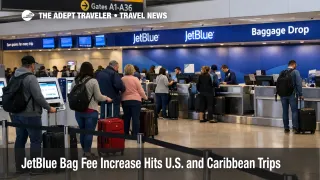
JetBlue's latest cost pass through has moved from airfare into baggage, and that changes the math for travelers who were still finding workable base fares. The airline has raised checked bag fees on flights within the United States and on many routes to Latin America, Canada, and the Caribbean, while keeping a separate chart for transatlantic service. The immediate effect is a higher total trip cost for passengers who need to check luggage during spring, summer, Thanksgiving, and winter holiday travel windows. Travelers with flexible plans should now price the full trip, not just the fare, before deciding whether to book JetBlue or switch carriers.
JetBlue Bag Fee Increase: What Changed
JetBlue now charges $39 for a first checked bag on off peak travel dates if the bag is paid for more than 24 hours before departure, and $49 on peak travel dates. If the traveler waits until the last 24 hours, that first bag rises to $49 off peak and $59 peak. Second bags now cost $59 off peak and $69 peak with advance payment, or $69 off peak and $79 peak inside the last 24 hours. JetBlue's own baggage pages show the peak and off peak structure remains in place, and outside reporting tied the latest move to a fresh increase of $4 to $9 depending on timing and seasonality.
This is not a small fare rules tweak. It is an ancillary revenue move that pushes more of the cost burden onto travelers who cannot travel light, families checking multiple bags, and passengers on longer or mixed purpose trips. The airline said the change reflects "rising operating costs" while it tries to keep base fares competitive and preserve onboard features such as free Wi Fi, snacks, drinks, and seatback entertainment.
Which JetBlue Travelers Pay More
The most exposed travelers are not necessarily the ones booking the cheapest ticket. They are the ones whose trip type makes baggage hard to avoid. That includes family leisure travelers, cruise passengers, longer Caribbean stays, winter sun trips, and travelers combining work and personal travel on one itinerary. A roundtrip traveler checking one bag each way can now pay $78 off peak if prepaid, or $98 peak. A traveler checking two bags roundtrip can reach $196 peak even before seat selection or other extras. Those totals shift JetBlue from a fare comparison story to a trip total story.
The timing also matters. JetBlue's baggage information page says peak season pricing applies during high traffic periods including Thanksgiving, winter holidays, and peak summer travel. That means the higher fee band lands exactly when many leisure travelers have the fewest practical alternatives and the least schedule flexibility. Travelers with JetBlue credit card baggage benefits or Mosaic status are partly insulated, but infrequent travelers and price sensitive households are not.
What Travelers Should Do Before Departure
Travelers booking now should compare total trip cost across carriers with the bag included, not just the headline fare. JetBlue can still look competitive at first glance, especially on leisure routes where the base ticket remains lower, but that advantage narrows fast once a checked bag is added. The prepayment discount is now more important because waiting until the final 24 hours adds another $10 per bag each way.
The decision threshold is simple. If you already know you will check a bag, price that bag at booking and compare it against airlines that bundle one bag through fare class, credit card perks, or status. If you are traveling during summer or a holiday period, assume the higher band unless the exact travel date shows otherwise on JetBlue's baggage page. If your trip works with a carry on only, the fee change may not alter the decision. If it does not, the new pricing can erase much of the apparent savings from a lower fare.
There is also a broader market signal here. U.S. airlines have often matched one another on bag fee moves after one carrier breaks first. That does not guarantee an immediate industry follow, but it does raise the odds that other carriers test similar ancillary increases if fuel stays elevated into the second quarter. Travelers with summer bookings should watch not only airfare, but baggage and change fee rules as well.
Why JetBlue Moved Now, and What Happens Next
The mechanism is straightforward. Fuel is one of the largest airline cost items, and it moves faster than many fares already sold for future travel. Reuters reported on March 30 that jet fuel was priced at $4.24 per gallon last Thursday, up from $2.50 just before the first U.S. Israeli strikes on Iran, according to Airlines for America. Reuters also reported on March 25 that JetBlue was already increasing optional service fees, including checked baggage, because of rising operating costs. For a carrier with thinner margins and no fuel hedges, ancillary fees are one of the fastest ways to recover cash without rewriting the entire fare structure overnight.
That is what makes this more than a baggage story. In an earlier Adept Traveler article, Fuel Shock Cuts Summer Flights as Fares Rise, the main signal was that fuel pressure was already moving from higher prices into schedule cuts. JetBlue's new bag fee move shows another layer of the same squeeze. First order, travelers pay more to fly with luggage. Second order, the industry gets another test of how much cost it can pass through before demand softens, booking windows shorten, or competitors copy the fee structure. The next decision point is whether fuel eases quickly enough to stop the spread of these charges, or whether ancillary revenue becomes the easier path for more airlines through spring and summer.