

UK ETA Fee Rises April 8, Transit Rules Still Split
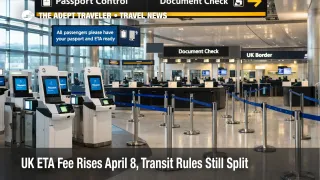
The UK ETA fee increase becomes a real booking trigger on April 8, 2026, when the official application cost rises from £16 to £20. For eligible non visa travelers, that is a modest price jump on its own, but the larger operational issue is that the UK's transit rules still depend on how a connection is structured. Travelers who pass through UK passport control need an ETA, while passengers transiting airside through Heathrow or Manchester without passport control currently do not. The practical move now is to check both nationality eligibility and the exact transit path before ticketing or before online check in opens.
UK ETA Fee Increase: What Changed on April 8
GOV.UK says an Electronic Travel Authorisation, or ETA, currently costs £16 and will cost £20 from April 8, 2026. The Home Office repeated the same date and amount in its March 2026 ETA factsheet, which also says the permit remains valid for multiple journeys over two years, or until the traveler's passport expires, whichever comes first. The fee change is not a policy overhaul, but it does create a hard near term cost threshold for travelers who already know they will need UK permission soon.
This applies mainly to visitors who do not need a visa for short UK trips, including many travelers from Europe, the United States, Canada, and Australia. Each traveler needs their own ETA, including children, and the authorization is tied to the passport used in the application. That means a family of four that has not yet applied moves from £64 to £80 on April 8, 2026, and a traveler who renews a passport after applying may need to resolve that mismatch before departure.
The operational seriousness is moderate, not dramatic. A £4 increase is not likely to change a long haul leisure trip by itself, but it can matter at the margin for families, same day business trips, low fare comparisons, and multi stop Europe itineraries where travelers are already stacking taxes, seat fees, baggage charges, and local transport costs. It also matters because the ETA is now part of the boarding process, not just a border formality. In an earlier Adept Traveler article, UK ETA Boarding Rule Now Blocks Unprepared Travelers, the main risk had already shifted forward to check in and boarding rather than arrival alone.
Who Needs To Act Before UK Travel
Most short stay travelers who would normally visit the United Kingdom without a visa need either an ETA or another valid immigration permission. British and Irish citizens do not need one, and travelers who already have permission to live, work, or study in the UK are also outside the usual ETA requirement. The cleanest starting point is still the official eligibility check, because nationality, residence status, and trip purpose can change the answer.
The highest exposure is not just for people flying to London, England. It is also for passengers booking connections that touch the UK, because transit is where many travelers make the wrong assumption. The Home Office says eligible visitors taking connecting flights and going through UK passport control need an ETA. By contrast, passengers transiting through Heathrow Airport or Manchester Airport without going through UK passport control do not currently need one. A March 2026 Home Office carrier poster states the same rule more bluntly, saying ETAs are not currently required for airside transit.
That split creates two different risk profiles for what can look like the same connection on a fare search. A passenger staying fully airside at Heathrow or Manchester may be fine without an ETA today, while a traveler on a separate ticket, a terminal transfer that requires landside movement, or an overnight connection that passes through border control can still need one. The problem is not the word "transit" itself. The problem is whether the itinerary forces entry into the UK processing stream.
Travelers who want broader context before booking can also review UK Entry Requirements For Tourists In 2026, but for a live trip the official government checker should override any general guide.
What Travelers Should Do Before Departure
Travelers who already know they will visit the UK, or who may need a landside UK connection, should treat the next few days as a decision window. Applying before April 8, 2026 avoids the higher fee, and the Home Office says most applicants currently get an automatic decision in minutes through the UK ETA app, though it still recommends applying at least three working days before travel in case the case needs more review.
The main decision threshold is simple. Apply now if the trip is booked, if the connection structure is even slightly unclear, or if the itinerary includes nonrefundable hotels, rail tickets, tours, or cruise embarkation. Waiting can make sense only when the trip is not firm and there is no realistic chance of needing UK passport control before travel. The fee increase is small, but the bigger exposure is denied boarding or a broken connection caused by assuming all transits are exempt.
Over the next 24 to 72 hours, travelers should watch for three things, their passport status, their exact transit routing, and any carrier specific instructions in manage booking or check in flows. A same airport connection is not automatically an airside connection, and a cheap fare assembled across separate bookings can create an ETA need that a through ticket might avoid. The cheapest mistake is delaying an application that was always going to be needed. The more expensive one is discovering the rule when the airline is already verifying documents.
Why the Transit Split Still Matters, and What Happens Next
The UK's ETA system is part of a broader border digitization model. Travelers submit biographic, biometric, and contact details in advance, and carriers are expected to screen whether passengers hold the right permission before travel. That enforcement model helps the UK move the problem upstream, but it also means confusion over transit rules becomes a traveler problem earlier in the journey, at check in, bag drop, and boarding.
What makes this story useful now is timing. The price increase is imminent, and the transit exemption is not broad enough for travelers to rely on the word "connection" alone. Heathrow's public passenger update page still contains older ETA wording that says transit requires an ETA even without UK border control, which conflicts with the newer March 2026 Home Office factsheet and carrier guidance stating that Heathrow and Manchester airside transit currently do not require one. For travelers, the safest reading is to trust the latest official Home Office guidance, then confirm the actual airport flow with the airline before departure if the booking is complex.
What happens next is likely more tightening and clearer carrier enforcement, not looser treatment. The government has already published the new fee, and the transit carveout is explicitly described as current, not permanent. That wording leaves room for future change. Travelers booking UK linked trips for spring and summer should assume that document checks will remain strict, and that the real planning question is not "Do I think I'm only transiting?" but "Will this itinerary force me through UK passport control at any point?"
Sources
- Get an electronic travel authorisation (ETA) to visit the UK, GOV.UK
- Electronic Travel Authorisation (ETA) factsheet, March 2026, Home Office
- Home Office immigration and nationality fees, 8 April 2026, GOV.UK
- UK Visa Requirements March 2026, Home Office Carriers Liaison Section
- Passenger updates, Heathrow Airport