

Burundi Bujumbura Travel Advisory Eases in Capital
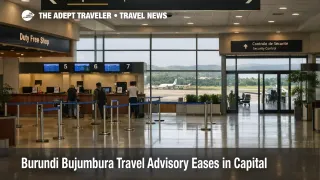
The Bujumbura travel advisory eased on March 30, 2026, when the U.K. Foreign, Commonwealth & Development Office said it no longer advises against all but essential travel to the city of Bujumbura and parts of Bujumbura Province. That is a real recovery signal for Burundi's capital, but it is narrow and conditional. Much of the surrounding risk picture remains in place, including an all travel warning for several communes in Bujumbura Province and continuing instability near the Democratic Republic of the Congo border. Travelers considering Burundi should treat this as a limited capital access change, not a broad country reopening.
Bujumbura Travel Advisory: What Changed
What changed is specific. The FCDO updated its Burundi advice on March 30, 2026, and said it no longer advises against all but essential travel to the city of Bujumbura and parts of Bujumbura Province. The same update still warns against all travel to Mugina, Cibitoke, Bukinyanyana, Bubanza, and Mpanda communes because of rebel presence risk in Kibira National Park and possible armed incursions from the DRC. It also continues to warn against travel on parts of Ntahangwa commune, specifically the RN5 north of Melchior Ndadaye International Airport in Bujumbura toward Cibitoke and west of the Rusizi River toward the DRC border, including Rusizi National Park.
That means the operational map changed more than the headline warning did. Bujumbura city is now easier to justify for tightly managed travel, especially for trips that begin and end in the capital and avoid high risk road movement. The immediate benefit is that some itineraries that were previously blocked by advisory language can now move into conditional planning. The immediate limit is that a traveler can still lose the logic of the trip as soon as it depends on the wrong road corridor, a border facing detour, or onward travel outside the eased area.
Which Travelers Can Use This Burundi Shift
This change is most useful for travelers whose reason for being in Burundi is concentrated in the capital. That includes short business visits, diplomatic and NGO movement, and some family travel that can stay inside Bujumbura with controlled airport transfers and prearranged transport. For that group, the main gain is not comfort. It is that employer approvals, insurer reviews, and travel manager signoff may now be more achievable than they were when the capital itself was under an all but essential travel warning.
The change is much less useful for discretionary travelers hoping this signals a wider Burundi recovery. The FCDO still warns that armed group activity and conflict along the Burundi DRC border have increased, and says armed group movement, military activity, and refugee flows in the DRC could affect the Burundian side of the border in Bujumbura Province. It also notes that Burundi has only one international airport, the Rwandan border is closed, the DRC border area is unstable, and transport options on the Tanzania route can be limited by fuel shortages. That keeps the downside high if a traveler needs to reroute, exit overland, or recover from a disrupted plan.
What Travelers Should Do Before Departure
Travelers who now see Bujumbura as possible should keep the trip narrow. Build the itinerary around the city, confirm that meetings and lodging stay inside lower risk parts of the capital, and use prearranged airport transport rather than ad hoc road movement. Because the FCDO says travel insurance can be invalidated if you travel against its advice, this is the point to read the actual policy wording and confirm whether the insurer distinguishes between Bujumbura city and the still restricted parts of Bujumbura Province.
The decision threshold is straightforward. Reconsider the trip if it requires road travel north of the airport on RN5, movement west toward the Rusizi corridor, or any attempt to add nearby off limit communes to the plan. A capital only itinerary may now be workable. A wider Burundi itinerary still breaks on the same security constraints that were already limiting route design.
Travelers should also add exit buffer and supplier checks. Burundi's limited land border options mean a same day fallback is weak if flights are disrupted or security conditions shift. In an earlier Adept Traveler article, Kavimvira Border Update Shifts DRC Burundi Routing, the overland picture near Burundi and eastern DRC was already shown to be fragile rather than dependable. That still applies here.
Why The Recovery Angle Is Real, But Narrow
The reason this story matters operationally is that the advisory boundary moved. It is no longer accurate to treat Bujumbura city the same way as the highest risk parts of surrounding Burundi. That can reopen capital focused travel conversations that were effectively closed. First order, more trips to Bujumbura may get approved. Second order, hotels, drivers, insurers, and airlines serving the capital may see slightly more usable demand, even while the rest of the country remains difficult to justify.
What happens next depends on whether the eased zone holds, expands, or reverses. For now, the FCDO still frames Burundi as a country with restricted travel areas, border instability, and constrained fallback options. The practical reading is simple. Bujumbura is easier to consider than it was a week ago, but Burundi is not broadly open for normal travel planning. Travelers should monitor fresh FCDO updates, any change to road risk around the DRC facing corridors, and airline continuity through Melchior Ndadaye International Airport before treating this as more than a limited recovery signal.