

Dubai Transit Ban Blocks Emirates Itineraries for Iranians
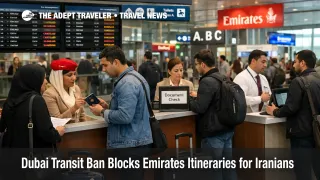
Iranian nationals now face an immediate routing problem through Dubai, United Arab Emirates, after Emirates said on April 1, 2026, that they are not allowed to enter or transit the United Arab Emirates. That turns one of the world's biggest long haul connecting hubs into a same day failure point for a specific passport group, not just a generally stressed Gulf transfer option. For travelers, the operational risk is straightforward: some passengers may be denied boarding before departure, while others may lose Dubai as a usable bridge entirely and need a new routing, a new visa check, or an overnight reset before continuing.
Emirates Dubai Transit Ban: What Changed
Reuters reported on April 1 that Emirates' website says Iranian nationals are not allowed to enter or transit the United Arab Emirates. The same Reuters report said flydubai's website listed a narrower exception, stating that Iranian nationals holding a UAE Golden Visa are exempt and permitted to enter and transit. Reuters did not report a public Emirates exception in the same form, so travelers should not assume a flydubai exemption automatically carries over to Emirates without carrier specific confirmation.
That is a sharper restriction than the normal UAE transit process published on Emirates' visa pages, which still describe 48 hour and 96 hour transit visas and online visa applications for eligible passengers traveling on Emirates tickets through Dubai. In practical terms, the new restriction overrides what many travelers, and some agents, would otherwise expect from standard Dubai connection rules. A booked itinerary through Dubai is no longer enough on its own if the passenger's nationality falls inside the restriction.
Which Iranian Travelers Are Now Exposed
The most exposed travelers are Iranian nationals booked on Emirates itineraries that require any Dubai transfer, especially long haul trips built around a single Emirates ticket between Europe, Asia, Africa, Australasia, and North America. The first order effect is denial of entry or transit through the UAE. The second order effect is that families, advisers, and corporate travel desks may have to rebuild whole itineraries around a different hub, often at short notice and at a higher fare.
The risk is highest for travelers departing soon, travelers on inflexible trips, and anyone using separate tickets. A single ticket can still leave a passenger unable to use Dubai at all, but separate tickets are worse because they can break protection between flights, increase missed connection exposure, and force baggage recheck, hotel, or new visa decisions outside the original booking. Travelers with cruises, tours, medical appointments, work rotations, or fixed family events should treat this as an itinerary viability issue, not a minor document check. Emirates' own travel updates page says disrupted customers may be rebooked on the next available Emirates flight and notes this applies to most disrupted tickets, including journeys connecting beyond Dubai, but that does not solve the underlying problem when Dubai itself is unusable for the passenger.
What Travelers Should Do Now
Iranian nationals booked on Emirates should check the booking before going to the airport and speak to the ticketing carrier or issuing agent before departure. Do not assume airport staff can solve this at check in if the route still requires Dubai. The immediate goal is to confirm whether the itinerary remains valid at all, whether a carrier specific exemption applies, and whether rerouting can be done on the same ticket.
For replacement routings, Istanbul currently looks clearer than another UAE hub. Turkish Airlines' published transfer guidance says international to international passengers on a single ticket can proceed directly to the boarding gate without passport control, and its Istanbul Airport FAQ says there is no need to obtain a visa if the passenger exits the transit area under that process. That does not remove destination visa requirements, but it does show a functioning international transfer pathway that is not tied to UAE entry rules.
Doha may still work for some travelers, but it should be treated as a live requirements check rather than a blanket substitute. Qatar Airways directs passengers to use its travel requirements tool for nationality, destination, and transit country checks, and says those conditions can change and should be independently verified before travel. The next decision point is simple: if Dubai remains in the itinerary and departure is near, rebook now when a valid non UAE path exists. Waiting only makes sense if the carrier confirms a lawful, ticketed alternative or the trip itself can move.
Why Dubai Connections Just Got Harder
This restriction lands while Gulf travel is already running with less slack than normal. In an earlier Adept Traveler article, Qatar Doha Timetable Stays Tight Through April 15 showed that even one of the main fallback hubs is still operating on a constrained pattern through mid April. In another, Europe-Middle East Flight Cuts Reach Into Autumn showed that broader Middle East airline capacity remains thinner than normal on several corridors.
That wider context changes the seriousness of the Emirates Dubai transit ban. When a major hub becomes unavailable for one passport group, the damage is not limited to one airport. It spreads into fare pressure on alternate hubs, weaker same day reaccommodation, more overnight stays, and more document screening friction before departure. What happens next depends on whether Emirates publishes fuller guidance, whether exemptions broaden or narrow, and whether other Gulf carriers adopt similar rules. Until there is clearer carrier by carrier alignment, Iranian travelers should treat Dubai as blocked for Emirates transit and rebuild plans around verified non UAE routings.
Sources
- Airline Emirates says Iranian nationals barred from entering or transiting UAE, Reuters
- Travel Updates, Emirates
- UAE Visa Information, Emirates
- Transfer and Transit Passenger Travel Information, Turkish Airlines
- Frequently Asked Questions, Istanbul Airport, Turkish Airlines
- Travel Requirements, Qatar Airways