

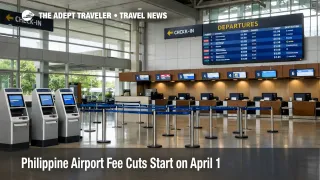
Philippine Airport Fee Cuts Start on April 1
Trinidad and Tobago arrival card processing is now a live digital compliance step for every inbound and outbound air or sea traveler. The government's online platform replaced the paper system on March 17, 2026, and travelers now need to complete the form online before travel, then keep the QR coded receipt ready for presentation to officials. The practical risk is not a theoretical policy change months away. It is same day airport or port friction for travelers who arrive expecting paper forms, weak mobile service, or last minute staff help to rescue the process.
Trinidad and Tobago Arrival Card: What Changed
The rule change is already in force. The Immigration Division said the Online Arrival and Departure Card Platform officially went live on March 17, 2026, replacing the traditional paper forms previously completed by travelers. Official guidance says all persons entering or leaving Trinidad and Tobago must complete the card online before travel, and the form can be completed up to 72 hours before arrival or departure.
The process now depends on digital readiness. The portal says every passenger must save the receipt containing the QR code and either print it or download it to a mobile device. The portal also says each passenger needs a valid email address, flight information, a valid passport, and a JPEG or PNG copy of the passport biodata page. That makes this more than a paperwork cleanup. It shifts a border processing step forward into the pre travel window, where mistakes show up before check in, at check in, or in the immigration hall.
Who Needs To Act Before Travel
This is a broad rule, not a niche requirement for tourists from one market. Official tourism guidance says submission is required for all passengers arriving in or departing from Trinidad and Tobago by air or sea. That means visitors, returning nationals, business travelers, cruise or ferry passengers where relevant, and travelers leaving the country all need to handle the form before they reach the processing point.
The most exposed travelers are the ones who rely on a smooth airport day. Families managing several passports, older travelers who are less comfortable with account creation and uploads, and passengers on tight onward plans face the highest operational risk. Official guidance says support will be available at Piarco International Airport (POS), at A.N.R. Robinson International Airport (TAB), and through airlines, but that support should be treated as a fallback. In real travel operations, airport help usually means slower queues and more variable timing, not a friction free substitute for arriving prepared.
What Travelers Should Do Before Departure
The best move is to complete the form as soon as the 72 hour window opens, not on the way to the airport. Save the QR receipt to the phone, take a screenshot, and carry a printed copy if there is any chance of poor roaming, weak battery, or unreliable connectivity. The portal and tourism guidance both explicitly tell travelers to retain the QR receipt for presentation, and that single detail is likely to determine whether this feels efficient or messy on travel day.
The decision threshold is straightforward. A solo traveler with time to spare and good mobile service might get away with a late submission. A family, a group, or anyone with a short connection, hotel pickup, or timed arrival should not take that gamble. Advisors should treat the digital card as a mandatory pre departure checkpoint and confirm that each traveler has the QR receipt before check in opens. That is especially important for less tech confident clients, because the new process adds account setup, document upload, and receipt storage to what used to be a quick paper step.
Why The New System Changes Airport Timing
The mechanism is simple. Trinidad and Tobago is moving a manual border form into an online pre travel workflow. In the best case, that should speed movement through ports because travelers arrive with the data already submitted and the QR receipt ready. The portal itself says using the online card helps expedite movement through ports. In the worst case, the bottleneck shifts upstream, where unprepared travelers are trying to create accounts, upload passport images, and retrieve receipts at the exact moment airport bandwidth, airline staff time, and traveler patience are most limited. aPhilippine airport fee cuts are now live across Civil Aviation Authority of the Philippines, or CAAP, operated airports on April 1, 2026, changing the fare math for domestic and some international trips that touch regional gateways. The Department of Transportation said the cuts target passenger service charges and airport navigation fees as jet fuel prices stay elevated, which means the benefit is real at the airport cost layer even if airlines do not pass through every peso immediately. Travelers comparing secondary airport routings, domestic hops, and near term bookings should now watch whether cheaper airport charges show up in lower base fares, softer fuel surcharge pressure, or more competitive pricing on thinner routes.
Philippine Airport Fee Cuts: What Changed
The clearest change for passengers is the Passenger Service Charge, the fee often treated as the terminal fee inside a ticket. Reporting on the April 1 rollout says international passenger service charges at CAAP operated international airports fall to PHP700.00 from PHP900.00, while domestic charges at international airports drop from PHP350.00 to roughly PHP150.00 to PHP200.00. Principal Class 1 airports move from PHP300.00 to roughly PHP150.00 to PHP200.00, Principal Class 2 airports fall from PHP200.00 to PHP100.00, and community airports drop from PHP100.00 to PHP50.00. The same rollout also cuts aeronautical charges, including landing and takeoff related fees paid by airlines, with reports describing reductions of nearly 50 percent in some cases.
That matters operationally because airport charges are one of the cleaner cost inputs in a fare. When those charges fall, airlines have more room either to price lower, to absorb fuel pressure without raising fares as much, or to defend weaker regional routes that might otherwise become less attractive. The Department of Transportation linked the move directly to the jump in jet fuel prices from $90.87 per barrel on February 19, 2026, to $188.2 per barrel on March 9, 2026, and also told the Civil Aeronautics Board to shorten its review period for airfare changes to 15 days.
Which Travelers and Airports Benefit Most
The biggest near term benefit is for travelers flying through CAAP operated airports outside the privatized main Manila gateway system. CAAP's own airport classification memo shows the network includes international airports such as Bohol-Panglao, Davao, Iloilo, Kalibo, Laoag, and Puerto Princesa, plus a much larger group of Principal Class 1, Principal Class 2, and community airports across the country. That gives the fee cut more value for domestic flyers, island hoppers, and travelers building itineraries through secondary cities rather than only through Manila.
The practical winners are travelers booking fresh tickets from April 1 forward, especially on leisure and visiting friends and relatives traffic where price sensitivity is high. A PHP50.00 to PHP200.00 difference in airport charges will not transform every ticket, but it can change close fare comparisons on short domestic sectors, multi segment itineraries, and routes where low cost carriers compete aggressively. It also slightly improves the economics of flying from a regional origin instead of repositioning by ferry or long road transfer first. For international travelers, the gain is narrower but still useful on departures from CAAP run international airports where the international passenger service charge is being cut.
What Travelers Should Do Before Booking
Travelers should treat the fee cut as a live price advantage, not an automatic promise that every visible airfare will drop by the same amount. The first check is whether you are searching a CAAP operated airport at all, because this is not a blanket all Philippines airport story. Then compare like for like fares across several dates and airlines, and look closely at the fare breakdown during checkout to see whether taxes and fees, base fare, or surcharge components are moving.
The next decision point is whether to book now or wait. Book now if you already see a competitive fare from a CAAP airport that fits your trip, especially for Easter and other near term travel when seat inventory can tighten faster than fee savings compound. Wait only if your route has frequent service, several competing airlines, and low sellout risk, because carriers may take some time to reflect the lower airport cost structure consistently across distribution channels.
Over the next several days, monitor whether airlines highlight lower all in fares, reduced surcharges, or route specific sales from regional airports. That is the clearest signal that the savings are flowing through to consumers instead of being used mainly as a buffer against fuel stress. Travelers who can start from a regional gateway should also rerun fare searches they made in March, because some direct versus connecting comparisons may now look different.
Why the Change Happened, and What Comes Next
This is a fuel shock response as much as a consumer relief move. The Philippine government said the fee cuts were ordered to cushion the impact of sharply higher jet fuel costs on airlines and travelers, and the policy logic is straightforward. When fuel prices spike, carriers either raise fares, trim flying, or accept weaker margins. Lower airport and navigation charges ease one part of that pressure, which can help keep regional service more stable and reduce the need for larger fare increases.
What happens next depends on how long fuel pressure lasts and how aggressively airlines compete for demand. In an earlier Adept Traveler article, China Fuel Export Ban Raises Asia Travel Risk, the broader regional fuel squeeze was already raising questions about fares, supply, and transport resilience in Asia. This new Philippines fee cut does not remove that pressure. It offsets part of it. If fuel markets settle, the shorter Civil Aeronautics Board review window could help fare relief reach travelers faster. If fuel stays high, the airport fee cut may work more as a brake on bigger fare increases than as a dramatic discount on its own.
Sources
- Civil Aviation Authority of the Philippines, CAAP Announcements
- Civil Aviation Authority of the Philippines, Memorandum, Rate Adjustment for Passenger Service Charge
- Civil Aviation Authority of the Philippines, Memorandum, Implementation of CAAP Revised Schedule of Aeronautical Fees and Charges
- Philippine Information Agency, DOTr cuts airport, passenger fees to ease airfare burden
- GMA News Online, DOTr orders cut in airport charges amid jet fuel rise
- SunStar, CAAP to lower airport fees starting April
What happens next is likely a transition phase rather than another policy reversal. The system is already live, paper cards are already discontinued, and official agencies are already pushing travelers to the travel.gov.tt portal. The likely near term pattern is uneven compliance, especially among first time visitors and infrequent travelers, followed by smoother processing once airlines, advisors, and hotels start treating the digital form as a standard pre travel task. Until then, the main traveler consequence is not outright closure risk. It is preventable airport friction that can spread into check in timing, arrival hall queues, and missed handoffs on tightly planned itineraries.