

Argentina Strike Flights Spread to Ports February 19
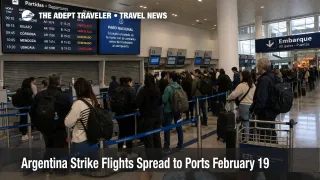
Argentina strike flights turned into a wider transport shutdown on Thursday, February 19, 2026, with disruption spreading across aviation, buses, trains, subways, and ports in Argentina. The heaviest traveler impact centered on Buenos Aires, Argentina, where airport departures, city mobility, and port operations were all hit at once. For travelers, this was not a narrow labor headline. It was a same day network failure that broke airport access, canceled flights, and raised the risk of missed cruise embarkations and delayed recovery into the following day.
Argentina Strike Flights: What Changed
The confirmed broad transport shutdown hit on February 19, 2026, not April 10. Argentina's main labor federation, the CGT, launched a 24 hour nationwide strike as the lower house prepared to debate President Javier Milei's labor reform bill. Reuters reported that the stoppage involved transport workers, public sector staff, and bank employees, while Buenos Aires Herald reported that trains, subways, and buses were set to halt nationwide and that the strike would begin at 12:00 a.m. local time.
In aviation, Aerolíneas Argentinas said it canceled 255 flights and expected the strike to affect more than 31,000 passengers. Reuters separately reported that many of those cancellations were concentrated within Argentina and that some flights in Santiago, Chile, were also suspended because of the knock on effects. That pushed the story beyond a domestic labor dispute and into a regional air movement problem for travelers connecting through Buenos Aires hubs.
The disruption did not stop at airports. Buenos Aires Herald reported that a separate 48 hour maritime strike, already underway, meant cruise ships could not enter or leave Argentine shores because port workers were not providing assistance. Reuters said maritime workers targeted cargo operations mainly around Rosario and that at least 12 grain ships were affected, confirming that the transport stress was already spreading through ports as the general strike began.
Which Travelers Face the Most Disruption
Passengers flying to, from, or through Buenos Aires Ministro Pistarini International Airport (EZE) and Aeroparque Jorge Newbery (AEP) were the most exposed, especially anyone trying to combine an international arrival with a same day domestic connection. Once flights are canceled at scale and surface transport also weakens, the normal fallback options start to disappear. A traveler who can usually switch airports, take a bus, or ride rail into the city suddenly has fewer recovery paths.
Cruise passengers and crews also faced unusual exposure. Buenos Aires Herald reported that cruise ship movements and shore assistance were affected by the 48 hour maritime stoppage, which means the strike was not only an airline problem. It also threatened embarkations, disembarkations, crew repositioning, and same day hotel and transfer plans tied to fixed port timings.
In an earlier Adept Traveler article, Argentina Strike Hits EZE Flights February 19, 2026, the reporting already flagged Buenos Aires airport travelers as the core exposure group and noted waiver driven rebooking pressure around the February 18 to 21 window. That framing still holds, but the broader picture is now clearer, this was a multi layer transport event, not only an airport disruption.
What Travelers Should Do Now
For travelers with February 19 itineraries, the best move was to treat the day as unreliable across the whole transport chain, not just in the air. If a trip could be shifted into February 18 or February 20 to 21 without breaking a larger itinerary, that was the safer option because Aerolíneas Argentinas had already published hard cancellation numbers and the strike was running across multiple transport modes at once.
Travelers who could not move the trip needed to separate the air segment from the ground segment and secure each one independently. A confirmed flight alone was not enough protection when buses, trains, subways, and some airport access options were also affected. The practical threshold was simple, if missing the trip would break a cruise, tour, wedding, work event, or long haul connection, waiting for day of recovery was the weaker choice. Rebooking early or adding a hotel night in Buenos Aires was the safer tradeoff.
For the next operational step, travelers needed to watch airline notifications, airport status pages, and any port or cruise communications through at least February 20. Even after a 24 hour stoppage ends, a system this interconnected does not snap back instantly. That is especially true when aircraft, crews, and passengers all need to be repositioned after a day of mass cancellations and weak ground access. The likely recovery window was therefore longer than the strike clock itself.
Why the Shutdown Spread Beyond Airports
The mechanism was political, but the traveler effect was operational. The CGT called the nationwide stoppage to protest Milei's labor reform, which unions argued would weaken worker protections, including strike rights, while the government argued it would promote investment and formal employment. Reuters reported that the proposal included limits on strikes in essential services and lower severance costs, while Buenos Aires Herald said unions also objected to changes in working hours, overtime handling, sick leave, severance calculations, and union activity.
What made this strike more serious for travelers was the overlap of transport layers. Airport operations were hit by aviation cancellations, city mobility was weakened by bus, train, and subway stoppages, and maritime operations were already under pressure from a separate 48 hour union action. When those layers fail together, the problem stops being whether one flight operates and becomes whether the traveler can still complete the full trip from hotel to airport, airport to domestic leg, or ship terminal to onward transport. That is why Argentina strike flights on February 19 created a larger itinerary risk than the airline cancellation numbers alone would suggest.
Sources
- Argentine labor reform faces key lower house vote as unions stage nationwide strike, Reuters
- Argentina's trade unions call for general strike against Milei's labor reform, Buenos Aires Herald
- Argentine unions go to general strike: what will happen with flights, cruise ships and transport, Buenos Aires Herald
- Aerolíneas Argentinas cancela 255 vuelos por el paro de la CGT, Aerolíneas Argentinas
- Argentina Strike Hits EZE Flights February 19, 2026, Adept Traveler