

Austin South Terminal Closure Moves Flights to Main AUS
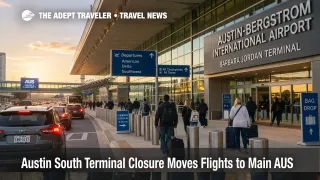
Austin South Terminal closure is now a same day airport navigation problem at Austin-Bergstrom International Airport (AUS), because the South Terminal officially closed on April 1, 2026, and Allegiant and Frontier now operate from the main Barbara Jordan Terminal. Travelers who still follow old drop off, parking, or rideshare habits can lose time before check in even starts. The immediate risk is not a canceled flight, it is arriving at the wrong building or underestimating main terminal congestion during a live operating transition. Travelers flying Allegiant or Frontier from AUS should now go straight to the Barbara Jordan Terminal, confirm terminal details in their airline app, and build extra buffer while airport habits reset.
Austin South Terminal Closure: What Changed
The operational change is simple, but the traveler consequences are immediate. March 31, 2026 was the final day of South Terminal operations, and beginning April 1 all Allegiant and Frontier departures and arrivals shifted into the Barbara Jordan Terminal. Austin's airport says all commercial airlines at AUS now operate under one roof, which removes the old split terminal setup that had sent some low cost carrier passengers to a separate facility off Logistics Lane.
That means the old South Terminal no longer works as a place to check in for Allegiant or Frontier, clear security for those flights, or depart for a commercial trip on either carrier. The airport is still running a parking shuttle for travelers who parked at the South Terminal before the closure and returned after April 1, but that is a temporary clean up measure for existing vehicles, not a sign that the old terminal remains active for normal flight use.
Which Austin Travelers Face the Most Risk
The most exposed group is occasional AUS users who have flown Allegiant or Frontier out of the South Terminal before and may still have an old mental map, saved rideshare destination, or parking habit tied to that separate building. A second exposed group is anyone arriving during Austin's spring travel surge, because AUS had already warned that peak days around late March and early April would bring more than 30,000 departing passengers and advised travelers to arrive 2.5 hours before domestic departures and 3 hours before international departures.
The second order effects are easy to miss. When two carriers consolidate into the main terminal, the pressure point shifts from remote terminal access to curb flow, ticketing, bag drop, checkpoint choice, and parking behavior at Barbara Jordan. AUS says all checkpoints in the main terminal lead to all gates, and it recently added Checkpoint 4 on the west side, which should help spread demand, but only if travelers actually arrive at the correct building with enough time to use the main terminal system properly.
In an earlier Adept Traveler article, Austin Festival Traffic Hits Airport, Downtown Trips focused on Austin's broader downtown and airport access strain during the spring event season. This new shift is more direct and more immediate for flyers, because the problem is no longer citywide traffic alone. It is terminal choice at AUS itself.
What Travelers Should Do Now
If you are flying Allegiant or Frontier from AUS on or after April 1, go directly to the Barbara Jordan Terminal and ignore any older South Terminal instructions in saved emails, old booking memories, or third party directions. Check your airline app before leaving, especially if you booked weeks ago or are traveling on a round trip that began before the switch.
For the next several days, the smart buffer is at least the airport's current spring guidance, 2.5 hours before domestic departures and 3 hours before international departures, and more if you are checking bags, returning a rental car, or traveling at a peak time. That is a tougher recommendation than the old South Terminal pattern, where some repeat Allegiant and Frontier flyers built their routine around a smaller, simpler facility. The tradeoff now is a unified terminal versus less forgiving arrival mistakes.
Travelers should also rethink parking and pickup. If you parked at the South Terminal before April 1 and came back after the closure, use the ABIA parking shuttle to reach your vehicle. For new trips, plan around the main terminal's parking, drop off, pickup, and rideshare patterns instead. The next decision threshold is simple, if you are unsure which building to use, do not guess based on past trips, confirm before you leave for the airport.
Why AUS Closed the South Terminal, and What Comes Next
Austin says removing the South Terminal clears the way for New Midfield Taxiways, a project tied to the broader Journey With AUS expansion program. The airport describes those taxiways as an enabling step for later projects including Concourse B and a connecting tunnel, which means this closure is not a temporary airline shuffle. It is part of a structural rebuild of how AUS grows gate capacity and moves aircraft around the airfield over the coming years.
What happens next for travelers is less about whether Allegiant and Frontier stay moved, they will, and more about how quickly the new one terminal habit becomes normal. In the near term, travelers should expect a transition phase where old terminal assumptions, spring traffic, parking demand, and main terminal checkpoint choices all interact. Over time, the airport is betting that a single commercial terminal setup will be easier to use, but the immediate period after April 1 is when wrong terminal mistakes and arrival time miscalculations are most likely.