

JetBlue TrueBlue Adds Subscriptions, Extra Redemptions
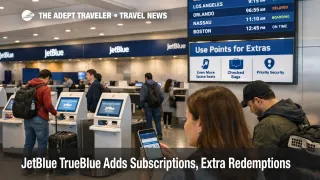
JetBlue is widening the ways travelers can use and earn TrueBlue points, and the timing is not accidental. On March 31, 2026, the airline launched three paid TrueBlue subscription tiers and began letting members redeem points for selected add ons such as seat assignments, first and second checked bags, pet fees, and priority security at some airports. For travelers who already buy bags and seats on JetBlue, that makes the loyalty program more flexible. For everyone else, the main question is whether these new options offset JetBlue's higher cash bag costs, or simply make those extras easier to swallow with points instead of dollars.
In an earlier Adept Traveler article, JetBlue Bag Fee Increase Hits U.S. and Caribbean Trips laid out the cash side of that shift. JetBlue now charges more for checked bags than many travelers were paying before, especially when they add bags close to departure. This new loyalty move changes the decision from a simple fee increase story into a bundling story, where JetBlue is trying to keep more travelers inside its own ecosystem by making points useful for the extras that increasingly shape trip cost.
JetBlue TrueBlue Subscriptions: What Changed
JetBlue's new program has three tiers. Points Traveler costs $13.00 (USD) per month or $144.00 (USD) annually for 1,000 points per month. Points Adventurer costs $32.50 (USD) monthly or $360.00 (USD) annually for 2,000 points per month, plus a 2 point per dollar flight accelerator. Points Trailblazer costs $67.75 (USD) monthly or $750.00 (USD) annually for 2,500 points per month, plus a 3 point per dollar flight accelerator and a 10 percent rebate on JetBlue award flights. JetBlue also says Mosaic members and co branded cardholders can stack more value on top, including higher earning rates and, for some cardmembers, combined award rebates of up to 20 percent after travel is completed.
The second change may matter more day to day. TrueBlue points can now be used not just for flights and partner redemptions, but also for EvenMore seats, Core Preferred and Extra Legroom seat assignments, first and second checked bags, pet fees, and priority security access where JetBlue offers it. That moves more of the airline's ancillary menu into the loyalty layer. First order, travelers with existing point balances have more ways to cut out of pocket trip costs. Second order, JetBlue can make rising ancillary fees feel less punishing to repeat customers who stay active in TrueBlue instead of comparison shopping on base fare alone.
Who Gets the Most Value
These changes are best for four groups. The first is frequent JetBlue flyers who already buy bags, better seats, or both several times a year. The second is Mosaic members and JetBlue cardholders, because JetBlue's published earning and rebate math is materially better for them than for a casual member. The third is travelers booking through JetBlue's own channels who want more control over where points get spent. The fourth is families using points pooling, since JetBlue says subscription earned points do not expire, can be pooled, and have no blackout dates.
The weak fit is the occasional flyer who only takes one or two JetBlue trips a year and does not regularly buy extras. Based on JetBlue's own pricing, the annual subscription tiers work out to roughly 1.2 cents, 1.5 cents, and 2.5 cents per point before counting the accelerator or rebate, which means the math gets much tougher as you move up tiers unless you are a consistent JetBlue spender. Trailblazer, in particular, looks built for travelers who redeem often and buy enough cash tickets to benefit from the 3 point per dollar accelerator, not for someone looking for a cheap way to stockpile points casually. That is an inference from JetBlue's published subscription prices and point totals, but it is the right lens for a traveler deciding whether this is a real savings tool or just another recurring charge.
What Travelers Should Do Now
Travelers with upcoming JetBlue trips should start by checking whether they already hold enough TrueBlue points to cover extras that would otherwise be paid in cash. With JetBlue's bag fees now higher than they were previously, using points for a first or second checked bag may be more valuable to some travelers than holding points back for a low value short haul redemption, especially on family itineraries where ancillary costs stack fast.
The next decision point is whether a subscription replaces spending you were already going to do, or adds a new monthly cost without changing behavior. If you already pay for EvenMore seating, check bags regularly, and book JetBlue often enough to use the flight accelerators, one of the upper tiers may make sense. If you mostly fly JetBlue on occasional leisure trips, the better move is usually to skip the subscription, keep the free TrueBlue account, and use points opportunistically when a bag, seat, or award flight produces obvious savings.
Over the next few weeks, watch for how JetBlue surfaces these options in booking flow and account pages. The operational question is not whether the features exist, JetBlue has confirmed that, but whether redemption pricing for extras is attractive enough in practice to change traveler behavior. That is what will determine whether JetBlue TrueBlue subscriptions become a useful loyalty tool, or just a more polished way to monetize extras. Related JetBlue shoppers may also want to read United JetBlue Blue Sky Cash Bookings Now Live, since JetBlue is simultaneously broadening how customers shop and earn across its wider commercial strategy.
Why JetBlue Is Pushing Points Into Extras
JetBlue is following a wider airline pattern. Base fares stay competitive, while more of the real trip cost moves into bags, seat selection, priority services, and loyalty mechanics. Letting points cover extras does not reverse that shift. It makes the system feel more flexible for travelers who stay loyal, while preserving the airline's ability to charge cash prices that can still sting for infrequent customers. In that sense, this is less a generosity story than a pricing architecture story.
What happens next is straightforward. JetBlue will likely keep testing how far it can push personalization, loyalty bundling, and ancillary revenue without losing too much price sensitive demand. Travelers should expect more offers that tie together subscriptions, card benefits, seat upsells, bags, and points usage rather than simpler fare based value. For anyone evaluating JetBlue TrueBlue subscriptions now, the right move is to treat them as a trip cost management tool first, and a loyalty perk second.