

United TSA Wait Times Reach Seven Hub Airports
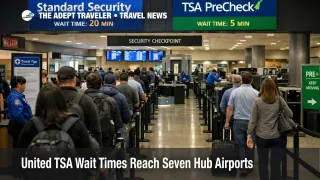
United TSA wait times are now visible inside the airline's mobile app, giving travelers at seven major U.S. hub airports a new way to gauge checkpoint conditions before leaving for the airport. United said the pilot began on April 1, 2026, and covers Chicago, Denver, Houston, Los Angeles, New York and Newark, San Francisco, and Washington, D.C. area operations, with lane specific estimates for both standard screening and TSA PreCheck. The timing matters because the Department of Homeland Security shutdown is still distorting airport security reliability even after many Transportation Security Administration officers began receiving back pay earlier this week. For travelers, this adds a useful planning tool, but it does not eliminate the need for extra buffer when screening is unstable.
United TSA Wait Times: What Changed
What changed is not TSA policy, but the visibility travelers get before they arrive. United said its app now shows estimated wait times throughout the day for specific screening lanes in terminals serving United customers, including standard lanes and TSA PreCheck. The airline described the rollout as a pilot and called it a first of its kind offering from a major U.S. airline, while Houston is the one airport in the launch group where the estimates come from Houston Airport System data rather than United's own data collection.
That makes this more useful than a generic airport warning, but narrower than a systemwide checkpoint tool. Travelers can now compare line estimates in the app as part of the same day trip workflow, alongside flight status, rebooking tools, and gate information. The immediate benefit is better departure timing. A traveler who sees a long standard queue and a shorter PreCheck lane can adjust when to leave, which terminal entrance to use, or whether a tight landside meal or ride share stop still makes sense.
Which Travelers Benefit Most From the New United App Feature
The biggest benefit goes to travelers departing from United's hub airports, especially those starting trips there rather than connecting through. Departing passengers can still decide when to leave the hotel, home, or rental car lot. That matters more than it does for connecting passengers who are already inside security. It also matters most for travelers flying in peak morning banks, holiday periods, or during labor and funding disruptions when line conditions can swing faster than published averages suggest.
Houston travelers are a particularly exposed group because recent checkpoint strain there was severe enough to produce four hour waits before lines eased this week. In an earlier Adept Traveler article, TSA Pay Restart Eases Airport Security Lines, the immediate story was recovery after back pay began reaching officers. This new United feature changes the traveler decision point from broad awareness to airport specific timing at hubs where screening conditions can still turn uneven. Travelers with checked bags, family groups, or paid ground transfers on a fixed schedule should get more value from the app than experienced solo travelers who already build large buffers into airport departures.
What Travelers Should Do Now With United TSA Wait Times
Use the app as an early warning signal, not as permission to cut your airport buffer too aggressively. United's estimates can help with departure timing, but they are still estimates, and even secondary summaries of the rollout note that actual waits can differ from what the app shows. If the trip includes bag drop, family travel, wheelchair assistance, international document checks, or a holiday traffic window on airport access roads, keep the usual margin even if the checkpoint number looks manageable.
For travelers flying from one of the seven hubs, the decision threshold is practical. If the app shows a modest line and the airport is operating normally, it is reasonable to treat that as a sign that your standard arrival plan still works. If the app shows a long queue, or if local reporting and airport alerts suggest staffing or screening stress, shift earlier rather than waiting for the line to improve on its own. That is especially true at Houston, where recent conditions showed how quickly checkpoint strain can become operationally serious.
Travelers outside the seven hub airports should not assume the same visibility exists. The pilot is helpful, but its coverage is limited. If your departure airport is not in the launch group, you still need to rely on airline alerts, airport advisories, and larger departure buffers until a broader rollout exists.
Why This Is Happening, and What Comes Next
United's rollout is landing in a very specific operating environment. The Department of Homeland Security shutdown has pushed airport security reliability into the traveler spotlight, even as back pay has begun easing some of the worst pressure. United's own statement tied the feature directly to that environment, saying travelers want better information about expected wait times while the shutdown continues. In plain terms, the airline is trying to reduce uncertainty at the checkpoint layer, which has become one of the most visible weak points in U.S. air travel over the past several weeks.
The main next step to watch is whether this stays a limited hub pilot or expands to more airports and richer decision support. If the shutdown ends and screening normalizes, the feature still has value as a day of departure planning tool. If line volatility returns, the app becomes more operationally important because it helps travelers react earlier, before they are stuck in a queue with few alternatives. The feature should improve trip planning at the margin, but it is not a substitute for staffing recovery, stable funding, or airport level line management.