

U.S. Airfares Rise as Fuel Shock Tightens Summer Trips
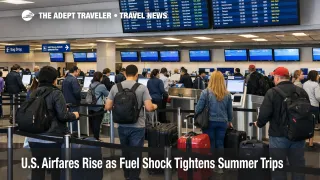
U.S. airfare increases accelerated after March 30, 2026, as airlines responded to the late March fuel shock with higher fares, higher fees, and thinner schedules. For travelers booking spring and summer trips in the United States, the problem is no longer only that tickets cost more. In some markets, the backup flights that make delays and misconnects survivable are starting to disappear at the same time. ARC said U.S. based travel agency air ticket sales reached $9.6 billion in February 2026, while the average domestic round trip ticket price rose to $601, up 3 percent from January and 7 percent from February 2025.
U.S. Airfare Increases: What Changed
What changed is that the fuel story is now hitting travelers through several channels at once. Reuters reported that jet fuel prices nearly doubled after the conflict began in late February, and United Airlines said fares booked over the prior week were already up 15 percent to 20 percent. United also said it is cutting about five percentage points from its planned 2026 capacity after trimming weaker midweek, Saturday, overnight, and some Chicago O'Hare flying. That combination shifts the traveler risk from simple sticker shock to a harder operating environment where a broken itinerary is also tougher to fix.
Fees are moving in the same direction. JetBlue has already raised checked bag charges, with first bag pricing now starting at $39 on off peak dates when paid more than 24 hours ahead, and rising higher on peak dates or closer to departure. That matters because ancillary charges let airlines recover some cost pressure without relying only on the base fare, and those charges tend to be less reversible once they are in the system.
Which Trips Will Feel the Squeeze First
The first trips to feel this are the ones that depend on flexibility. One stop domestic itineraries, mixed carrier bookings, separate tickets, midweek trips, and redeyes are more exposed because airlines are targeting weaker time bands and marginal flying first. Travelers who used to rely on a later backup departure may find that the cheaper option is gone, or that the remaining alternative now means a long airport wait or an overnight stay.
Budget travelers will feel it earlier than premium travelers. Reuters reported that large U.S. carriers are still seeing resilient demand, in part because they lean more heavily on premium customers, corporate accounts, and loyalty members. At the same time, low cost carriers were already cutting routes and slowing growth before the latest fuel jump, which removes some of the cheapest seats from the market and gives larger airlines more room to push higher fares through.
That keeps the short term picture awkward for consumers. Demand is still holding up, which helps airlines pass through higher costs, but stronger pricing does not mean the traveler experience is stable. It means a smaller number of seats is being sold into a market where fewer cheap alternatives remain.
What Travelers Should Do Before Summer Fares Rise Further
Travelers with fixed dates should stop treating this as a wait for a sale story. When fares are rising and schedules are thinning together, the better decision often shifts from bargain hunting to protecting the trip. That is especially true for weddings, cruises, tours, conferences, or long haul trips that depend on a clean same day connection.
Rebook or lock in now when three conditions are present. First, your trip depends on a one stop routing or a separate ticket connection. Second, your preferred airline has already published cuts or warned that it can trim more capacity if fuel stays high. Third, missing the flight would force hotel, meal, or onward transport costs that outweigh a modest fare difference today. Travelers with flexible leisure dates can still wait, but only if they are also flexible on time of day, airport, and baggage needs.
The next 24 to 72 hours matter less than the next several weekly schedule updates. Watch for published airline schedule reductions, not just fare moves. A higher fare can still leave options in the market. A flight cut removes recovery room from the system. Also price the full trip, not the headline fare, because baggage, seat selection, and same day change costs are becoming a bigger share of the real spend.
Why Higher Fuel Costs Also Cut Flight Options
Fuel is usually the second largest airline expense after labor, and most major U.S. carriers no longer hedge it. That means a sudden oil move hits the income statement quickly, while many tickets were sold weeks or months earlier at older prices. Airlines can try to offset the shock with fare hikes, but when a route or time of day looks too weak at the new cost level, they also cut flying. That is why travelers are seeing a paired effect, more expensive tickets and less schedule resilience.
The outlook is still not a collapse in demand. ARC's February numbers showed strong agency sales and passenger trip growth, and major U.S. carriers have said demand remained firm through March even as fuel climbed. But the second order effect is increasingly clear. Higher fuel costs do not just change what a seat costs. They change which flights remain worth operating, how many cheap seats stay in the market, and how much slack is left when something goes wrong. For summer travelers, that is the bigger shift to plan around.
Sources
- Airlines Reporting Corp., February U.S. Travel Agency Air Ticket Sales Reach $9.6 Billion
- Reuters, United Airlines to cut more flights as it eyes oil above $100 through 2027
- Reuters, U.S. airlines lean on demand, fares as Iran war rattles overseas peers
- Reuters, Strong travel demand lifts U.S. airlines despite fuel price surge
- Reuters, Global airlines hike fares, cut routes as fuel costs balloon
- Adept Traveler, JetBlue Bag Fee Increase Hits U.S. and Caribbean Trips