

Asia Aviation Slowdown Threatens Australia Tourism
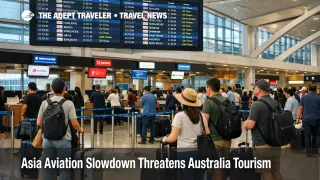
Australia tourism slowdown risk is becoming easier to see in the aviation data, even if the downturn is not fully here yet. The pressure is building through the Asia Pacific network that feeds Australia, where airlines are juggling softer pockets of demand, aircraft delivery delays, older fleets, and a new fuel shock that is already forcing surcharges, emergency cost controls, or capacity caution at some carriers. For Australia, the exposure is simple, a large share of future visitor growth still depends on Asian markets and the seats that connect them. Travelers and tourism businesses should treat this as a warning phase, not a confirmed collapse, and watch capacity, fares, and inbound recovery closely through the next few months.
Australia Tourism Slowdown: What Changed
The main change is that Australia's inbound recovery still looks positive on paper, but the buffer around that recovery is thinner than it appeared a few months ago. Tourism Research Australia still forecasts more than 1 million arrivals from China in 2025, with China remaining Australia's second largest inbound market through 2030. But the same forecast also says arrivals from Japan are expected to slip slightly in 2025, and it flags softer than anticipated arrivals from parts of Asia, including South Korea, Japan, China, and possibly India, alongside softer economic conditions and policy changes.
That matters because Australia does not need a full regional aviation downturn to feel pain. It only needs slower growth, thinner schedules, or weaker pricing power across a few major Asian source markets. BITRE's latest international data still show Australia growing, with 44.229 million international passengers in the year ended October 2025, up 9.0 percent year over year, and available seats up 9.3 percent. That is healthy traffic, but it also means the comparison base is now higher. Any Asia-led cooling would hit an Australia market that has already used up much of its easy rebound phase.
Which Travelers and Businesses Are Most Exposed
The most exposed travelers are those relying on competitive one stop or nonstop links between Australia and North Asia or Southeast Asia, especially on leisure routes where fares are sensitive and backup flights matter. The most exposed businesses are destination operators, hotels, airports, and tourism regions that depend on steady growth from China, Japan, South Korea, and Southeast Asia rather than only domestic or long haul Western demand.
Tourism Research Australia's own forecast makes that dependence clear. China is forecast to keep growing as an inbound source market, while Southeast Asia remains a major growth region over the medium term. At the same time, the agency notes that strong Australian outbound demand can temporarily occupy seats that might otherwise support inbound growth on popular regional routes. That is an important mechanism for Australia, because a market can look busy overall while still becoming less favorable for inbound visitors if seat mix, fares, and timing shift the wrong way.
What Travelers Should Do Now
Travelers heading to Australia from Asia, or booking Australia trips that depend on Asian connections, should pay closer attention to schedule depth, not just the headline fare. A cheaper ticket matters less if the route now has fewer weekly frequencies, tighter same day recovery options, or a greater chance of fare increases after booking. That is especially true while some Asia based carriers are openly warning that prolonged fuel stress could force harder decisions on growth or pricing.
For inbound leisure trips, booking earlier is becoming the safer move on routes where Australia depends on Asian feed traffic. Waiting may still work when capacity is stable and competition is strong, but it becomes riskier when airlines face both delayed aircraft deliveries and fuel cost pressure. Travelers should avoid tight self connections, leave more buffer around major events or cruise departures, and favor itineraries with at least one credible backup frequency the same day or next morning.
For operators inside Australia, the decision point is not whether international demand disappears. It is whether growth arrives more slowly, at higher acquisition cost, and with more regional imbalance. Tourism businesses that are highly exposed to one or two Asian source markets should watch forward air capacity, not just hotel pickup, because aviation softening usually shows up first in frequency decisions, fuel surcharges, and route economics.
Why the Warning Signal Is Getting Harder To Ignore
The broader mechanism is that Asia Pacific aviation is still growing, but under strain. IATA's latest chartbook showed Asia Pacific carrying 34.4 percent of global industry RPKs in 2025, with regionwide RPK growth of 7.4 percent and ASK growth of 6.5 percent, so this is not a clean regional contraction story. But that same industry picture sits on top of supply chain stress that is keeping airlines waiting for newer aircraft while older fleets cost more to run and maintain. When higher fuel prices hit on top of that, carriers with weaker margins or more price sensitive customers are the first to rethink growth.
That is why this looks like an early warning sign for Australia rather than a proven tourism slump. The country's official outlook still expects inbound growth, yet the forecast also acknowledges softer arrivals from parts of Asia in 2025, and Australia's visitor economy remains exposed to aviation conditions beyond its borders. In an earlier Adept Traveler article, China Fuel Export Ban Raises Asia Travel Risk we covered how regional fuel and capacity stress could spread through Asia Pacific networks. In another earlier Adept Traveler article, Aircraft Shortages Through 2026: Airbus 62 jets, Boeing 47 Deliveries in July we covered the fleet bottleneck that still limits seat growth. The next decision point for travelers is whether Asia Australia capacity holds through the coming booking cycles, or starts to thin in ways that make Australia trips more expensive and less recoverable.
Sources
- Tourism Forecasts for Australia 2025 to 2030, Tourism Research Australia
- Quarterly Air Transport Chartbook, Q4 2025, IATA
- Reviving the Commercial Aircraft Supply Chain, IATA
- International Airline Activity, BITRE
- Cathay Pacific's 10% Growth Plan Could Change if Fuel Prices Stay High, CEO Says, Reuters
- Korean Air to Shift to Emergency Mode in April Amid Rising Oil Prices from Iran War, Reuters
- Airlines Face Fare Dilemma as Fuel Spike Threatens Travel Demand, Reuters