

Cruise Fuel Surcharges: Asia Move Raises Global Risk
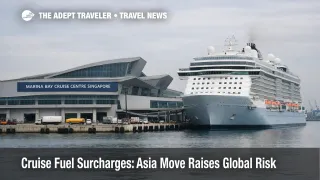
Cruise fuel surcharges are no longer just buried contract language. By April 5, 2026, StarDream affiliated brands had already activated new fuel charges on selected Asia departures booked on or after March 20, while oil markets remained under heavy pressure from the Iran war and disruption around the Strait of Hormuz. For travelers, the immediate risk is not that every major line will add a fee tomorrow. It is that cruise pricing has entered a phase where new bookings, fly cruise math, and bundled value can worsen quickly even before the base fare obviously jumps.
That makes this a planning story, not a rumor story. Norwegian Cruise Line Holdings told Fox News Digital it does not expect an immediate impact on ticket prices or guest experience, and Carnival said it has no plans to change its current pricing model. Those statements lower the odds of an instant broad based surcharge wave across the largest operators, but they do not remove the contractual tools cruise lines already hold if fuel stays elevated.
Cruise Fuel Surcharges: What Changed
What changed is that one part of the market has already crossed from theoretical rights to active collection. Star Navigator departures from Keelung now carry a fuel surcharge of NTD 600 per guest, per night for new bookings made on or after March 20, 2026, and Genting Dream sailings from Singapore and nearby homeports added SGD 15 per guest, per night under the same booking trigger. Both notices say the charge is tied to higher fuel costs after recent Middle East developments and may be revised if fuel prices move again.
That matters beyond Asia because the legal framework is already in place across much of the global cruise business. Royal Caribbean's U.S. ticket contract excludes any fuel supplement from the cruise fare and reserves the right to impose it, while Norwegian's fuel supplement policy says the company may charge up to $10.00 (USD) per passenger per day if West Texas Intermediate rises above $65.00 (USD) per barrel, and that it may apply the charge to existing or new bookings, even if paid in full.
Which Cruise Travelers Face the Most Risk
The travelers most exposed are not necessarily the ones sailing next week on a fully paid Caribbean booking. The higher risk group is people still shopping 2026 sailings, especially longer itineraries, Asia departures, premium cabins, and any trip where airfare to the embarkation port is already a large share of the total vacation cost. In an earlier Adept Traveler article, Cruise Fuel Costs Rise as Oil Hits Wave Season, the warning was that fuel pressure would likely show up first through weaker deal quality, add on pricing, and fly cruise friction, not necessarily through a blunt headline fare jump on day one.
The large public operators also do not enter this period equally exposed. Royal Caribbean said in its 2025 annual report that fuel swap agreements covered 60 percent of its projected 2026 fuel requirements. Norwegian said it had hedged about 51 percent of projected 2026 fuel purchases. Carnival, by contrast, says it manages fuel price risk mainly through consumption and operating efficiency, and Reuters reported it is the only major U.S. cruise line among the big public operators that does not typically hedge fuel. That does not guarantee Carnival or others will impose a surcharge, but it does make a prolonged oil shock more likely to show up somewhere in the pricing stack.
What Travelers Should Do Before Booking
Travelers should read the ticket contract before treating a "paid in full" balance as the end of price risk. The practical threshold is simple. If a line's contract explicitly reserves fuel supplement rights, and oil remains far above the trigger language embedded in some contracts, then the real question is not whether the line can do it. The question is whether commercial conditions force it to use that option. On current reporting, the nearer term consumer risk still looks higher on future bookings and weaker promotional value than on mass retroactive billing across the biggest brands. That is an inference from the mix of existing contract rights, company hedging, and current public statements.
The better booking strategy now is to price the whole trip, not just the cabin. Compare cruise fare, air, hotel, transfer costs, and change flexibility together. Avoid assuming a current perk stack will still be there in a week if oil volatility stays high. For Asia sailings and long haul fly cruise trips, it makes more sense to lock a refundable or flex rate when available than to chase the lowest headline fare with weak terms. Travelers who already hold a booking should monitor fare rules, contract updates, and any notice from the cruise line directly rather than social media rumor threads.
Why Wider Cruise Fuel Surcharges Are Still Limited
Wider cruise fuel surcharges are still limited for three reasons. First, large operators have more tools than a straight surcharge, including weaker promotions, higher bundled air pricing, reduced onboard credit, itinerary efficiency, and selective fare increases on new bookings. Second, hedging gives some lines more breathing room than others. Third, retroactive charges on fully paid guests carry a bigger brand risk than quietly repricing the next wave of inventory. In an earlier Adept Traveler article, Travel Fuel Risk Is Becoming a Refinery Fit Problem, the broader point was that this is not only an oil headline. It is a fuel transmission story that can spread into aviation, marine fuel, and total trip cost through several channels at once.
What happens next depends on duration more than shock value. If oil pressure eases and Strait of Hormuz transit normalizes, the Asia surcharges now in place may remain a regional response rather than a global pricing template. If disruption persists into late April and May, the odds rise that more cruise lines protect margin through higher new booking prices, thinner perks, or targeted supplementary charges where contracts and market conditions allow. The practical traveler conclusion is blunt. Cruise fuel surcharges are now a live risk variable, but the first signal to watch is usually not a surprise invoice. It is a worse deal.
Sources
- Star Navigator Fuel Surcharge Update, StarCruises Guest Notice, March 17, 2026
- Update: Genting Dream Fuel Surcharge, Dream Cruises Guest Notice, March 17, 2026
- Cruise/Cruisetour Ticket Contract, Royal Caribbean
- What Is the Fuel Supplement, Norwegian Cruise Line
- Terms and Conditions of Ticket Contract, Carnival
- Royal Caribbean Cruises Ltd. Annual Report on Form 10-K for Year Ended December 31, 2025, U.S. SEC
- Norwegian Cruise Line Holdings Ltd. Annual Report on Form 10-K, March 2, 2026
- Carnival 2026 1Q 10-Q, Carnival Corporation
- US crude jumps more than 11%, Brent nearly 8% after Trump vows more attacks on Iran, Reuters, April 2, 2026
- OPEC+ agrees to boost oil output when Strait of Hormuz reopens, Reuters, April 5, 2026
- Tanker loaded with Iraqi crude passes through Hormuz, shipping data shows, Reuters, April 5, 2026
- Could cruise passengers soon be hit with a fuel surcharge, MarketWatch, April 4, 2026