

Cruise Fuel Costs Rise as Oil Hits Wave Season
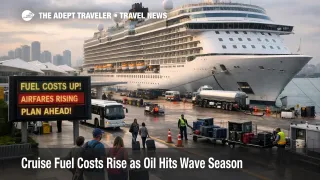
Cruise fuel costs are becoming a real traveler issue, not just a balance sheet problem for operators. Reuters reported on March 16, 2026 that rising oil prices are lifting fuel costs across the U.S. cruise sector, and analysts see Carnival as the most exposed large operator because it does not hedge fuel the way some rivals do. For travelers shopping spring and summer sailings, that matters during wave season, the January through March booking window when cruise lines usually use price cuts and perks to lock demand. The practical move now is to watch whether promotions stop improving, airfare into embarkation cities rises, and lines lean harder on fees, packages, and add ons instead of headline fare cuts.
The change since earlier energy coverage is that operator level exposure is now clearer. Reuters, citing company filings, said a 10 percent fuel cost increase would reduce Carnival's 2026 net income by about $145 million, versus about $57 million for Royal Caribbean, while Norwegian's filings imply a smaller but still meaningful hit after hedging offsets. In plain terms, cruise fuel costs are now uneven across the sector, which means some brands have more room than others to hold discounts, absorb cost spikes, or protect itinerary economics without passing pressure along to travelers.
Cruise Fuel Costs, What Changed for Travelers
What changed is not a port closure or an itinerary collapse. It is that higher fuel is landing during the exact period when many travelers are still comparing offers, deposits, onboard credit, cabin category upgrades, and fly cruise math. Reuters said Brent crude moved above $100 per barrel after rising more than 35 percent since the Iran conflict began, and analysts warned that cruise operators now face a cost squeeze even without direct Middle East sailings in the market.
That matters because the first lever cruise lines usually pull is not the itinerary. It is pricing architecture. A line under more fuel pressure can let discounts weaken, tighten included air offers, reduce bonus onboard credit, push harder on nonrefundable terms, or lean more heavily on shore excursions, beverage packages, specialty dining, and pre cruise hotel bundles to protect yield. Travelers may still see public sales, but the value inside those sales can get worse before the brochure fare obviously rises. Adept's own Wave Season guide already warns that deals do not exist in a vacuum, and the nearby pricing context matters as much as the ad itself.
The next practical traveler effect is on the edges of the cruise, not only the ship. Carnival's own annual report says higher fuel costs can raise guests' overall vacation costs because many passengers depend on airlines to reach embarkation and disembarkation ports, and higher airfare can reduce cruise demand. That is the first order booking risk here, a sailing that still looks available may become less attractive once the air and hotel pieces move against you. Adept's earlier Jet Fuel Shortages Spread as Hormuz Risk Deepens and Travel Costs Rise as Iran War Pushes Up Oil Prices coverage showed how fast fuel pressure can spread beyond the vehicle itself.
Which Cruise Lines Look Most Exposed
Carnival is the clearest exposure story. Reuters reported that it is the only major U.S. cruise line among the big public operators that does not hedge fuel, and Carnival's filing shows the company manages fuel price risk mainly by reducing consumption through fleet optimization, itinerary efficiency, energy efficiency, new technologies, and alternative fuels. That is a real operating strategy, but it does not give the same short term financial cushion as locked in hedges when oil jumps quickly.
Royal Caribbean looks better insulated on current filings. Its 2025 annual report says fuel swap agreements designated as hedges represented 60 percent of projected 2026 fuel requirements, and the company estimated a hypothetical 10 percent increase in weighted average fuel price would raise forecast 2026 fuel cost by about $55 million net of those swaps. Norwegian also has a hedge program, with its 2025 annual report saying it had hedged about 51 percent of projected 2026 fuel purchases and estimating a 10 percent increase in weighted average fuel price would raise anticipated 2026 fuel expense by $66.2 million, partly offset by a $27.6 million increase in the fair value of its fuel swap agreements.
That does not mean Royal Caribbean or Norwegian are immune, and it does not mean Carnival must immediately raise consumer prices. It means the room for maneuver is different. Carnival has the larger immediate profit sensitivity, Reuters noted, and CFRA pointed out that in 2022 its fuel costs rose faster than peers. Royal Caribbean, by contrast, entered 2026 saying wave season was off to a record start, which gives it more commercial cushion if costs stay high. For travelers, the fit question is simple. The brands with better hedging or stronger demand momentum may be able to preserve promotional value longer, while the most exposed lines may need to protect margin sooner through softer discounts or more aggressive ancillary selling.
What Travelers Should Do Before Booking
The immediate move is to price the whole trip, not just the cruise fare. Compare the cabin cost, taxes and fees, airfare, pre cruise hotel, transfers, insurance timing, and any line sponsored air or hotel package on the same day. A headline fare that looks flat can still become a worse deal if air into PortMiami, Fort Lauderdale, Barcelona, Rome, or Athens keeps rising. If the cruise is date critical, treat a stable total price as the real buy signal, not a slightly bigger onboard credit.
The decision threshold for booking versus waiting is also getting sharper. Book now if you need a specific week, itinerary, or cabin category, and the total trip price still works with at least one full buffer night before embarkation. Wait only if you are flexible on sailing date, ship, and cabin type, and you can absorb the risk that promotions may stop improving even if public sale language stays loud. Adept's Wave Season page is right on this point, the best looking offer is not always the best booking when airfare and operational conditions are moving underneath it.
Over the next 24 to 72 hours, watch for three signals that the fuel story is turning into a consumer problem. First, operators keep the sale banner but stop sweetening perks. Second, fly cruise pricing worsens faster than the cruise fare itself, especially on Europe sailings and longer Caribbean departures that depend on air from inland U.S. markets. Third, cruise companies or analysts start talking more openly about yield protection, softer discounting, or itinerary efficiency. Those are the signs that cost pressure is moving out of investor language and into the traveler checkout experience.
Why Higher Oil Can Spread Through Cruise Pricing
The mechanism is straightforward. Cruise ships burn heavy fuel oil, marine gas oil, and related marine fuels, so when oil prices jump, operating costs rise unless a line has already locked in part of that exposure with fuel swaps or other hedges. If the increase is sudden, lines usually try to protect profit without disrupting the product. That means they first work on consumption, revenue mix, and commercial terms before they touch itineraries.
That is why the second order effects matter more than an immediate schedule cut. A cruise line can tweak deployment pace, sailing economics, package value, and onboard monetization long before travelers see a canceled voyage. The pressure also spreads into shore excursions and hotel packages around embarkation markets if lines try to hold headline fares steady while making more money elsewhere in the trip. For Europe sailings, Reuters said analysts already see a risk that consumers become more hesitant on higher priced transatlantic trips, which is exactly where the full vacation budget, not just the cruise ticket, gets exposed.
There is another reason this matters now. None of the major U.S. lines had direct ship exposure in the Middle East when the conflict began, according to Reuters, so this is not mainly a rerouting story. It is a cost transmission story. Oil moved, operator exposure became easier to compare, and wave season shoppers are still in market. That combination can change what counts as a good deal very quickly. Travelers do not need to assume a fuel surcharge announcement is coming tomorrow. They do need to assume that cruise fuel costs are now one of the main variables shaping whether current offers get better, hold, or quietly get worse.
Sources
- US cruises sail into higher costs as oil prices rally; Carnival could be hardest hit, Reuters
- Carnival Corporation & plc Annual Report on Form 10-K for fiscal year ended November 30, 2025, U.S. SEC
- Royal Caribbean Group Annual Report on Form 10-K for fiscal year ended December 31, 2025, U.S. SEC
- Norwegian Cruise Line Holdings Ltd. Annual Report on Form 10-K for fiscal year ended December 31, 2025, U.S. SEC
- Royal Caribbean Group Reports 2025 Results, Issues 2026 Guidance, Royal Caribbean Group
- Wave Season, The Adept Traveler
- Jet Fuel Shortages Spread as Hormuz Risk Deepens, The Adept Traveler
- Travel Costs Rise as Iran War Pushes Up Oil Prices, The Adept Traveler