

Galveston Cruise Port Expansion Maps Next 20 Years
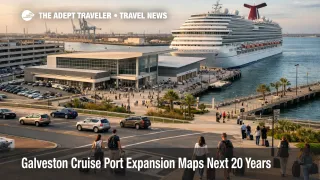
The Galveston cruise port expansion just moved from fast growth into a long range buildout plan. On February 11, 2026, the Galveston Wharves Board adopted an updated 20 year master plan that would add up to three more cruise berths, more on site parking, hotels, retail, waterfront space, and a larger cargo footprint. For travelers, the main point is timing. Galveston is not getting three new terminals overnight, but the port is signaling that cruise volume, pre cruise hotel demand, parking demand, and Harborside access pressure are all expected to keep rising from here.
Galveston Cruise Port Expansion, What Changed
What changed is that Galveston now has an approved roadmap sized for a much larger homeport role. The port says it is already the fourth ranked cruise home port in the United States, with four cruise terminals and a 2026 projection of 445 sailings and 3.9 million passenger movements. The updated plan lays out a fifth cruise berth with parking around 2028, a sixth in the mid 2030s, and a seventh in the 2040s, with total cruise capital needs of about $1.46 billion inside the broader $2.4 billion program.
That makes this a structural capacity story, not a same day booking change. A traveler sailing from Galveston this year should not expect an instant jump in terminal choice or a sudden drop in embarkation friction just because the plan is approved. The closer near term signal is that the port expects growth to continue after opening its fourth terminal in late 2025, which means existing traffic, hotel, and parking pinch points are more likely to stay relevant while new infrastructure catches up. In an earlier Adept Traveler article, Winter Storm Fern Galveston Cruise Returns Early, the pressure point was weather and homeport access. This time, the issue is sustained scale.
Who Benefits First, and What Will Take Longer
The travelers who benefit first are Texas and Gulf Coast cruisers who use Galveston as a drive to homeport. More terminal and parking capacity should support more sailings and a wider mix of ships over time, which can improve itinerary choice and reduce the need to connect through Florida homeports. The commercial side matters too. The plan envisions one to two limited service hotels, one full service hotel, about 600,000 square feet of additional retail, waterfront walkways, and recurring multifamily housing along Harborside Drive aimed partly at hospital and port workers. That points to a cruise district that is easier to use for one night stays, early arrivals, and embarkation morning logistics.
What takes longer is the part travelers usually notice only when it breaks. Cargo growth is also built into the same strategy. The port's planning materials show cargo moving from about 3 million tons a year to more than 5 million tons over the next five to 10 years, with more acreage, rail work, berths, and west port investment. If cruise demand and cargo demand rise together before roadway and circulation upgrades fully land, the risk is not theoretical crowding. It is more curbside compression, heavier Harborside traffic, and narrower timing margins on embarkation days.
What Travelers Should Do Before Booking
For 2026 and 2027 bookings, treat the Galveston cruise port expansion as a confidence signal, not as proof that embarkation will suddenly feel easier. Travelers should still choose sailings with conservative arrival plans, especially if they are flying into Houston area airports or driving in on busy turnover days. A hotel night before departure remains the safer default for fixed sailings, because the master plan's biggest cruise additions are phased years ahead, not weeks ahead.
The next threshold is where you expect savings. More long term capacity can improve competition and itinerary choice, but it does not guarantee lower total trip cost. Hotel pricing, parking, and fuel exposure can still move the other way, especially if operators keep adding larger ships while energy costs stay volatile. In an earlier Adept Traveler article, Cruise Fuel Costs Rise as Oil Hits Wave Season, the problem was not canceled voyages, but how cost pressure could reshape cruise pricing before travelers saw obvious schedule cuts. Galveston's growth should be read through that same lens. More supply helps, but total trip math still matters.
Why The Port Is Expanding, and What Comes Next
The mechanism is straightforward. The port's first master plan, adopted in 2019, was overtaken by faster than expected cruise growth. Port materials say key projects, including two new cruise terminals, internal roadway work, and cargo expansion, moved ahead quickly enough that the board decided to update the strategy in 2025 and adopt a new version in February 2026. Financially, the port says gross revenue rose from $59 million in 2019 to $87.3 million in 2025 while operating expenses held at about $40 million, and the new capital stack is designed as a mix of port revenues, grants, public private partnerships, and debt.
What happens next is phased execution, not one giant build. The plan presentation says each project can move at the port's direction and at the appropriate time, with five year capital cycles and flexibility to adjust if demand changes. That matters for travelers because Galveston cruise port expansion should make the port more capable over time, but the path there will likely be uneven. The upside is a deeper homeport bench in Texas. The tradeoff is that a busier port can produce more local friction before enough roads, parking, hotels, and people moving space are in place to absorb it. Travelers booking Galveston cruises over the next two to three years should watch ship growth, terminal assignment, parking guidance, and hotel inventory as closely as they watch fares.