

Nepal Everest Rescue Fraud Raises Evacuation Risk
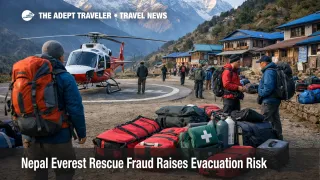
Nepal Everest rescue fraud allegations have turned a safety backstop into a planning risk just as Spring 2026 climbing traffic builds. Nepali authorities have charged 32 people in a scheme centered on allegedly unnecessary helicopter evacuations, forged manifests, and false hospital paperwork tied to nearly $20 million in insurance claims. For travelers heading to Everest or other high altitude routes, the immediate problem is trust, whether an evacuation recommendation is medically necessary, whether paperwork will hold up with insurers, and whether rescue logistics will slow if underwriters tighten scrutiny. The practical move now is to verify operators, confirm how evacuation approval works, and carry documentation strong enough to survive a harder claims environment.
Nepal Everest Rescue Fraud: What Changed
What changed is not the existence of rescue fraud in Nepal. That problem has been on the record for years. What changed is the scale of the latest case and the timing. The Kathmandu Post reported that investigators described a network of trekking firms, helicopter operators, hospitals, and agents staging fake evacuations and inflating claims, while Climbing reported that charges were filed on March 22, 2026 against 32 defendants under Nepal's Organized Crime Prevention Act.
Travelers should also separate the confirmed fraud allegations from the most dramatic claim now circulating internationally. Nepal's Central Investigation Bureau, or CIB, issued a public notice on April 3, 2026 after foreign media reports said guides had poisoned climbers to trigger rescues. The CIB said its investigation had not found evidence that toxic substances were mixed into food, and The Himalayan Times reported the bureau urged media and the public to avoid spreading unverified claims. That does not weaken the insurance fraud case itself. It narrows what is confirmed.
For Spring 2026 travelers, that distinction matters. A real fraud crackdown can change how rescue recommendations, hospital admissions, and insurance approvals are handled even if the most sensational allegation does not hold up. In other words, the headline risk is not only safety. It is friction inside the rescue and reimbursement chain at the moment genuine emergencies still need fast action.
Which Climbers and Treks Face the Most Risk
The most exposed travelers are not only Everest summit teams. They include Everest Base Camp trekkers, clients on guided Khumbu itineraries, and anyone whose plan depends on high altitude helicopter evacuation as the main medical fallback. The fraud allegations center on mountain rescue operations and hospital paperwork, which means the weak point is the handoff from guide decision to helicopter dispatch to insurer reimbursement.
Independent travelers and budget buyers face a sharper version of that risk. If an operator has weak controls, vague rescue language, or unclear hospital relationships, a traveler may not know whether an evacuation recommendation is medically grounded until after the flight is billed. Group clients on reputable expeditions are not immune, but they usually have clearer chain of command, more established medical protocols, and more leverage with insurers if a claim is challenged. In an earlier Adept Traveler article, Nepal Climbing Fees: 97 Peaks Free for Two Years explained how Nepal is trying to tighten risk management around climbing even as it grows the sector. This fraud case pushes that credibility problem back to the center.
There is also a second order risk. Insurers that believe Nepal rescue claims were abused may respond with slower approvals, narrower high altitude terms, more documentation demands, or tougher post-claim review. That does not mean genuine evacuations stop. It does mean travelers should assume the paper trail matters more now than it did before this case broke wider internationally. Beyond the Basics: A Comprehensive Guide to Understanding and Choosing Travel Insurance is a useful refresher on checking exclusions, limits, and claim procedures before departure.
What Travelers Should Do Before Trekking
Travelers heading into Nepal's high altitude trekking system should start with operator due diligence, not gear shopping. Ask who authorizes evacuations, which helicopter company is typically used, which hospital receives patients in Kathmandu, Nepal, and whether the operator can explain the medical trigger for airlift versus descent on foot or ground transfer. A reputable company should answer that cleanly and in writing. If it cannot, that is already a warning sign.
Insurance review now needs to be more exact. Check altitude limits, activity wording, emergency evacuation terms, preauthorization requirements, and what documents the insurer will require after a claim. Save policy numbers offline, carry the emergency contact path on paper, and keep receipts, route records, and any medical notes from the field. If a rescue is recommended, ask for the diagnosis, the reason descent was not sufficient, and copies of the transport and admission documents before leaving Nepal when possible. That is tedious, but it is easier than rebuilding a disputed claim from home.
The decision threshold is simple. Rebook or switch operators if the company is evasive about evacuation procedure, insurance handling, or partner hospitals. Proceed if the operator has a credible safety protocol, transparent rescue escalation, and a history you can independently verify. Travelers already in Nepal should not assume every rescue recommendation is suspect, but they also should not treat helicopter evacuation as an automatic administrative formality. In an earlier Adept Traveler article, Nepal Lifts Movement Limits, Vote Count Risk Remains we noted how Kathmandu transfer and administrative friction can still complicate travel even when movement conditions improve. This case adds another layer of paperwork sensitivity inside the capital's travel system.
What Happens Next for Rescue Oversight
The next phase is likely to be slower and less visible than the headlines. Court proceedings, additional arrests, or amended charges may follow, but the more immediate traveler consequence is operational. Expedition operators, rescue firms, hospitals, and insurers will all be under pressure to document cases more tightly. Nepal's tourism sector is entering its main climbing window while also trying to prove that legitimate rescues remain legitimate, fast, and medically grounded.
The broader mechanism is straightforward. Real helicopter rescues in Nepal save lives, especially where altitude, weather, and distance make rapid descent hard. That same urgency also creates an opening for abuse when paperwork is opaque and insurers are far from the mountain. The Kathmandu Post described exactly that tension, a genuine lifesaving system threaded through with incentives to exploit distance, urgency, and weak oversight. Nepal's challenge now is to protect the rescue system without making travelers slower to seek help in real emergencies.
What travelers should watch over the next 24 to 72 hours is not another sensational poisoning headline. Watch for official statements from Nepal Police, Department of Tourism guidance, expedition operator updates, and any insurer bulletins on high altitude Nepal coverage or documentation. The Nepal Everest rescue fraud story is serious because it can reshape how rescue decisions are trusted and paid for. For Spring 2026 climbers, the safest response is not panic. It is tighter operator screening, tighter insurance review, and a rescue plan that is medically clear before the trek starts.
Sources
- Public Notice Concerning Unverified Media Reports and Misinformation Pertaining to Tourist Fake Rescue Investigations, Central Investigation Bureau of Nepal Police
- Inside Nepal's fake rescue racket, The Kathmandu Post
- No, Everest Climbers Are Not Being Poisoned By Their Guides, Climbing
- CIB refutes 'fake rescue' poisoning claims in Everest region, urges responsible reporting, The Himalayan Times
- Scam in mountains: Nepal probes fake rescue incidents, Anadolu
- Tourism Dept tightens rules for Spring 2026 mountaineering season, The Himalayan Times