

U.S. TSA Privatization Plan Targets Small Airports
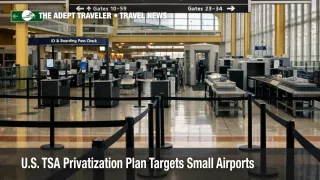
President Donald Trump's new TSA privatization plan is a real policy signal, but not yet an airport checkpoint change travelers will feel this week. The White House budget released on April 3, 2026 would cut TSA funding by $52 million and require small airports to enter the Screening Partnership Program, where private contractors handle screening under TSA oversight. For travelers, the immediate takeaway is restraint. No broad checkpoint transition has been announced, no airport list has been published, and Congress would still need to move the budget forward before this becomes an operational reality.
TSA Privatization Plan: What Changed
The direct change is a federal budget proposal, not an enacted airport security overhaul. White House budget language says the administration wants to "begin the privatization of TSA's airport screeners" by requiring small airports to enroll in the existing Screening Partnership Program, and it argues that airports already using that model have shown savings compared with federal screening. Reuters reported the proposal alongside a $52 million reduction in TSA funding and new money to hire more air traffic controllers. That pairing matters, because the administration is framing this as both a cost move and a way to reduce exposure to future funding fights that have recently battered airport operations.
Travelers should also understand what "privatization" means here. This is not a proposal to remove screening rules or federal oversight. The Screening Partnership Program already exists, and private screeners in that system still operate under TSA standards, procedures, and supervision. The practical difference is who staffs the checkpoint, not whether airport screening disappears. That makes this a structural policy story more than an immediate security lane story, at least for now.
Which Travelers and Airports Matter Most
The most exposed travelers are those who routinely use smaller U.S. commercial airports, especially where there are fewer checkpoint lanes, limited airline competition, and fewer same day rebooking options. If the proposal advances, those airports are the places most likely to see a meaningful staffing model change first. For travelers, that matters less because private screeners are inherently different at the checkpoint, and more because smaller airports have less slack when a transition is uneven, contracts are contested, or staffing ramps take longer than expected.
Large hub travelers still have a stake, but it is more indirect. TSA officers only recently began receiving back pay after the Department of Homeland Security funding fight left airport screening under heavy strain, pushed national absences above 10 percent on some days, and contributed to more than 500 officer departures in recent weeks. Reuters also reported TSA handled a record 904 million passengers in 2024, which means this proposal lands while the system is still carrying high demand and recovering from a staffing shock. First order, the proposal targets smaller airports. Second order, the broader debate could shape hiring, morale, and stability across the network if travelers and airport operators start treating federal screening as less durable in future shutdown fights.
In an earlier Adept Traveler article, U.S. DHS Deal Could Lock In TSA Pay Through Sept. 30 explained why the recent TSA recovery is real but still not fully secure. That context matters here, because the administration is clearly using the shutdown damage as part of its case for shifting some screening away from the traditional federal model.
What Travelers Should Do Before Booking or Flying
Do not assume this proposal changes your next trip unless your airport or airline says something concrete. For most travelers, the correct move right now is to watch for three things: congressional action on the budget, airport authority statements about Screening Partnership Program participation, and any sign that checkpoint performance or staffing guidance is changing locally. If none of those happen, your near term airport experience is far more likely to be shaped by existing recovery from the shutdown than by privatization itself.
If you rely on a small airport for a tight onward connection, a same day cruise embarkation, or a fixed event that cannot slip, keep more buffer than usual until the federal funding picture is genuinely stable. The smarter threshold is not the political headline alone. It is whether your airport publishes a transition notice, whether airlines begin padding schedules or offering flexibility, or whether local checkpoint hours and staffing language start changing. Absent that, rebooking solely because of the TSA privatization plan would be premature.
In an earlier Adept Traveler article, How a government shutdown could affect travel laid out the wider travel mechanics when federal funding breaks down. That remains the more useful traveler playbook right now, because the current operational risk is still uneven staffing and funding durability, not an already executed privatization rollout.
Why This Is Happening, and What Comes Next
The administration's argument is straightforward. The White House says small airports already using private screeners have demonstrated savings, and Reuters reported the budget is designed in part to reduce TSA's vulnerability to congressional funding fights after weeks of airport disruption during the recent DHS shutdown. That is the mechanism behind the proposal. The policy is being sold as cheaper, and as a way to avoid repeating a scenario where unpaid federal screeners become a choke point for the national travel system.
What happens next is much less certain. A budget proposal is not self executing, and the administration has not yet published a public list of which small airports would be required to join the program or how quickly any transition would happen. Skepticism is also rational here. Moving staffing models during a period of recent attrition, persistent aviation safety scrutiny, and ongoing air traffic controller shortages could create its own friction if implementation outruns planning. For travelers, that means the TSA privatization plan is important now as a signal of where federal airport security policy may be heading, but not yet as a reason to change an itinerary unless local facts begin moving.