

U.S. DHS Deal Could Lock In TSA Pay Through Sept. 30
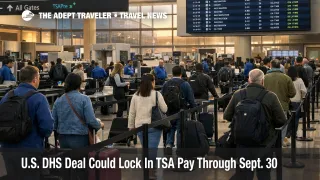
Congress now has a clearer path to stabilize airport screening after weeks of shutdown damage, but travelers should not mistake that for a finished fix. Republican leaders said on April 1, 2026 they were backing a two track plan that would return to the Senate's bipartisan bill funding most of the Department of Homeland Security through September 30, 2026, while leaving Immigration and Customs Enforcement and Border Patrol for a separate party line fight later. That matters for air travelers because TSA pay resumed only after emergency executive action, and the House still had not taken final action as of April 2. For now, the practical move is to treat checkpoint conditions as improved, but still uneven at major hubs.
TSA Pay Through September: What Changed
The operational change is real, even if the legislation is not yet finished. President Donald Trump first moved to restart TSA pay, and workers began receiving retroactive pay on March 31 after more than six weeks without checks. Reuters reported that most officers received at least two full two week paychecks, with the remainder of a partial missed paycheck still to come, and the national absence rate fell to 8.6 percent from 12.4 percent the prior Friday. That helped security lines shrink sharply at airports that had seen waits stretch beyond four hours, including Houston and Atlanta.
What has not changed yet is the legal durability of that recovery. The Senate cleared the way again on April 2 for the House to pass legislation that would end the nearly seven week partial DHS shutdown and fund the department through the end of the fiscal year, but Reuters reported that no House vote had been scheduled and the chamber was next set to meet on Monday, April 6. Trump also said on April 2 that he would extend temporary pay relief to other unpaid DHS employees, which buys time, but it does not replace enacted funding.
Which U.S. Travelers Still Face Screening Risk
The most exposed travelers are still those departing from large airports that took the hardest staffing hit during the shutdown, especially if their trip depends on a same day connection, an early morning wave, or a tight airport to rail or airport to cruise transfer. Even after pay restarted, Reuters said Atlanta still had about 29 percent of screeners absent on March 31, while Houston area airports, Baltimore, New Orleans, New York John F. Kennedy, and Philadelphia remained around 20 percent. That is much better than the peak, but it is not a fully reset system.
This also remains a spring travel volume problem, not just a labor politics story. Reuters reported that airport demand was running about 5 percent above the same period last year, which means a modest staffing shortfall can still turn into an outsized checkpoint delay at the wrong hour. First order, travelers face screening variability. Second order, they face weaker same day rebooking options, more fragile curbside timing, and a higher chance that a short domestic connection fails even when their flight itself is on time.
What Travelers Should Do Before Monday
For trips over the next several days, travelers should keep using a shutdown mindset even though the lines have improved. Arrive with more buffer than you would on a normal week if you are flying from a hub that saw multi hour waits during the crisis. That is especially true if your itinerary starts in Houston, Atlanta, Baltimore, New York, or New Orleans, or if missing the first leg would break the rest of the trip.
The next decision point is House action. If Congress passes the Senate backed bill, the travel system gets a more durable answer for TSA pay through September 30. If the House delays again, the immediate crisis may stay muted because of temporary executive pay action, but travelers should assume staffing recovery could remain patchy. Rebook or build in extra buffer if your trip depends on a tight connection, a nonrefundable same day event, or ground transport that cannot slip.
Travelers should also keep an eye on airline flexibility, not just TSA headlines. In an earlier Adept Traveler article, U.S. TSA Shutdown Travel Waivers Expand at Key Hubs showed how carrier waivers began appearing when checkpoint stress became operationally visible. If screening conditions deteriorate again before Congress acts, airline policy shifts may be the earliest sign that disruption risk is rising faster than the public line times suggest.
Why Airport Recovery Is Still Not Fully Secure
The reason this remains fragile is simple. Back pay solved the immediate cash crisis for TSA officers, but it did not instantly restore staffing, morale, or trust in the agency's funding stability. Reuters reported that more than 500 airport security officers had already quit since mid February. That means even a bill that funds TSA through September would end one risk, unpaid labor, while leaving another risk in place, thinner staffing depth at some of the country's busiest checkpoints.
The broader political mechanism also matters. The current plan separates airport screening stability from the unresolved fight over immigration enforcement funding. That may be enough to get travelers through the spring and summer schedule with fewer surprise checkpoint meltdowns, but it does not create long term insulation from future standoffs after September 30. In an earlier Adept Traveler article, TSA Back Pay Leaves U.S. Airport Recovery Fragile made the same point from the operational side, and the related Adept Traveler signal Airport Security Delays Could Outlast the Shutdown explained why a reopened funding channel is not the same thing as a resilient checkpoint network.
Sources
- Paying Our Great Transportation Security Administration Officers and Employees
- U.S. Senate Daily Press: Home
- Fate of DHS Funding Uncertain as US Congress Republicans Decide Next Steps
- Absences Fall Sharply After US Airport Security Workers Finally Get Paid
- Republican Leaders in Congress Announce Plan to End DHS Shutdown
- Trump Says He'll Sign Order to Resume Pay for Homeland Security