

Saudi Arabia Hotel Security Risk Now Shapes Travel
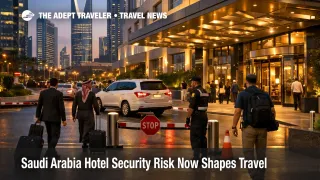
Saudi Arabia hotel security risk is now a lodging and movement problem, not only a flight reliability problem. Smartraveller updated its Saudi Arabia advice on April 8, 2026, to highlight a March 31 U.S. Embassy Riyadh security alert about threats against places where Americans gather, including hotels, U.S. businesses, and U.S. educational institutions, while also saying commercial departure options are available from more locations but schedules can change at short notice. For travelers heading to Riyadh, Jeddah, or Dammam over the next few days, that shifts the main planning question from whether a flight operates to whether the hotel, meeting venue, and daily route are the right ones for the current threat picture.
Saudi Arabia Hotel Security Risk: What Changed
What changed on April 8 is the advisory focus. Smartraveller kept Saudi Arabia at "reconsider your need to travel" overall because of the volatile regional security situation, but it newly emphasized the March 31 U.S. Embassy Riyadh alert warning that hotels and other gathering points used by Americans may be potential targets. The same update says commercial options are available from more locations and that anyone wishing to leave should do so if they can secure a flight and it is safe to travel to the airport, with schedules still subject to short notice change.
That makes this different from the April 5 airport centered phase of the story. In an earlier Adept Traveler article, Saudi Arabia Airports Open, but Flights Stay Fragile, the main issue was whether open airports could still deliver usable departures. The new problem is broader. A traveler can still have a functioning ticket, but the more immediate exposure may sit at the hotel, the office tower, the school campus, or the venue where foreigners gather before they ever reach the terminal.
Which Travelers Face the Most Saudi Arabia Hotel Security Risk
The most exposed travelers are business visitors with fixed meetings, expatriates and long stay visitors in large international hotels, conference attendees, education linked travelers, and anyone whose routine depends on repeated movement between hotel, office, mall, and airport in the major cities. Travelers using Saudi Arabia as a short stopover face less time on the ground, but they are still exposed if they rely on airport hotels, crew hotels, or popular foreigner oriented properties during a volatile period.
The first order effect is a change in where travelers should stay and how they should move. A hotel that looked convenient yesterday may now be a worse choice if it is a known foreign business hub or a common gathering point for Western travelers. The second order effect is that changing hotels, avoiding certain meeting venues, or shifting to shorter ground movements can break carefully timed business schedules, airport transfer plans, and onward domestic flight or rail connections. If localized security action hits one district, the practical result can be last minute hotel rebooking pressure, longer transfer times, and tighter inventory in the safer properties travelers rush toward next.
What Travelers Should Do Now
Travelers who still need to go should recheck hotel selection before departure, not after arrival. The safer operational choice is usually a property with strong controlled access, a shorter transfer from the airport or primary meeting site, and less dependence on long cross city road movements. Travelers already in country should reduce unnecessary time in prominent gathering places, keep documents and medication easy to access, and avoid building a day around one rigid route or one late night transfer.
The main decision threshold is whether the trip can still work with fewer public touchpoints and more slack. If the visit depends on crowded public venues, multiple city crossings, or one specific high profile hotel, the risk has moved far enough that postponing, shortening, or restructuring the trip becomes the cleaner option. If the trip is essential and can be done with a hardened hotel choice, limited movement, and flexible meeting timing, the itinerary may still be workable, but it should be treated as a security managed trip, not a routine business stay.
Over the next 24 to 72 hours, the signals that should trigger a change are fresh embassy or consular alerts, stronger wording from Smartraveller or the U.S. State Department, hotel security posture changes, road restrictions near major properties, and any reduction in flight schedules that would narrow exit options. If one of those shifts appears, travelers should move earlier rather than wait for a full airport shutdown, because the advisory language already points to a threat environment where schedules and local access conditions can change quickly.
Why the Risk Has Spread Beyond the Airport
The mechanism is straightforward. In a volatile regional security environment, an airport can remain open while the practical pressure shifts to the ground network around the traveler. Hotels, business sites, educational institutions, transport hubs, and other places foreigners use routinely are softer and more distributed targets than one terminal building, which means the traveler problem becomes dispersed across the full stay, not concentrated only at departure time. That is why current official advice combines flight flexibility language with warnings about gathering points and broader terrorist risk.
What happens next depends on whether the threat picture stays at the advisory stage or produces more visible local security measures. For now, the serious point for travelers is that Saudi Arabia is no longer only a flight status story. The next decision point is hotel choice, route discipline, and how quickly a traveler can leave if alerts tighten again. That makes Saudi Arabia hotel security risk the key planning issue in the final days before departure and in the first hours after arrival.