

Schengen EES Goes Live, Border Timing Changes Today
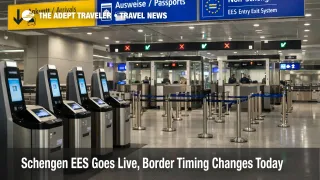
The Schengen area's Entry/Exit System is fully live on Friday, April 10, 2026, which means many non EU short stay travelers now face a less predictable first border crossing than they did a week ago. The operational shift is not just the end of passport stamping. It is the start of biometric registration at scale, with a face image, passport data, and, for adults and children age 12 and over, fingerprints now being recorded for many first entries. Travelers with tight same day rail, ferry, flight, or road connections should build more slack into the first Schengen crossing of a trip, because the main risk is no longer the rule itself, but how unevenly each border point absorbs the extra processing time on day one.
Schengen EES Border Timing: What Changed
As of April 10, the European Commission says the Entry/Exit System is fully operational after a phased rollout that began on October 12, 2025. The system replaces manual passport stamping for covered short stay non EU travelers across 29 participating countries, including France, Germany, Spain, Italy, the Netherlands, and the non EU Schengen states Iceland, Liechtenstein, Norway, and Switzerland. Ireland and Cyprus remain outside EES, so passport stamping continues there.
For airport travelers, that shifts the first pressure point to immigration and document control on arrival, especially at larger Schengen gateways where long haul passengers, short haul bank arrivals, and onward same day connections compress into the same border window. For rail, ferry, and road travelers on some UK linked routes, the friction can start before departure instead. The UK government says EES registration for Eurostar at London St Pancras, Eurotunnel LeShuttle at Folkestone, and the Port of Dover takes place before leaving the UK, which means missed boarding can now happen before a traveler has even crossed the Channel.
The seriousness is real, but it is not uniform. Official guidance says checks should take only a few minutes per person, yet both Smartraveller and the UK government warn that longer border waits are possible as the system beds in. That makes the most fragile itineraries the ones built on old border timing assumptions, short self transfers after landing, rail bookings that leave no recovery time, cruise embarkations reached by same day train, and Channel crossings tied to fixed onward appointments.
Who Faces the Most Exposure on Day One
The core exposure group is non EU nationals entering Schengen for a short stay, whether they are visa free or travelling on a short stay visa. The system applies on first entry across the participating EES countries, and repeat travelers within three years should usually face a lighter step, because the digital record already exists and only one biometric check may be needed on later entries and exits.
Not everyone is in scope. EU and EES country nationals are outside the system, as are travelers covered by several exemption categories, including many residence permit and long stay visa holders, some family members of EU citizens, certain researchers, students, intra corporate transferees, local border traffic permit holders, and some rail crew. Children under 12 can still be registered, but they are exempt from fingerprint collection. That matters for family trips because a party with young children may still move more slowly at a first registration point even if fingerprint capture is not required for every child.
The highest disruption risk sits in corridors where border control is physically compressed. Airports can spread queues across larger halls, but cross Channel travel often funnels border control into hard pre departure cutoffs. In an earlier Adept Traveler article, Channel EES Checks Stay Uneven at UK-France Crossings, the issue was already operator by operator inconsistency. That remains relevant on go live day because legal full operation does not guarantee identical passenger flow at St Pancras, Dover, Folkestone, ferry terminals, and every continental arrival point.
What Travelers Should Do Now
The immediate move is simple. Add extra buffer to the first Schengen entry of the trip, not just to the flight or train itself. At airports, the biggest gap should be between scheduled arrival and any onward self connection, intercity rail ticket, tour departure, or rental car pickup with a hard close time. At rail and ferry touchpoints, the bigger change is psychological as much as logistical, ticketed departure time is no longer a safe proxy for when terminal processing begins.
For Eurostar, follow the arrival time on the ticket rather than trying to shave minutes. Eurostar says the recommended time already accounts for border checks, and the UK government says pre departure EES registration applies at St Pancras for covered travelers. For Dover and LeShuttle, treat the crossing as a border controlled process that starts in the terminal approach and check in flow, not at the French side after boarding.
The rebook versus wait threshold depends on what breaks if the first border crossing runs long. If the trip includes a protected airline connection on one ticket, the risk is lower than a self built airport to rail or rail to ferry chain. If missing the first segment would collapse a hotel night, cruise embarkation, or event booking, preserving margin is worth more than preserving an aggressively tight schedule. Travelers should also carry the same passport used for any booking data, check that it remains valid under Schengen rules, and remember that EES is free, there is nothing legitimate to buy in advance for this system.
Why the Border Rhythm Changes From Here
The mechanism is straightforward. EES replaces a quick stamp with a digital border event that may include passport scanning, face capture, and fingerprint collection, then links that record to future entries and exits. On paper, that should modernize control and eventually reduce friction for repeat travelers. In practice, go live day shifts time risk to the first contact point where passenger volume, terminal design, staffing, and equipment throughput all meet at once.
That is why this is more than an immigration rule story. First order, some travelers take longer to clear the border. Second order, the delay spills into check in cutoffs, onward rail windows, road pickup timing, coach staging, and hotel arrival patterns, especially where a missed crossing means waiting for the next fixed departure rather than simply joining a longer line. In an earlier Adept Traveler article, Europe EES Boarding Checks Tighten on April 10, the risk was tightening pre departure checks before go live. On April 10, the story becomes whether each border point absorbs that change cleanly or turns it into a visible queue problem.
What happens next is likely a short period of uneven traveler experience rather than one continent wide failure. Airports with higher long haul volumes, Channel crossings with pre departure French controls, and any border point handling holiday surges are the places to watch first. ETIAS is separate, later, and not live yet, so travelers should not confuse today's EES launch with a new pre trip authorization requirement. The next practical signal is operator guidance on the ground, same day warnings about queue times, early reports from major hubs, and whether first entry waits settle down once more travelers already have an EES record in the system.
Sources
- The Entry/Exit System Will Become Fully Operational on 10 April 2026, European Commission
- A Modern, More Efficient Border Management System for Europe, Travel to Europe, European Union
- EU Entry/Exit System, GOV.UK
- Entry/Exit System: New EU Border Checks for Brits This Easter, GOV.UK
- France Travel Advice and Safety, Smartraveller
- Check Travel Requirements Between the UK and EU, Eurostar