

Europe Jet Fuel Shortage Threatens Summer Flights
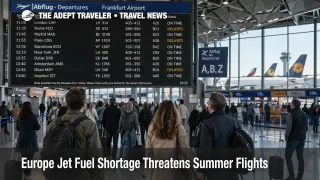
Europe jet fuel shortage risk is no longer only a pricing story. Reuters reported on April 10 that ACI Europe warned the continent could face a systemic jet fuel shortage within three weeks unless Strait of Hormuz flows recover, while the European Commission said the broader oil market is stable for now but singled out jet fuel as the main concern because EU refineries cover about 70% of consumption and the rest depends on imports. For travelers planning Europe departures, connections, or summer leisure trips, that changes the practical question from whether fares rise to whether schedules, recovery options, and same day backup plans start thinning before peak season.
Europe Jet Fuel Shortage: What Changed
What changed is that the risk has moved from airline warning to system level supply warning. Reuters reported on April 10 that ACI Europe told the European Commission a prolonged disruption could create a continent wide jet fuel crunch within three weeks. That is a more serious signal than a carrier complaining about fuel costs, because airports are now warning about physical availability ahead of the summer peak, not just margin pressure.
The operating picture is also different from a normal airfare spike. When fuel gets expensive, airlines can try to pass through some of the cost, trim weaker frequencies, or accept lower margins. When fuel availability itself tightens, carriers and airports have to protect the most important flights first, preserve minimum network integrity, and make harder choices about where limited slack goes. That is how a fuel story turns into a schedule resilience story, with misconnect risk, fewer replacement seats, and more overnight disruption when one flight fails.
Which Travelers and Airports Look Most Exposed
The most exposed travelers are not necessarily the latest bookers or the people paying the highest fares. The bigger risk sits with passengers using thinner leisure routes, secondary airports, once daily frequencies, and tight onward connections that depend on one successful sector. Reuters reported on April 1 that Ryanair would start looking at cancellations if jet fuel supply is at risk in June, July, or August, which is a direct warning about schedule vulnerability rather than only higher operating cost.
Geographically, the UK deserves close attention, because Reuters reported on April 1 that Ryanair sees it as Europe's most vulnerable market due to its supply links, including Kuwaiti fuel. Northern Italy also matters because Reuters reported on April 7 that local suppliers had to step in after temporary shortages threatened Milan Linate Airport (LIN), Venice Marco Polo Airport (VCE), Treviso Airport (TSF), and Bologna Guglielmo Marconi Airport (BLQ). Those Italian airports avoided operational fallout, but the episode showed how quickly a local supply hiccup can move from commodity stress to airport level constraints.
Europe's exposure is structural, not just local. IATA said in March that 25% to 30% of Europe's jet fuel demand comes from the Persian Gulf, and that Europe's commercial inventories typically amount to just over one month of demand. That does not mean all of Europe runs short at once. It means markets with less redundancy, more import dependence, or fewer alternative frequencies are likely to feel pressure first.
What Travelers Should Do Now
Travelers flying in Europe this summer should put more weight on schedule depth than on a small fare difference. A cheaper ticket loses value fast if it sits on a once daily route, the last departure of the day, or a self connection with no recovery path. The practical move now is to favor itineraries with multiple same day alternatives, longer connection buffers, and tickets that allow changes without a severe penalty.
There is also a clearer decision threshold than there was a week ago. On high frequency trunk routes through major hubs, waiting can still be rational because airlines have more ways to recover the itinerary. On monopoly routes, island links, secondary city pairs, or trips chained to cruises, ferries, tours, or nonrefundable stays, early flexibility is worth more now. In an earlier Adept Traveler article, Ryanair Europe Fuel Warning Raises Summer Flight Risk, the warning was still mostly about what airlines might do. In another, Italy Fuel Limits Sharpen Europe Summer Flight Risk, the issue had already started showing up at airport level.
The warning signs to monitor before departure are fairly specific. Watch for airport fuel advisories, quiet cuts to weaker frequencies, route suspensions on leisure heavy networks, and carrier language that shifts from fuel price discussion to fuel availability discussion. If those signals broaden through late April and May, Europe jet fuel shortage risk will become a real summer operations problem, not just another reason fares went up.
Why the Risk Is Bigger Than a Fare Story
The mechanism is simple. Europe still refines most of its own jet fuel, but not all of it, and the imported slice is the vulnerable one. The European Commission said on April 10 that there is no immediate general risk to EU oil and gas security, yet it also said jet fuel remains the primary concern because about 30% of consumption depends on imports. IATA's March analysis adds the second pressure point, Europe's limited inventory cushion and the difficulty of replacing Gulf supply quickly when Asian buyers and shipping constraints are competing for the same barrels.
That is why this is operationally different from a normal fare increase. Price pain can be spread across tickets. Physical tightness hits specific airports, routes, and dayparts unevenly, then spreads through aircraft rotations, crew duty limits, reaccommodation capacity, and hotel demand when a disrupted bank of flights does not recover cleanly. The next step to watch is whether the current warning stays a contingency exercise, or whether more airports begin showing the kind of localized strain Italy already experienced.
Sources
- Europe could face jet fuel crunch within weeks, airports body warns, Reuters
- Energy Union Task Force calls for enhanced EU-wide coordination to safeguard energy security, European Commission
- Middle East Conflict Exposes Jet Fuel Supply Vulnerabilities, IATA
- Ryanair will consider cancelling flights if jet fuel supply disrupted from June, CEO says, Reuters
- Local suppliers avert jet fuel disruption at four Italian airports, sources say, Reuters