

U.S. Airfares Rise as Summer Booking Risk Builds
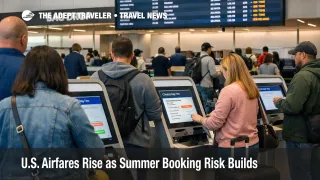
U.S. airfares rise is no longer just a March inflation datapoint. It is becoming a forward looking warning for summer travelers, because the March Consumer Price Index showed another seasonally adjusted fare increase, while airlines have since widened bag fee hikes and started protecting margins with tighter pricing and more selective schedule discipline. For travelers booking domestic trips, Caribbean breaks, Mexico flights, or short haul international itineraries from the United States, the practical change is simple, the cheap fallback option is getting harder to find, and waiting for a better fare may now mean paying more for fewer convenient choices.
U.S. Airfares Rise: What Changed
The Bureau of Labor Statistics said airline fares rose 2.7 percent in March on a seasonally adjusted basis, after a 1.4 percent rise in February, and were up 14.9 percent from March 2025. That makes March the third straight month of seasonally adjusted airfare increases, which shifts the story from a one month spike to a clearer pricing trend.
What changed after March is what makes this more important for forward planning. Reuters and AP both reported that airlines have been passing through higher fuel costs not only through ticket prices, but also through ancillary charges and more cautious capacity decisions. American and Alaska raised checked bag fees on April 9, 2026, joining a broader U.S. carrier move that already included Delta, Southwest, United, and JetBlue. American also made Basic Economy less forgiving from May 18, 2026, by adding a higher bag charge and stripping out some seat selection and upgrade benefits.
Fuel is the mechanism behind this reset. IATA's Fuel Price Monitor said the global average jet fuel price last week rose 7.1 percent week over week to $209.00 (USD) per barrel. Reuters separately reported that jet fuel had been averaging about $85 to $90 per barrel in February before surging during the recent Middle East conflict and shipping disruption around the Strait of Hormuz.
Which Travelers Will Feel the Price Reset First
Leisure travelers shopping by headline fare are the most exposed, especially those booking late, traveling on weekends, or flying on routes where a checked bag is effectively mandatory. A family that once could choose the cheapest base fare and decide on extras later now faces a different equation, because the base fare may be higher, the bag fee may be higher, and the next cheapest backup flight may have a worse schedule.
The first order effect is more expensive booking. The second order effect is weaker itinerary resilience. When airlines protect margins during a fuel shock, they do not always need to slash whole networks to change traveler behavior. Sometimes they raise the fare, keep fewer bargain seats open, push more revenue into bags and seat assignment, and let inconvenient timings become the cheaper alternative. That is why a moderate CPI fare increase can still translate into a noticeably harsher booking experience on the consumer side.
Budget conscious travelers are likely to feel this before premium flyers, but premium travelers are not insulated. AP reported that fewer flight options and tougher tradeoffs are spreading across the market, not just the low fare end. Business travelers and summer long weekend flyers may not see the sharpest sticker shock on every route, but they can still lose schedule quality as airlines trim growth and defend yields instead of chasing volume.
What Travelers Should Do Before Summer Fares Climb Further
Travelers with June through August trips should stop treating this like a wait and see fare dip story. The stronger move now is to price the full trip, including at least one checked bag, seat selection where needed, and any likely change costs, then compare that total across carriers rather than comparing base fares alone. In an earlier Adept Traveler article, U.S. Bag Fees Rise Again as Basic Economy Splits, the site documented how quickly the bag fee side of the equation has already shifted.
Rebook early rather than late if your trip depends on nonstop service, a short connection, or a high demand holiday window. Wait a little longer only if your dates are flexible, your route is served by multiple carriers, and you can tolerate a less convenient departure time. The main threshold is whether losing the current itinerary would force a worse airport, an overnight, or an extra bag charge that wipes out any hoped for fare savings.
Over the next few weeks, watch three signals, fuel prices, additional fare or surcharge announcements, and any signs that airlines are slowing growth or consolidating flying on weaker routes. In an earlier Adept Traveler article, Global Airfare Hikes Spread as Fuel Squeeze Widens, the site showed that this pass through was already broadening internationally. The U.S. market now looks less like an exception and more like part of the same pattern.
Why the Booking Math Is Changing, and What Happens Next
The operational issue is not only that fuel got more expensive. It is that airlines are trying to decide how much of that cost shock they can pass through without damaging demand. That creates a more selective market. Strong routes can absorb higher fares more easily. Marginal routes are more likely to lose discount inventory, lose frequency, or become less attractive once bag fees and schedule penalties are added back in.
There is some uncertainty in the outlook because oil and jet fuel have been volatile, not just high. AP reported that oil briefly fell after ceasefire news, but then climbed again as the durability of that relief came into question. That means travelers should not assume that one softer day in energy markets will quickly reverse airline pricing. Airlines usually reset consumer pricing and ancillary fees faster than they unwind them.
The likely next phase is a less promotional U.S. summer market, not an immediate fare explosion on every route. Travelers should expect pockets of resistance on competitive corridors, but the broader direction points to firmer fares, higher trip totals, and less forgiveness for late booking mistakes. That is a structural change in booking behavior, not just a noisy inflation print.
Sources
- Consumer Price Index Summary, 2026 M03 Results, Bureau of Labor Statistics
- Fuel Price Monitor, IATA
- Price Hikes, Outlook Cuts, What Airlines Are Doing as Fuel Costs Surge, Reuters
- American Airlines, Alaska Air Hike Checked Baggage Fees Amid Soaring Fuel Prices, Reuters
- Delta Hits Brakes on Growth Plans as Fuel Spike Reshapes Airline Economics, Reuters
- Travelers Face Higher Costs and Fewer Flight Options as Jet Fuel Prices Swing, AP News