

Barcelona Tourist Tax Rises From April 2026
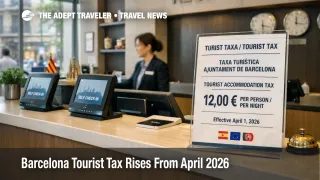
Barcelona tourist tax changed on April 1, 2026, and the increase is now large enough to alter trip math for hotels, short term rentals, and cruise calls in Barcelona, Spain. The biggest visible hit is at the top end of the market, where five star stays in the city now carry a total tax of €12.00 (EUR), about $13.60 (USD), per person, per night. Travelers booking Barcelona as a multi night base, adding family rooms, or stacking hotel nights before a cruise should now treat the tax as a real line item, not a minor add on.
Barcelona Tourist Tax: What Changed
The official rates published by the Catalan tax agency show that Barcelona city now applies a €5.00 municipal surcharge on top of the regional stay tax through March 31, 2027. That puts the total nightly charge at €12.00 for five star hotels, €8.40 for four star hotels, €9.50 for dwellings for tourist use, €6.00 for youth hostels, and €7.00 for other campsites and establishments. Cruise passengers are also affected. Those in Barcelona for more than 12 hours now pay €9.00, while those staying 12 hours or less pay €11.00.
That makes your source draft directionally correct, but not fully accurate. Reuters reported in February that visitors could face rates as high as €15.00 per night after Catalonia approved the law, but the current official Barcelona city schedule in force from April 1 shows the practical cap for ordinary Barcelona city stays at €12.00, with the €15.00 figure tied to the broader legislative ceiling rather than the current city surcharge now being collected. For travelers, the operational point is simple: use the official current tariff table, not early headline numbers, when pricing a stay.
Which Barcelona Trips Feel the Increase Most
The increase matters most for travelers staying several nights in central Barcelona, groups paying tax per person rather than per room, and cruise passengers who assumed port day fees would stay modest. A couple spending two nights in a four star hotel now faces €33.60 in city and regional stay taxes alone, before any VAT effect on the tax charge itself. A family or small group using a short term rental can also feel the increase quickly because the dwelling for tourist use rate in Barcelona city is now €9.50 per person, per night.
Cruise passengers should pay special attention because short Barcelona calls are now taxed more heavily than longer ones. The official table sets a €9.00 charge for cruise stays above 12 hours, but €11.00 for 12 hours or less. That means a brief port call can now carry a higher per person tax than some travelers expect, and it may not always be surfaced clearly in headline cruise pricing.
What Travelers Should Do Before Booking
Travelers should now price Barcelona with the full stay tax included before comparing it against other Catalan bases or alternate Mediterranean gateway cities. The extra cost is not trip ending on its own, but it is large enough to change whether a luxury hotel still feels worth it, whether a one night pre cruise stay should move outside the city, or whether a rental still beats a hotel on total cost.
The next decision point is booking transparency. Check whether the accommodation collects the tax at booking or on arrival, because the Catalan tax agency says the applicable rate for advance bookings depends on when the reservation and tax were paid. Cruise travelers should also verify whether Barcelona port taxes are already bundled into the fare or charged separately in the final onboard account or port fee line.
It also makes sense to widen the planning lens beyond the tax itself. In an earlier Adept Traveler article, Cruise Growth Raises Port Fees and Crowd Controls we noted that Barcelona is already tightening cruise capacity and mobility management. In another earlier Adept Traveler article, Spain Court Backs Crackdown on Airbnb Rentals to Ease Housing Crisis we covered the wider Spanish push to constrain non compliant tourist rentals. Together, those moves point to a city that is not just charging more, but also trying to reduce the pressure points that mass tourism creates in housing and transport.
Why Barcelona Is Raising Costs, And What Happens Next
The mechanism is political and structural, not merely fiscal. Reuters reported that Catalan authorities advanced the increase as resident anger over overtourism and housing pressure grew, and that 25 percent of the revenue is meant to support housing related needs. Reuters also reported that Barcelona hosted 15.8 million tourists last year and that the city still plans to ban all short term rental accommodation by 2028. That means the tax increase is part of a broader tourism management strategy, not a stand alone revenue grab.
What happens next is less about an immediate demand collapse and more about continued cost layering. First order, travelers will see higher stay costs in hotels, rentals, and cruise visits. Second order, some demand may shift toward lower tax property types, shorter stays, or bases outside Barcelona city proper. The city is also likely to keep tightening the supply side, especially around tourist rentals and cruise handling, if political pressure from residents stays high. Travelers planning summer and shoulder season visits should expect Barcelona to remain bookable, but less forgiving on price, less flexible on low cost short term lodging, and more deliberate about managing visitor volume.
Sources
- Tax on stays in tourism establishments in Catalonia, Agència Tributària de Catalunya PDF
- Cuota tributaria y tarifas, Agència Tributària de Catalunya
- Barcelona doubles tourism tax to one of highest in Europe to fund housing, Reuters
- Cruise Growth Raises Port Fees and Crowd Controls, Adept Traveler
- Spain Court Backs Crackdown on Airbnb Rentals to Ease Housing Crisis, Adept Traveler