

Peru GNV Shortage Hits Lima Ground Transport
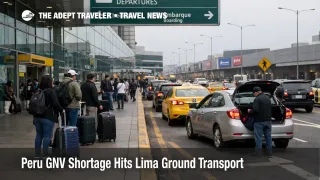
Peru travelers should treat the Peru GNV shortage as a ground transport problem, not just an energy story. The U.K. Foreign, Commonwealth and Development Office, or FCDO, currently warns that Peru remains under a State of Emergency, that travelers should avoid large gatherings and protests, and that emergency measures tied to the Camisea gas pipeline rupture have caused shortages of natural gas for vehicles, known locally as GNV. For anyone moving through Lima, Peru, and Callao, that changes how reliable taxis, ride-hail pickups, hotel transfers, and some road-based tour timing can be. Travelers with flights, long distance buses, or fixed check-in times should add buffer and avoid same day transfer assumptions that leave no margin.
Peru GNV Shortage: What Changed
What changed is the type of transport weakness travelers need to plan around. The current FCDO advisory does not frame Peru only as a protest or security destination. It specifically links the State of Emergency to a rupture of the Camisea gas pipeline and says the resulting natural gas shortage is disrupting GNV supply for vehicles. The advisory also notes temporary measures in Lima and Callao, including remote working in the public sector and remote classes, that were introduced to reduce movement pressure during the shortage.
That matters because GNV is not a niche fuel in Peru's urban transport system. During the March emergency phase, Peruvian officials and state media said restrictions fell most heavily on light vehicles, including taxis and mototaxis, while authorities prioritized residential use, essential services, and mass public transport. Reuters also reported on March 5 that Peru suspended natural gas exports as it dealt with what officials described as the country's worst energy crisis in two decades after the pipeline rupture.
For travelers, the first order effect is not necessarily a dramatic shutdown. It is a less forgiving city. Airport runs can take longer to secure, ad hoc taxi availability can tighten, and transport pricing can become less predictable when part of the vehicle fleet is constrained by fuel access rather than pure traffic alone.
Which Travelers Face the Most Disruption
The most exposed travelers are the ones depending on road precision. That includes passengers heading to Jorge Chávez International Airport (LIM), travelers arriving late and expecting a routine hotel transfer, people using bus terminals for intercity departures, and anyone trying to stack a flight, road transfer, and same day tour or cruise connection into one chain.
Lima and Callao matter most because the official response cited by the FCDO was concentrated there, and because that metro area handles the country's main international gateway. A citywide transport wobble does not need to shut the airport to damage itineraries. It only needs to make the last mile, or the first mile after arrival, less reliable.
Travelers moving outside the capital should not assume the issue stops at city limits. A fuel shortage affecting vehicle fleets can spill into wider road transport planning through delayed pickups, weaker backup vehicle capacity, and more fragile schedules for tours or onward bus legs. The exposure is highest for travelers arriving without a prebooked transfer, with limited Spanish, low cash on hand, or a plan that leaves no room for delay. In an earlier Adept Traveler article, Peru travel advisory: What U.S. travelers need to know, the main traveler lesson was to expect periodic disruptions and build extra time around Lima movements. The current Peru GNV shortage makes that advice more transport specific.
What Travelers Should Do Now
Build slack into every road movement linked to a flight, bus, or timed activity. For Lima airport runs, a prearranged hotel car or vetted transfer is a safer choice than assuming app based supply will appear at the normal price and normal speed. If you are arriving at night, land with a clear pickup plan, working data, and enough cash for a longer or more expensive transfer if needed.
The rebook versus wait decision depends on how tight your itinerary is. If missing the transfer would only cost convenience, adding buffer may be enough. If missing it would break a nonrefundable domestic flight, an overland crossing, a Machu Picchu sequence, or a cruise embarkation, the safer move is to shift earlier, overnight near the departure point, or split the itinerary into more defensible pieces. Travelers with early morning departures should think hard about staying closer to the airport the night before.
Monitor the next 24 to 72 hours through official advisories, your airline, your hotel, and local transport providers. Watch for signs that protests are broadening, that security controls are slowing movement further, or that transfer operators are starting to bake in extra time or surcharge language. For broader context on how advisory changes can alter planning, insurance expectations, and rebooking logic, Current Travel Advisories 2025: What U.S. Travelers Must Know remains a useful reference point.
Why the Transport Risk Can Outlast the Headline Shock
The mechanism is straightforward. When a major gas pipeline rupture triggers rationing and emergency measures, the strain does not stay inside the energy sector. It moves into mobility. Peru's system response was designed to preserve household supply and essential services first, which means some road based traveler services become the adjustment layer. That is why a fuel specific shortage can show up as a transfer problem, a queue problem, or a timing problem before it shows up as a formally canceled trip.
The security side adds another layer. The FCDO says the State of Emergency brings increased patrols and a visible armed forces presence, while also warning travelers to avoid protests and large gatherings. That does not automatically mean widespread closure, but it does mean city movement can become more brittle when traffic, demonstrations, checkpoints, and weaker vehicle availability collide.
What happens next depends on whether Peru's fuel supply and fleet operations continue normalizing, and whether unrest stays contained. The risk for travelers is not that every road move fails. It is that the system becomes less tolerant of mistakes. In Peru, that is enough to justify earlier departures, stronger transfer planning, and more caution around same day airport and bus links.
Sources
- Peru travel advice
- Peru suspends gas exports after pipeline rupture sparks energy crisis
- Natural Gas Shortage Impact on Transport and Services in Peru
- Gobierno dispone clases virtuales en Lima y Callao del 9 al 13 de marzo por crisis de GNV
- MTC responde a taxistas que anunciaron protesta al no poder abastecerse de GNV