

Europe Jet Fuel Risk Moves Into Emergency Planning
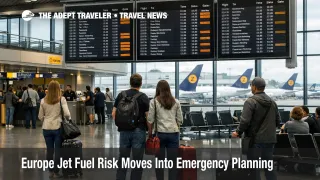
Europe jet fuel risk moved closer to an emergency planning phase on April 14, 2026, even though Brussels said there is no current fuel shortage. Airlines for Europe asked the European Union for crisis measures after airports warned shortages could emerge within weeks, while the European Commission kept its public line at watchful but not yet short. For travelers booking or holding Europe flights for late April, May, and summer, the problem is no longer only higher fares. It is whether airlines start protecting schedules, slots, and fuel access before a visible shortage hits.
Europe Jet Fuel Risk: What Changed
What changed on April 14 is the gap between what airlines are asking for and what the Commission is confirming. Reuters reported that Airlines for Europe asked for EU level monitoring of jet fuel supplies, relief from some aviation taxes, a temporary suspension of the EU carbon market for aviation, joint kerosene purchasing, and legal clarity that conflict driven airspace closures should count as justified slot non use. The Commission, by contrast, said there is no evidence of a jet fuel shortage in the European Union at present, while also warning that supply issues could emerge in the near future.
That gap matters operationally. When airlines lobby for joint purchasing and reserve rule changes, the issue has moved beyond a normal fuel price complaint. It means carriers are trying to secure planning tools before airports or governments have to ration around a harder supply problem. In an earlier Adept Traveler article, Europe Jet Fuel Shortage Threatens Summer Flights, the signal was still mainly that shortage risk could reach Europe within weeks. By April 14, the story had shifted into emergency policy positioning.
The seriousness is still below a confirmed Europe wide fuel shortage, but it is above ordinary cost pressure. This is the stage where airlines may start trimming weaker frequencies, adding or widening surcharges, protecting slot flexibility, and preserving fuel for stronger routes before the public sees obvious airport level failures. Lufthansa's chief executive said the group expects kerosene to remain scarce and expensive for the rest of 2026 and has contingency plans to cut capacity by 2.5% to 5% if needed.
Which Travelers Face the Most Exposure
The most exposed travelers are not only those flying to the Middle East. The bigger risk sits with passengers using Europe as a long haul bridge, travelers on once daily or thinner leisure routes, and anyone depending on tight same day onward connections during the late spring and summer build. If fuel planning tightens, airlines usually protect their strongest core banks and highest value routes first, which leaves marginal frequencies and weak recovery options more vulnerable.
Travelers should also watch for uneven exposure across countries. Spain said on April 14 that its kerosene and wider fuels supply is secure for now because its eight refineries produce about 80% of the kerosene it consumes, with its energy minister calling Spain's position more robust than many European peers that depend more heavily on imports. That does not remove Europe jet fuel risk, but it does suggest the pressure may emerge unevenly rather than all at once across the continent.
A second exposed group is price sensitive summer travelers who assume the main downside is a more expensive ticket. That can be true at first, but fuel stress often moves in layers. First order, carriers push fares and surcharges higher. Second order, they start thinning weaker routes, reducing backup seats, and making missed connections harder to recover from. A related Adept Traveler signal, Travel Fuel Risk Is Becoming a Refinery Fit Problem, explains why refinery dependence and import mix can keep pressure alive even before an airport visibly runs short.
What Travelers Should Do Now
Travelers with Europe flights in the next several weeks should treat schedule resilience as seriously as ticket price. That means checking whether the itinerary depends on one daily departure, a short self transfer, or a late final flight into a smaller airport. Those are the trips most likely to break first if carriers quietly reduce frequencies or preserve fuel and aircraft for stronger corridors.
For summer bookings, the main decision threshold is whether flexibility is still cheap. If a refundable or easily changeable fare is only modestly higher, that premium can be worth paying while Europe jet fuel risk remains unsettled. Travelers already holding tickets should watch for airline schedule changes, surcharge updates, and any new carrier language about fuel availability rather than only fuel cost. Once that language shifts, rebooking options usually become worse, not better.
Over the next 24 to 72 hours, the signals that would show a move from concern to operational shortage are fairly specific. Travelers should monitor for airport fuel advisories, broader talk of joint EU intervention ahead of the Commission's April 22 energy package, carrier announcements about route or frequency cuts, and more national carveouts like Spain's claim of relative insulation. If those signals spread, the right move is to avoid tight connections, favor larger hubs with multiple daily options, and lock in backup plans earlier.
Why the Risk Is Rising, and What Happens Next
The mechanism is straightforward. The Commission said on April 10 that crude oil supplies to EU refineries remain stable and there is no need for additional stock releases at present, but it also said jet fuel remains the primary concern because EU refineries cover around 70% of consumption and the rest depends on imports. In other words, Europe does not need a general oil shortage for aviation pressure to rise. It only needs sustained trouble in the imported slice that keeps airport and airline planning tight.
That is why this story has moved into emergency planning before a confirmed shortage. Airlines are trying to change the rules of the response early, including how reserves, purchasing, taxes, carbon costs, and slot protections work under conflict conditions. Brussels is still signaling that there is no present shortage, but it has already said it will propose an energy market response package on April 22. The next phase of the story depends on whether that package includes aviation specific relief and whether airports start reporting physical strain rather than precautionary concern.
For travelers, the near term outlook is a planning problem first, and a shortage problem second. Europe jet fuel risk is now serious enough to affect fare levels, schedule confidence, and recovery room before it necessarily produces visible airport disruption. The next decision point is not whether every Europe flight is in danger. It is whether the policy gap between airline emergency demands and Brussels' no shortage stance starts narrowing, or whether the market moves faster than the policy response.
Sources
- Airlines urge EU to step in as Iran war chokes jet fuel supply, Reuters
- No shortage of jet fuel in EU, but concerns remain, Commission says, Reuters
- Energy Union Task Force calls for enhanced EU-wide coordination to safeguard energy security, European Commission
- Lufthansa braces for jet fuel crunch, higher costs may force fleet cuts, Reuters
- Spain's kerosene, fuels supply guaranteed at the moment, energy minister says, Reuters