

Philippines Stay Relief Widens Through May 1
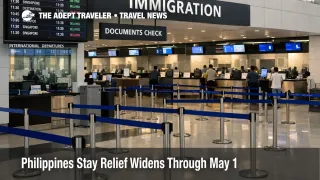
The Philippines overstay relief window has quietly become more useful for stranded travelers. Updated U.K. travel advice now says affected foreign nationals whose valid stay expired on or after February 28, 2026, can legally remain in the Philippines until May 1, 2026, without paying fees, fines, or penalties. That shifts this from a short grace period into a more meaningful planning buffer for visitors caught by Middle East related air disruption. Travelers whose onward plans are still fragile should treat May 1 as a real legal deadline, keep proof of disruption now, and avoid assuming another extension will appear automatically.
Philippines Overstay Relief: What Changed
What changed is the end date. In an earlier Adept Traveler article, Philippines Overstay Relief Runs Through April 1, the operative buffer ran only through April 1, 2026. The current U.K. advice now states that affected foreign nationals whose valid stay expired on or after February 28, 2026, can remain until May 1, 2026, without fees, fines, or penalties. Separate reporting on the Philippine decision says the extension was signed on March 30, 2026, after authorities concluded that some foreign nationals were still unable to leave because disruption tied to the Middle East had not fully cleared.
That matters in practical travel terms because it buys time without turning every missed departure into an immediate immigration problem. The same U.K. advice also says commercial options to depart the Philippines remain available, but warns that broader Middle East escalation has caused airspace closures, delays, and cancellations that can still affect trips even when the traveler is not headed to the Middle East itself. This is still a disruption measure, not a broad visa amnesty, and it does not remove the need to leave or regularize status before the buffer ends.
Which Travelers Benefit, and Where Exposure Remains
The clearest confirmed qualification point is the stay expiry date. Public wording says the relief applies to affected foreign nationals whose valid stay expired on or after February 28, 2026. The less clear part is the word "affected." The public facing guidance I could verify does not spell out an exact evidence standard for individual cases, which means travelers should assume they may need to show that flight cancellations, rebookings, or route disruption actually prevented departure on time.
That puts the biggest benefit with travelers who are already inside the Philippines on temporary status and whose itinerary broke after lawful stay was about to end. It is especially useful for visitors whose outbound trip depends on disrupted Gulf corridors or changing long haul routings. In an earlier Adept Traveler article, Philippine Airlines Dubai, Doha Cuts Run to May 31, Philippine Airlines suspended Dubai and Doha flights through May 31, 2026, and Riyadh flights through April 9, 2026, which shows why some Manila based exit plans have remained unstable well beyond the original March shock. Readers tracking the wider pattern can also follow Airline Disruption.
The exposure point now shifts to anyone whose new departure may slip beyond May 1. Once that date passes, the current verified relief wording no longer promises protection from normal fees, fines, or penalties. That means hotel extensions, inter island repositioning, and replacement tickets should be planned backward from the legal deadline, not only from the next available fare.
What Travelers Should Do Before May 1
Travelers should build a paper trail now, not after a deadline dispute. Keep the passport page showing lawful admission or last extension, cancellation notices, rebooking emails, boarding records, payment receipts for changed flights, and any written communication from airlines, agents, or insurers that helps show why departure moved. The public guidance confirms the relief exists, but it does not lay out a detailed case by case process in the material I could verify, so documentation is the safest buffer where interpretation may vary.
The next decision point is simple. If you hold a credible departure before May 1, keep checking the booking directly with the carrier and protect enough local buffer to actually reach the airport. If your trip is still waitlisted, split across separate tickets, or exposed to another disrupted transfer point, start treating formal immigration follow up as a live task now rather than waiting for the final days of the relief window. That is not because normal departure options are gone, but because the legal cushion is date bound while airline recovery can remain uneven.
Money timing changes too. A traveler shielded from overstay penalties may not need to buy the most expensive same day escape ticket, which can reduce panic spending. But the relief does not solve nonrefundable hotel nights, missed domestic sectors, ferry changes, or replacement transfers. For travelers moving between islands before departure, a cheaper itinerary that arrives too close to May 1 may be riskier than a more expensive one that clears the country earlier.
Why This Happened, and What Comes Next
The mechanism is straightforward. A flight disruption can become an immigration problem when a lawful stay expires before a traveler can leave. The Philippines buffer interrupts that chain temporarily by preventing immediate fines or penalties for some affected foreign nationals, which gives stranded visitors time to stabilize tickets and lodging instead of handling a broken itinerary and an overstay at the same time. First order, some travelers avoid instant status trouble. Second order, they gain a little more leverage on onward booking, hotel extension timing, and domestic repositioning inside the country.
What happens next depends on whether outbound travel keeps normalizing before May 1. The U.K. advice still says commercial departure options remain available, but it also still warns that wider Middle East disruption can affect travel plans. That leaves one big uncertainty: there is no verified public guarantee yet, in the sources I reviewed, for treatment after May 1 if a traveler remains stranded beyond that date. The sensible move is to use the Philippines overstay relief as a controlled reset window, not as proof that the issue is solved.