

American DFW E Boarding Gates Shift Hub Boarding Flow
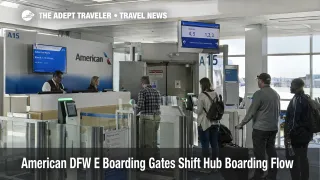
American Airlines is moving electronic boarding gates from pilot to deployment at Dallas Fort Worth International Airport (DFW), with the first rollout beginning this summer in the carrier's new Terminal A and Terminal C pier expansions. For travelers, the change is most relevant at the gate, not earlier in the airport journey. It should make boarding more controlled and predictable on some American departures at the airline's largest hub, especially for passengers connecting through DFW, but it will not solve upstream problems such as late inbound aircraft, security delays, or weather driven disruptions.
American DFW E Boarding Gates: What Changed
American said on April 14, 2026, that it will officially launch electronic boarding gates at DFW beginning this summer after a November 2025 pilot that the carrier described as successful. The airline says the system will debut at scale in its new Terminal A and Terminal C pier expansions, with nearly 20 gates using dormakaba equipment that automatically validates boarding passes, gives touchscreen instructions, and regulates boarding pace to improve jet bridge flow.
That makes this more than a small process tweak. American is positioning the rollout as a hub level boarding change at its largest operation, and it has already said DFW is only the start, with additional hubs and gateway airports planned over time. The practical effect is that the airline is trying to standardize the last gate to aircraft handoff, which is one of the few parts of the airport journey an airline can directly redesign without waiting on airport wide infrastructure or federal screening changes.
Which Travelers Benefit Most At Dallas Fort Worth
The biggest winners are connecting passengers who move through DFW on tight domestic or international itineraries and then hit crowded gate areas during peak banks. A more controlled boarding sequence can reduce the gate scrum that often forms when multiple groups cluster early, and that can make it easier for travelers to understand when to line up and how quickly the line is actually moving. For families, infrequent flyers, and passengers juggling carry ons during busy hub departures, clearer instructions and a steadier flow should reduce some uncertainty in the final minutes before departure.
The benefit is narrower for travelers who assume this will speed up the whole airport. It will not shorten TSA lines, fix check in bottlenecks, or recover time lost when an inbound aircraft arrives late. Boarding technology can help the departure gate operate more cleanly, but if the flight is already behind because of weather, aircraft rotation issues, or crew timing, the gain may be limited to preventing additional gate area friction rather than restoring the schedule. That is the main operational tradeoff. Better boarding discipline matters, but it works best when the rest of the trip is still largely intact.
There is also a bigger DFW context. American has been reworking how traffic flows through its flagship hub, including a shift to 13 flight banks from April 2026 and expansion work in Terminal C. In an earlier Adept Traveler article, American Airlines DFW Schedule Change Adds 13 Banks explained how American was trying to spread demand across more operating peaks. Electronic boarding gates fit that same logic. They do not add runway capacity, but they can reduce small boarding inefficiencies that become more painful when a hub is turning large volumes of people and bags at once.
What Travelers Should Do Before DFW Departures
Travelers flying American through DFW later this year should treat the new gates as a process change, not a reason to arrive later. Keep using the airline app, monitor gate assignments early, and be ready to follow the screen prompts instead of crowding the lane before your group is called. Passengers who usually rely on hovering near the scanner should expect a more controlled entry point.
For connections, the useful threshold is whether your itinerary is tight because of boarding uncertainty or because the inbound flight itself is fragile. If your connection risk usually comes from long gate queues and slow lane formation, these gates could help modestly. If your risk comes from weather, late arrivals, or thin backup options, build buffer anyway. The boarding gate can regulate flow, but it cannot create extra minutes that the schedule has already lost.
Travelers who need extra assistance should also pay attention during the first months of rollout. New boarding systems can be smoother once people learn them, but early deployment periods sometimes expose confusion around lane use, carry on timing, or when to approach the gate. Watch for how American communicates group calls and special boarding categories at DFW before assuming the experience will be identical to a conventional staffed scanner lane. American has not yet published a full airport by airport rollout timeline beyond saying DFW starts this summer and other hubs will follow over time.
Why American Is Starting At DFW, And What Happens Next
DFW is the obvious test bed because it is American's largest hub and a central piece of a wider modernization effort. American has tied the boarding gate launch to new pier expansions in Terminals A and C, while DFW's Terminal C project alone adds 115,000 square feet and nine gates as part of a broader reconstruction. That means the airline is not just dropping new scanners into an old space. It is pairing a redesigned boarding process with newly built gate environments, which gives it more control over how passengers queue, move, and board.
First order, that should make some DFW departures feel more orderly. Second order, if the system performs well at American's biggest hub, the airline gets a template it can push into other hubs and gateway airports. That matters more than the nearly 20 DFW gates themselves. The long term story is network standardization, where travelers begin to see the same boarding logic repeated across major American stations.
The main thing to watch next is whether American publishes specific terminal opening dates, expands the gate count beyond the initial DFW rollout, and identifies which airports follow. Until then, travelers should view this as a meaningful but targeted airport process upgrade. It could reduce gate area friction and make boarding more legible at DFW, but it is not a cure for broader hub stress when delays start earlier in the trip.