

Charlotte Airport Near Miss Raises Taxi Safety Risk
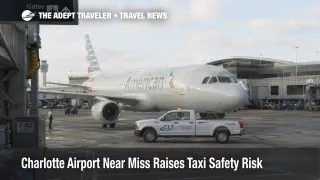
American Airlines passengers using Charlotte Douglas International Airport (CLT) are looking at a ground safety warning, not a broad flight shutdown, after a pilot said he had to brake hard to avoid an airport operations pickup truck while taxiing on April 15, 2026. CBS News reported the crew of Flight 1197 told ramp control the truck crossed directly in front of the aircraft near the gate area while the plane was moving with its taxi light on. Charlotte Douglas said it is aware of the incident and is investigating, and the Federal Aviation Administration said it is looking into what happened. For travelers, the immediate issue is not mass cancellations, but the possibility that a hub already built around tight aircraft turns and dense connections may face added scrutiny and slower ramp movement if investigators find a process gap.
Charlotte Airport Near Miss: What Changed
The confirmed facts are narrow but serious. According to CBS News, the incident involved an American Airlines aircraft taxiing near the gate area at Charlotte when a Charlotte Douglas ground vehicle entered its path. The pilot's radio call described a near collision and said the brakes had to be applied abruptly. The airport said the vehicle was a CLT ground vehicle, and American said the truck was not affiliated with the airline. The FAA has not, at least publicly, released a detailed sequence, causal finding, or corrective order yet.
That distinction matters. This was not a runway incursion, and it did not produce a known airport closure, ground stop, or airline wide operational meltdown. It was a taxi area conflict near the gate environment, where aircraft move slowly but where visibility, radio discipline, vehicle routing, and right of way rules still have to work cleanly every time. The operational seriousness comes from how small failures on the ground can escalate quickly when a hub is moving hundreds of aircraft through narrow time banks.
Charlotte is also not an airport where isolated ramp problems stay isolated for long if procedures tighten. It is one of American's largest hubs, so even a short burst of added caution, stop and verify procedures, or temporary route restrictions for ground vehicles can lengthen turn times and reduce recovery margin later in the day. No such measures have been announced yet, but that is the main traveler consequence to monitor as the investigation develops.
Which Charlotte Travelers Face the Most Exposure
The travelers most exposed are connecting passengers moving through CLT on American, especially those using shorter domestic connections or onward evening flights with fewer backup options. Flight 1197 itself still departed on time, according to CBS News, which is a sign that this specific event did not immediately spill into a visible system disruption. But near misses at gate and taxi areas matter most at banks where aircraft, tugs, fuel trucks, catering vehicles, maintenance vans, and airport pickups are all working in compressed spaces.
Origin and destination passengers in Charlotte face less immediate risk than connectors, because a modest slowdown on the ramp usually hurts connection reliability before it materially changes check in or security experience. The first order effect of a future repeat event would be a late push, a delayed taxi, or a held departure. The second order effect is where traveler pain grows, missed onward flights, thinner same day reaccommodation, and extra overnight hotel demand if a late bank starts to unravel. That pattern is especially relevant at Charlotte because hub operations depend on rapid sequencing rather than long schedule padding.
There is also a broader safety context now. The Charlotte incident came about a week after a Frontier Airlines jet at Los Angeles International Airport narrowly avoided trucks crossing in front of it on a taxiway, and less than a month after an Air Canada Express regional jet collided with a fire truck while landing at LaGuardia Airport, killing both pilots and injuring dozens. Those events are not the same operationally, but together they increase pressure on airports, carriers, and regulators to look harder at vehicle movement rules and compliance on the ground.
What Travelers Should Do Now
Travelers booked through Charlotte in the next several days do not need to panic rebook on this fact pattern alone. There is no evidence yet of a systemwide slowdown tied to the incident, and neither Charlotte Douglas nor the FAA has announced airport wide operating restrictions. The right immediate move is practical: keep normal day of travel monitoring on, check for aircraft swaps or gate changes in the airline app, and avoid assuming that a short CLT connection still has full buffer if weather or congestion also enters the picture.
For passengers who still have time to choose flights, the main decision threshold is connection margin. If you are booking a trip through Charlotte on American over the next week, a slightly longer layover gives more protection than chasing the tightest legal connection. That advice is not because this one incident guarantees delays, it does not, but because near misses sometimes lead to temporary procedure checks that shave recovery time off an already busy hub day. A 35 to 40 minute domestic connection that looked efficient on paper can become fragile once a departure bank starts moving unevenly.
Travelers should also separate safety signal from disruption signal. A near miss is operationally serious even when passengers never feel it beyond a jolt in the cockpit. What to watch next is whether the FAA, airport, or airline acknowledges any procedural change, retraining step, or vehicle routing adjustment. Those are the signals that would tell travelers whether this remains an isolated event or starts affecting day to day hub flow.
How Ground Vehicle Errors Spread Through Travel
Airports rely on a simple principle on the movement side of the operation, aircraft movements are tightly controlled, and ground vehicles either operate under specific clearance rules or are expected to yield depending on where they are. AP's reporting on the LAX near miss noted that in taxiway environments ground vehicles are supposed to yield to aircraft, which are typically moving slowly, around 15 mph. When that basic relationship breaks down, pilots may have little room to maneuver and almost no ability to stop gracefully, especially near gates and turn areas.
That is why the Charlotte event deserves attention even without a crash or closure. The mechanism is not dramatic, but it is consequential. A pilot brakes sharply, the aircraft stops where it was not expected to stop, ramp control has to sort out who can move next, and any required reporting or inspection can eat into departure timing. In a major hub bank, minutes matter. One late push can affect gate availability, crew legality margins later in the day, and reaccommodation options if the disruption combines with weather, maintenance, or air traffic flow constraints.
What happens next depends on what investigators find. Confirmed facts at this stage are limited to the near miss, the airport vehicle involvement, and the FAA review. The public record does not yet establish whether the problem was driver error, communication failure, route design, or another procedural gap. Until that is clearer, travelers should treat this as a sharpened safety signal around Charlotte ground operations, not as proof of imminent airport wide delays.
Sources
- American Airlines pilot forced to "slam on the brakes" to avoid colliding with truck at Charlotte airport, CBS News
- FAA Statements on Aviation Accidents and Incidents, Federal Aviation Administration
- Pilot slams brakes to prevent Frontier Airlines collision at Los Angeles airport, AP News
- Air Canada jet collision shuts LaGuardia; pilots killed, dozens injured, Reuters