

Nigeria Domestic Flight Shutdown Risk for April 20
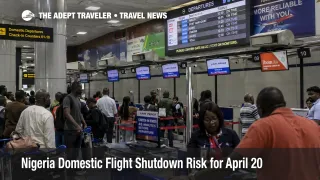
Nigeria domestic flight shutdown risk is now centered on a narrow intervention window between a threatened April 20 stoppage and a government emergency meeting set for April 22 in Abuja. Nigerian carriers, through the Airline Operators of Nigeria, warned they could suspend domestic flying from April 20 unless jet fuel prices ease, while Aviation Minister Festus Keyamo on April 16 urged airlines not to halt flights or raise fares. For travelers, that leaves the weekend as the main decision point for domestic trips and for international itineraries that depend on a Nigerian feeder leg.
Nigeria Domestic Flight Shutdown: What Changed
What changed is not the fuel complaint itself, but the level of operational risk and the government response. Reuters reported on April 16 that the Airline Operators of Nigeria said domestic flights would stop from April 20 without relief, after jet fuel prices had risen about 270 percent since late February. Reuters then reported on April 17 that the aviation minister formally appealed for restraint in a letter dated April 16 and scheduled an emergency April 22 meeting with regulators and stakeholders in Abuja.
That sequence matters because it creates a gap in which the shutdown threat is still live, but the formal negotiation is set for after the proposed stop date. Travelers should read that as a real near term planning problem, not a settled dispute. The most likely short term outcomes are continued service under pressure, abrupt fare increases, selective cuts, or a broader stoppage if talks fail to calm the market before Monday. The government has asked airlines to hold back, but Reuters did not report any binding settlement or published price relief as of April 17.
Which Travelers Face the Most Disruption
The most exposed passengers are domestic travelers flying on April 20 or in the following two days, especially those using Lagos, Abuja, Port Harcourt, Kano, Enugu, or other domestic points as feeders into long haul departures. A canceled domestic segment inside Nigeria is not just a local inconvenience when it is tied to an international ticket. It can become a missed long haul departure, a reissued ticket at a higher fare, an extra hotel night, or a forced ground transfer over much longer distances. That is the same network logic behind fuel stress elsewhere in Africa, where tighter fuel economics first raise fares, then weaken schedule resilience and backup options. In an earlier Adept Traveler article, Africa Jet Fuel Shortage Hits Flight Planning, the pressure was already shifting from price pain to network reliability risk.
Business travelers and passengers on protected international tickets have more to lose than point to point leisure travelers with flexible timing. Nigeria's airlines told Reuters that fuel costs were outpacing revenue, while the minister warned that fare hikes or service suspensions would have wider economic effects. That means even if a full shutdown is avoided, travelers should still expect a market where some carriers try to preserve cash through repricing, weaker frequencies, or tighter recovery options after irregular operations.
What Travelers Should Do Before the Weekend
Travelers booked on Nigerian domestic flights through April 22 should stop treating the ticket as fixed until the airline operates the segment. The safer move is to check whether an international departure can be reached a day earlier, whether the domestic leg can be moved forward, or whether a long haul ticket can be shifted without a full repricing. Waiting may preserve cash, but early changes may preserve the itinerary.
For travelers who cannot move the trip, buffer time becomes the main protection. Same day domestic to international connections inside Nigeria now carry more risk than usual because the pressure point is not only a single canceled flight, but the reduced chance of finding a good replacement quickly if multiple carriers start trimming service or raising fares at once. Where practical, avoid the last domestic flight of the day into an international gateway.
The next decision point is the period between now and the start of operations on April 20. Monitor airline notices, fare changes, and whether any carrier publicly confirms continued flying before the April 22 Abuja meeting. If airlines begin adding large fare increases or quietly removing frequencies from sale, that would signal the market is moving toward preservation mode even without a formal shutdown.
Why Fuel Prices Are Hitting Nigeria Flights So Hard
The mechanism is straightforward. Fuel is already one of the biggest airline costs, and Reuters reported that African carriers are more exposed than the global average, with jet fuel accounting for roughly 30 percent to 40 percent of operating costs versus 20 percent to 25 percent globally. In Nigeria, the dispute is sharper because airlines say local jet fuel prices have jumped far beyond what global crude alone would justify, while fuel marketers dispute the airline figures and point to specialized distribution costs.
Reuters also reported that Nigeria's aviation sector consumed about 2.1 million liters of jet fuel per day in March, while Dangote Petroleum Refinery, described as the country's only domestic jet fuel producer, made no deliveries to the domestic market that month. That does not by itself prove a physical shortage inside Nigeria, but it does show why a price fight can quickly become a mobility problem. When airlines are already saying revenue no longer covers fuel alone, they move from complaining about cost to questioning whether flights should operate at all.
What happens next depends on whether the government can secure a temporary price or supply easing before Monday, or at least persuade airlines to keep flying until the April 22 talks. Until then, the cleanest reading is that Nigeria domestic flight shutdown risk is real, narrow in timing, and most dangerous for passengers whose domestic segment is the first piece of a larger trip.