

Africa Jet Fuel Shortage Hits Flight Planning
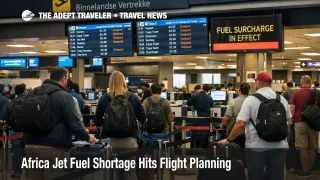
Africa jet fuel shortage risk is no longer just a price chart problem. Reuters reported on March 20, 2026 that about 70 percent of Africa's jet fuel and kerosene imports move through the Strait of Hormuz, while physical jet fuel prices in northwest Europe climbed near $239 a barrel and several African markets began showing thinner stock buffers, not just higher costs. For travelers, the immediate effect is more expensive tickets and fuel surcharges. The more serious risk is that a prolonged squeeze can narrow schedules, weaken recovery after cancellations, and break regional connections that feed long haul departures.
Africa Jet Fuel Shortage: What Changed
The main shift is from expensive fuel to uneven physical availability risk. Reuters says South African domestic jet fuel stocks were estimated at about three to four weeks, Kenya had around 50 days of stocks as of March 10, and Zambia said it had roughly 10 days of jet fuel available. That split matters. Kenya still looks more like a buffer market for now, while Zambia is already in the kind of short window where any delivery delay, panic buying, or airline uplift change can become an operational problem quickly.
Carrier behavior has also moved from warning to action. FlySafair said on March 11 that it would impose a temporary fuel surcharge on flights departing through May 12, 2026, and its website says the surcharge took effect on March 12. Reuters also reported that Airlink is adjusting fares and has said it could cut capacity if needed, while National Airways Corporation has added contract clauses to pass on fuel surcharges when prices change en route. That means the market has already crossed the threshold where airlines are defending margins and preserving cash rather than simply absorbing the shock.
Which African Itineraries Face the Most Risk
The most exposed travelers are not evenly spread across the continent. The first pressure point is southern Africa, especially South Africa's domestic and regional network, because carriers there are already repricing and the reported stock cushion is measured in weeks, not months. That puts O.R. Tambo International Airport (JNB), Cape Town International Airport (CPT), King Shaka International Airport (DUR), and Lanseria International Airport (HLA) in the practical risk zone for fare increases first, then possible schedule trims if supply stays tight. Zambia is the sharper near term stock story, so itineraries through Kenneth Kaunda International Airport (LUN) deserve more caution than markets with larger buffers.
The next layer of exposure is connection structure. A nonstop domestic fare increase hurts, but a regional cut hurts more because it removes backup options. Travelers linking smaller southern or east African cities into Johannesburg, Nairobi, Kenya, Addis Ababa, Ethiopia, or other long haul gateways face the biggest second order risk. If a domestic or regional feeder flight disappears, the problem is not only a higher ticket. It becomes a missed international departure, an extra hotel night, a reissued ticket, or a forced overnight in a hub with fewer remaining seats. That is the same system logic behind the broader global fuel story covered in Jet Fuel Price Shock Hits Global Travel Planning and Jet Fuel Shortages Spread as Hormuz Risk Deepens.
What Travelers Should Do Now
Travelers flying within Africa, or building an Africa segment into a longer itinerary, should now treat fuel risk like a network reliability issue, not just a budget issue. For departures in the next one to two weeks, the safer move is to protect connection time, favor fewer flight legs, and avoid last flight of the day routings into long haul gateways. Where a carrier has already added surcharges, booking later is unlikely to produce a cheaper outcome unless wholesale fuel prices retreat sharply.
The next decision point is whether the story stays in the surcharge phase or moves into the schedule cut phase. Repricing alone means airlines still believe they can operate the same flying at a higher cost. Flight cuts become more likely when three things happen together, stocks keep shrinking, airlines start warning publicly about post March or post April supply uncertainty, and domestic or regional flights become the first candidates for reduced frequency because they have lower yields and fewer premium passengers. Reuters already reported that Airlink sees more uncertainty beyond March and April, which is the kind of timing signal travelers should watch closely.
For trips that cannot absorb disruption, including safaris, cruises, weddings, and long haul self connects, paying more now for a simpler itinerary may be the cheaper decision overall. The tradeoff is straightforward. A lower fare with two regional links looks attractive until one cut or fuel constrained delay forces a missed onward ticket that is not protected on the same booking. Travelers using separate tickets should leave more overnight buffer than usual at gateway cities until stock data improves.
Why Africa's Buffers Are Thinner, and What Happens Next
Africa's vulnerability is structural, not temporary. Reuters says the continent relies heavily on imported refined products, around 70 percent of jet fuel and kerosene imports pass through Hormuz, and refining capacity across Africa remains limited. In South Africa, Reuters reported that only two crude oil refineries are operating after larger plants closed in 2020 and 2022. That helps explain why Africa can feel the physical squeeze faster than parts of Asia that still hold larger inventories, even when both regions face the same upstream shock.
What happens next depends less on headline oil prices than on whether replacement flows and local inventories stabilize. If carriers keep adding surcharges but published schedules remain intact, travelers are mostly dealing with higher trip costs. If airlines start cutting frequencies on domestic South African routes, warning about specific airport uplifts, or governments begin prioritizing supply and discouraging heavy buying, the story changes from painful to disruptive. Until then, the clearest reading is that Africa is already in a live fare and surcharge phase, with Zambia and parts of southern Africa closest to the point where thinner stock buffers could turn into real flight planning problems.