

United Polaris Lounge Access Changes in 2026
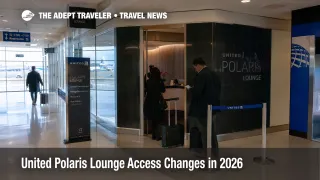
United Polaris lounge access changed in April 2026, and the practical effect is that lounge eligibility is now more tightly tied to fare type, airline partner, and aircraft product. Travelers connecting through Chicago O'Hare International Airport (ORD), George Bush Intercontinental Airport (IAH), Los Angeles International Airport (LAX), Newark Liberty International Airport (EWR), San Francisco International Airport (SFO), and Washington Dulles International Airport (IAD) should no longer assume that any long haul premium ticket gets them into a Polaris Lounge. For some flyers, access is expanding. For others, it has been cut back with little room for interpretation. The booking decision now includes a ground experience tradeoff, not just a seat tradeoff.
United Polaris Lounge Access: What Changed
The biggest immediate change is on partner airlines. United has narrowed Polaris Lounge entry for Star Alliance and partner travelers to a short list of eligible cabins on specific carriers. Recent reporting that reflects United's updated access language says the remaining eligible partner groups include first class on ANA, Lufthansa, and SWISS, business class on ANA, Air New Zealand, and ITA Airways, plus certain Lufthansa Group business fares on Lufthansa, SWISS, Austrian Airlines, and Brussels Airlines. Travelers flying premium cabins on other Star Alliance carriers, including airlines that previously gave many passengers a Polaris Lounge stop before departure, are now outside that access window.
United is also moving in the opposite direction for part of its own premium base. The airline's new tiered premium fares mean base business class customers lose Polaris Lounge entry and instead get United Club access, while standard and flexible customers keep the higher tier lounge benefit. That makes a business class fare family materially different even when the seat onboard may look similar to the traveler shopping the itinerary.
A third change widens access for a new segment. United's new domestic A321neo "Coastliner" aircraft will bring Polaris branded lie flat seats to select domestic routes tied to Newark, Los Angeles, and San Francisco from summer 2026, and those eligible domestic Polaris customers are expected to receive Polaris Lounge access. In an earlier Adept Traveler article, United A321XLR, Coastliner Add Premium Seats noted that the new subfleet changes which narrowbody flights bring lie flat seats and lounge access into domestic trip planning.
Which Travelers Gain, and Which Ones Lose
The clearest winners are travelers booked on United's qualifying Polaris fares and those who can book the new domestic Polaris product on the Coastliner fleet. For that group, the airport piece of the itinerary becomes more valuable, especially on longer domestic premium flights where the predeparture meal, shower suites, quieter seating, and lower crowd levels can meaningfully change a same day transcontinental trip.
The clearest losers are partner premium passengers who used to treat Polaris Lounges as a dependable Star Alliance long haul perk. A business or first class ticket on carriers such as Singapore Airlines, LOT Polish Airlines, EgyptAir, Turkish Airlines, Ethiopian Airlines, or others may still deliver a premium seat onboard, but it no longer automatically delivers United's top ground product at these airports under the newly tightened rules described in multiple reports tracking the update. That is not a cosmetic downgrade. It changes where you eat, where you shower, how comfortably you work, and how much buffer time the airport experience can absorb before a long haul departure.
Base fare buyers also need to reset expectations. In an earlier Adept Traveler article, United Polaris Base Fares Reshape Premium Booking explained that United was already turning the premium cabin into a more segmented product. The new access rules reinforce that trend. The airline is not just selling a better seat, it is increasingly selling separate layers of the premium journey.
What Travelers Should Do Before They Fly
Travelers with a trip already booked should recheck lounge eligibility directly against the operating carrier and fare family, not just the cabin name printed on the boarding pass. "Business class" is now too broad a label to answer the lounge question on its own. If your itinerary includes a long layover at ORD, IAH, LAX, EWR, SFO, or IAD, verify whether you still have Polaris Lounge access before you build meal timing, shower plans, or remote work time around it.
For new bookings, the main decision threshold is simple. Reprice the whole premium trip, not just the seat. A lower base business fare may still make sense if you do not care about lounge time, advance seat choice, or added flexibility. But on an overnight or connection heavy itinerary, paying up for a standard or flexible fare, or booking the right partner, may preserve more real value than the headline fare difference suggests.
Partner airline passengers should also check whether another lounge path exists through status, a different alliance benefit, or the operating carrier's own contract lounge. The main risk is not being shut out of every lounge, it is assuming Polaris is still part of the ticket when it may no longer be. That distinction matters most on long haul departures and on itineraries where the airport stay is part of the comfort math.
Why United Is Doing This, and What Happens Next
The mechanism here looks straightforward. Airlines and lounge operators across the premium market have been tightening access as lounge crowding rises and premium demand grows. United is simultaneously expanding its premium hard product, through moves such as new Polaris suites and domestic Coastliner service, while narrowing which customers can use the highest tier lounge. That lets the airline protect space for the travelers it values most, or wants to upsell most effectively.
The second order effect is that premium comparison shopping gets harder. Travelers now have to compare fare family, alliance relationship, lounge rules, and route equipment together. A cheaper business fare on one airline, or on the wrong fare family, can end up being less comfortable on the ground even if the onboard cabin is still strong. The likely next step is more fine tuning, not less. United has already signaled broader fare segmentation, and the latest United Polaris lounge access changes fit that pattern. Travelers booking high value trips this spring and summer should assume the premium airport experience is now a more conditional benefit that needs to be checked every time.
Sources
- United Club and United Polaris Lounge Access, United Airlines
- United Polaris, United Airlines
- United to Introduce Tiered Fare Categories, Giving Customers More Options Across Every Type of Ticket, United Airlines Newsroom
- Who Can Access United Polaris Lounges? Carrier Rolls Out Major Policy Changes, TravelPulse
- What to Know About United Airlines' New Basic Business Premium Plus Fares, The Points Guy
- United Restricts Polaris Lounge Access For Star Alliance Partner Airlines, One Mile at a Time
- United Cuts Polaris Lounge Access for Star Alliance Partners, AwardWallet