

Ecuador Emergency Extension Slows Road Travel
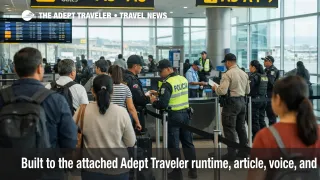
Travelers in Ecuador should now plan around slower road movement, longer security checks, and tighter timing margins, not just a higher advisory level. The U.K. Foreign, Commonwealth & Development Office says a 60 day state of emergency was renewed on April 2, 2026, across multiple provinces that matter to both domestic itineraries and airport access, including Pichincha and Guayas. The practical consequence is that police and military checks can add friction to road trips, airport transfers, and same day multi leg plans, while Guayaquil keeps one important carveout, airside transit at José Joaquín de Olmedo International Airport (GYE) remains outside the FCDO's all but essential travel warning for Guayas.
Ecuador Emergency Travel Delays: What Changed
The new planning problem is not a full country shutdown. It is a renewed security regime that extends a controlled travel environment into provinces that shape many Ecuador itineraries. The FCDO says the order applies in Guayas, El Oro, Manabí, Los Ríos, Santa Elena, Pichincha, Santo Domingo de los Tsáchilas, Esmeraldas, and Sucumbíos, plus specific cantons in Bolívar, Cotopaxi, and Cañar. It also warns travelers to expect heightened police and military presence nationwide, without previous notice, along with potential disruption from extra security checks.
That distinction matters because Pichincha includes Quito, while Guayas includes Ecuador's main coastal gateway at Guayaquil. A traveler can still fly through GYE on an airside connection, but the same advisory continues to place Guayas under all but essential travel guidance for wider ground movement. In practice, that splits Ecuador trips into stronger and weaker use cases. A protected same terminal transit remains more viable than an itinerary that depends on road transfers, discretionary side trips, or a tightly timed overnight stop in the province.
This also makes the story narrower than a generic crime warning and broader than a one province alert. The extension reaches provinces used for capital stays, coastal access, and interior road links, so the first order effect is slower movement. The more important second order effect is what breaks when even a modest delay lands in the wrong place, missed domestic flights, late hotel arrivals, driver tour compression, and less room to recover if a bus, transfer, or checkpoint sequence slips.
Which Ecuador Trips Now Carry More Risk
The most exposed travelers are the ones stacking road movement into one day. That includes domestic flyers connecting between Quito hotels and the airport, travelers landing in Guayaquil and continuing onward by car, bus passengers bridging provinces, and border or long haul overlanders who need checkpoints and transfer windows to line up cleanly. The emergency order does not automatically stop these trips, but it makes them less predictable. That is a meaningful change for leisure itineraries built around exact pickup times, same day domestic hops, or long driver based routes across multiple provinces.
Travelers using Guayaquil only as a flight connection face a different exposure profile. The FCDO explicitly says its all but essential travel warning for Guayas does not apply to airside transit within Guayaquil Airport. That carveout preserves a narrow but important path for Ecuador itineraries that stay inside the terminal. It does not make Guayas generally easy to move around by road, and it does not remove the wider checkpoint and patrol environment that can slow landside movement.
Border linked overland plans also remain fragile. In an earlier Adept Traveler article, Ecuador Border Crossings Narrow Overland Options, the main issue was corridor concentration. In Ecuador Emergency Rule Keeps Key Transit Carveouts, the emphasis shifted to the small number of exceptions that still keep some trips workable. The extension now reinforces the same operational logic, keep Ecuador movements tight, daylight based where possible, and less dependent on road flexibility than older trip plans assumed.
What Travelers Should Do Now
The immediate adjustment is buffer time. Travelers should build extra margin into any overland leg touching the affected provinces, especially if that road move feeds an airport check in deadline, a same day domestic flight, or a hotel arrival with limited flexibility. Trips that once looked routine on a timetable can now lose reliability because checkpoint delays do not need to be dramatic to break the day.
The next decision point is whether the trip can stay air based. If Guayaquil is only a connection, staying inside the airport is the cleaner option under the current advisory structure. If the itinerary depends on a landside transfer, a late arrival, or a long drive through affected provinces, travelers should consider whether a different gateway, an overnight buffer, or a simpler routing would protect the trip better. That tradeoff matters most for short vacations and fixed date tours, where preserving the itinerary is often worth more than preserving the original sequence.
Travelers heading toward borders or long inland road corridors should also treat timing as operational, not aspirational. Leave earlier than usual, carry printed and digital booking records, and avoid planning a checkpoint heavy road leg on the same day as an important departure if there is any cleaner alternative. Over the next 24 to 72 hours, the main signal to watch is not a headline about the emergency itself, but whether official advisories tighten or whether transport providers begin warning about slower transfers, reduced flexibility, or route changes tied to checkpoints and security operations.
Why The Delay Risk Spreads Beyond One Checkpoint
States of emergency change travel through control density, not only through outright closures. More patrols, more inspections, and more official presence can make a route technically open but operationally slower. That creates a different kind of disruption than a cancellation or closure. The route still exists, but the certainty around its timing weakens, which is exactly the condition that damages airport connections, private transfers, and long day tours.
That is why the Guayaquil airside exception matters so much. It shows the emergency framework is not a blanket stop order. Ecuador is still preserving selected channels where officials appear to see clear transit value. But those carveouts are narrow. They work best when travelers use them for focused movement, not as proof that the wider province or highway map has returned to normal.
What happens next depends less on one announcement and more on whether the current security posture remains stable, widens, or begins to harden further in practice. For now, the most honest reading is that Ecuador emergency travel delays are a timing and routing problem first. Travelers can still move, especially by air, but road based plans in affected provinces need more slack, cleaner sequencing, and a lower tolerance for tight same day connections.