

Southwest Size Policy Faces New Pressure After OAC Call
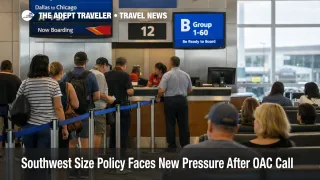
Southwest size policy is facing fresh pressure after the Obesity Action Coalition said on April 17, 2026, that the airline should immediately set clear and respectful standards for how its Customer of Size rules are applied. The timing matters because Southwest's assigned seating model is now live for travel from January 27, 2026, which turns an extra seat from a flexible boarding issue into an inventory and rebooking problem on fuller flights. For travelers who may need additional space, the practical risk is no longer limited to discomfort or embarrassment. It can now affect same day fare costs, whether an adjacent seat is still available, and whether a trip proceeds as booked.
Southwest Size Policy: What Changed
The immediate change is not a brand new policy announcement from Southwest. It is a public escalation from OAC, which says it has received reports of inconsistent handling and wants a "Standardized Dignity" approach built around objective standards, private resolution, and consistent treatment across airports. OAC ties those concerns directly to the assigned seating shift, arguing that frontline staff are being left to make subjective calls in public settings while travelers face unclear expectations at the airport.
Southwest's current rules are stricter in operational terms than the older open seating model. The airline's assigned seating page says the new seat system applies to flights departing on or after January 27, 2026. Its Contract of Carriage says passengers who cannot be safely accommodated in a single seat, including those who would encroach on the neighboring seat, are required to purchase an adjacent seat. It also says that if Southwest determines a passenger cannot be safely accommodated in one seat and an additional seat is not available to purchase, the customer will be rebooked on an alternate flight.
That is the core traveler consequence. Under open seating, the failure mode could sometimes be managed with flexibility on a lighter flight. Under assigned seating, the second seat has to exist as actual adjacent inventory, and on busy departures that raises the odds of day of travel disruption rather than a quiet onboard accommodation.
Which Travelers Face the Most Risk
The most exposed travelers are larger bodied passengers who book late, travel on peak departures, or fly routes with limited same day alternatives. They are also the travelers most likely to be forced into an airport decision rather than resolving the issue privately in advance. Southwest's help center says customers who encroach on neighboring seats must purchase the number of seats needed, and its public policy language uses the armrest as the definitive seat boundary. The airline also says refund requests for a second seat are subject to conditions, including a 90 day filing window after travel.
The second order effect is broader than the seat itself. A gate side decision can spill into missed onward flights, lost prepaid ground transfers, and extra hotel costs if the next available Southwest departure is materially later. That matters more now because Southwest's assigned seating system also sorts travelers by fare bundle and boarding group, which makes seat access more rigid and less improvisational than the old boarding process.
In an earlier Adept Traveler article, Southwest Size Policy Raises Day Of Travel Costs examined the cost and rebooking side of that January shift. OAC's new intervention widens the story from fare exposure to consistency, dignity, and how much discretion gate staff should be using in front of other passengers.
What Travelers Should Do Now
Travelers who know they may need additional space should not treat this as something to sort out casually at the airport. Southwest's own contract places responsibility on the passenger to notify the airline of unique seating needs, and the current policy framework leaves less room for same day flexibility on fuller flights. That makes advance planning the safer move, even though it can still leave refund and fairness questions unresolved.
The decision threshold is simple. If losing the original departure would break the trip, a traveler should resolve seating before travel rather than betting on gate availability. Waiting may still work on lighter flights, but the downside is much worse now because the airline can rebook a traveler if an adjacent seat is needed and cannot be purchased on that departure. For trips built around cruises, weddings, same day business meetings, or thin leisure routes, that risk is too high to ignore.
Over the next several days, the main thing to watch is whether Southwest responds with a clearer public explanation of how airport staff should handle Customer of Size cases under assigned seating. OAC has said it has formally contacted leadership and is open to collaboration, so the next meaningful change would be a more explicit standard that reduces public gate negotiations and narrows frontline discretion. Until that happens, travelers should assume the operational burden still sits heavily on pretrip planning.
Why This Fight Matters Beyond One Gate Interaction
This is really a systems story about what happens when a carrier moves from open seating to mapped inventory without fully removing ambiguity from a sensitive accommodation policy. Assigned seating can make expectations clearer for many travelers, but it also hardens the consequences when a second seat becomes necessary after booking. The first order effect is a possible seat purchase or rebooking. The second order effect is that a personal accommodation issue can suddenly become a schedule reliability issue.
OAC's complaint is aimed squarely at that mechanism. The group is not only criticizing the substance of Southwest's current approach, it is arguing that inconsistent, public enforcement creates avoidable dignity and operations problems at the same time. That leaves Southwest balancing three pressures at once, inventory control, frontline consistency, and reputational risk. Unless the airline clarifies the standard, this issue is likely to keep surfacing one airport interaction at a time.
Sources
- Southwest Airlines' Assigned Seating Rejects Their Own "Southwest. Even Better" Philosophy, Obesity Action Coalition
- Weight Bias Issues, Obesity Action Coalition
- Assigned Seating, Southwest Airlines
- Contract of Carriage Passenger English Version, Southwest Airlines
- Extra Seat Policy, Southwest Airlines Help Center
- Request a Refund for an Extra Seat, Southwest Airlines Help Center