

Spain Summer Airfares Face New Fuel Price Clauses
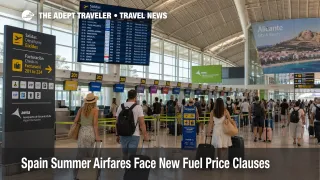
Spain summer airfares are entering peak season with two opposing signals at once. Reuters reported on April 21, 2026, that airlines have raised Spain seat capacity for the April to October season by 6 percent to nearly 260 million seats, with the strongest growth in Alicante and Andalusia and about 8 percent more seats at Madrid and Barcelona. At the same time, low cost carrier Volotea has introduced a temporary fuel linked pricing mechanism that can move the final ticket price closer to departure. For travelers, that means Spain still looks broadly bookable for summer, but the fare logic is becoming less predictable on some routes, especially where leisure demand is strongest.
Spain Summer Airfares: What Changed
What changed is not a shortage of seats. It is the appearance of a new pricing lever inside a market that is still adding capacity aggressively. Reuters said seat supply for Spain's April to October season is up 6 percent year over year, with Alicante up 14 percent, Andalusia up 8 percent, and both Madrid and Barcelona airports up about 8 percent. That keeps Spain in the "still bookable" category for summer 2026, even as Europe wide fuel concerns continue to hang over airline planning.
The new wrinkle is Volotea's "Fair Travel Promise." For bookings made from March 16, 2026 onward, the airline says it reviews fuel market prices seven days before departure and may either add a surcharge or issue a refund, with the adjustment capped at €14 per passenger, per flight. The legal terms show a Brent based table, with no adjustment between $65.01 and $75.00 per barrel, positive charges above that range, and refunds below it. Reuters reported on April 20 that consumer group Facua has asked for an investigation, arguing the policy may breach consumer protection rules that require price transparency up front.
That does not mean Spain is suddenly becoming hard to reach. It means a traveler can no longer assume that an advertised fare on every carrier is the fully settled number once the booking is done. On routes where suppliers think demand will remain strong, especially leisure heavy point to point flying, even a modest post booking adjustment can change the value equation for families, weekend breaks, and low margin package trips.
Which Spain Trips Are Most Exposed
The clearest exposure is on discretionary leisure travel rather than mission critical long haul flying. Reuters said capacity growth is concentrated in Alicante and Andalusia, both of which matter heavily for beach travel, second home traffic, and short haul summer demand. That is where travelers are most likely to see the uncomfortable mix of abundant seats on paper and less stable fare logic in practice.
Travelers using Barcelona El Prat Airport (BCN) and Adolfo Suárez Madrid, Barajas Airport (MAD) still benefit from scale. Big hubs with multiple airlines and dense schedules usually offer better comparison shopping and more backup options if one fare becomes less attractive. Coastal and regional leisure markets can behave differently. First order, airlines add seats because they expect demand. Second order, if pricing becomes more fluid, hotels, transfers, and packages in those same markets can harden faster because travelers who think they found a cheap flight may end up protecting the rest of the trip sooner.
Price sensitive travelers are the group most likely to feel this first. A business traveler buying flexible inventory at a major hub may absorb a small change. A family of four on a low fare coastal itinerary may not. The policy also matters more on carriers or routes with fewer clean substitutes, because a fare that drifts upward close to departure can force a traveler to choose between paying more than expected or rebuilding the trip when hotel and ground costs are already committed. That is the practical risk, not a nationwide collapse in Spain flight availability.
What Travelers Should Do Before Paying In Full
Travelers booking Spain this summer should read the fare conditions, not just the headline price. On Volotea, check whether the booking is covered by the fuel adjustment mechanism, when the final review happens, and what flexibility exists if the price changes seven days before departure. The airline says customers can modify or cancel free of charge up to four hours before departure under this temporary framework, but that benefit only matters if the rest of the trip is still flexible enough to use it.
The next decision point is whether the savings on a restricted fare are large enough to justify extra uncertainty. If a competing fare on another carrier is slightly higher but fully fixed, that may be the better buy for travelers who have nonrefundable hotels, cruise joins, event tickets, or family travel dates. If the trip itself is flexible and the price gap is meaningful, the Volotea model may still be acceptable, but only if the traveler is comfortable with a last week adjustment window.
Travelers should also price the whole itinerary, not just airfare. In an earlier Adept Traveler article, Spain and Portugal Summer Bookings Tighten Faster, the pressure point was substitute demand pushing flights and hotels tighter together. In this case, the added seat growth helps, but it does not guarantee that the best value survives once fare rules, hotel deposits, and transfer costs are combined.
Why Spain Can Add Seats While Pricing Gets More Fragile
The mechanism is straightforward. Reuters reported that Spanish airlines are relatively insulated from a direct fuel supply shock because more than 80 percent of their jet fuel comes from domestic refineries, only 11 percent of their crude supply comes from the Middle East, and roughly 70 percent of summer fuel needs are already covered through pre conflict hedging. That helps explain why airlines are still willing to grow seats into summer instead of cutting back immediately.
But insulation is not immunity. In an earlier Adept Traveler article, Europe Jet Fuel Risk Moves Into Emergency Planning, the broader signal was that Europe fuel stress could first show up through fares, route trimming, and thinner schedule resilience before any obvious airport shortage. Spain now looks like a useful test of that pattern. The country can keep adding capacity while individual carriers experiment with ways to push fuel volatility back into customer pricing.
What happens next depends on whether Volotea stays an outlier. Reuters quoted Spain's airline association president saying he was not aware of other Spanish airlines adopting similar measures, which keeps this from becoming a full market repricing story for now. If other carriers copy the model, travelers should expect more last minute fare uncertainty, more scrutiny of consumer rules, and tougher choices around nonrefundable summer bookings. If Volotea remains alone, the bigger story is still Spain's strong summer demand and expanding capacity, not a general breakdown in airfare transparency.