

Antigua Cruise Growth Could Reshape Southern Caribbean
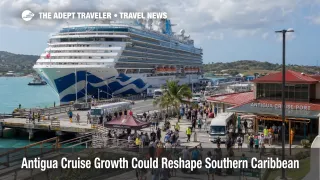
Antigua cruise growth is turning into something more important than a bigger port calendar. Antigua and Barbuda says cruise lines have already committed to more 2027 calls, MSC Group alone is rising from 12 calls in 2026 to 41 in 2027, and several partners are now exploring homeporting as the island upgrades its port product and pushes deeper into Southern Caribbean routing. For travelers, that is not just a tourism win. It is a signal that Antigua wants to move from being a strong port day into being a more meaningful cruise planning node, with bigger effects on itinerary design, pre cruise hotel demand, and regional airlift.
Antigua Cruise Growth: What Changed
The immediate shift is the scale and type of commitments now being discussed. Antigua and Barbuda says MSC Group has confirmed 12 calls in 2026 and 41 in 2027, including 13 Explora Journeys calls, while Royal Caribbean Group is projected at 112 calls in the next season and Oceanus at 52 annual calls. Officials also say Antigua will receive the maiden revenue call of MSC World Europa on December 7, 2026, and is projecting more than one million cruise passengers and more than 400 annual calls next season.
That matters because the growth is not limited to one mass market line or one ship class. Antigua is adding mainstream, premium, and luxury relevance at the same time, and it is trying to convert that into a broader strategic role in Eastern and Southern Caribbean deployment. ABTA officials tied the gains directly to meetings at Seatrade Cruise Global 2026, where they said homeporting, longer Southern Caribbean itineraries, and new excursion development were active points of discussion.
Who Benefits Most From Antigua Homeporting Potential
The clearest beneficiaries are travelers who prefer Southern Caribbean itineraries with fewer sea heavy compromises and more port dense routing. If Antigua wins more turnaround business, it could become more than a stop between larger embarkation islands. That would create more fly cruise options, more pre cruise and post cruise stay potential, and possibly more ways to reach itineraries without routing through the most overloaded Caribbean gateways.
This looks especially relevant for travelers already watching how cruise lines are repositioning ships across the region. In an earlier Adept Traveler article, MSC Gulf Pullback Reshapes Winter Caribbean Cruises, MSC World Europa's shift into the Southern Caribbean showed how fast regional deployment can change when a line sees a stronger fit elsewhere. Antigua now appears to be trying to capture more of that redistributed value. The higher upside is not just an extra port call. It is a stronger claim on itinerary planning cycles that determine where ships sleep, where passengers fly in, and where more shore spending happens.
The weaker fit is for travelers who still think any increase in calls automatically means a better cruise experience. More calls can improve choice, but they can also intensify crowding on busy days, tighten shore excursion inventory, and push up hotel and transfer costs if turnaround volume grows faster than on island capacity. That is why the homeport angle matters more than the headline passenger count.
What Travelers Should Do Before Booking
Travelers considering Southern Caribbean cruises for late 2026 or 2027 should start comparing Antigua not only as a port of call, but as a possible embarkation or turnaround market. If a sailing depends on a fly cruise connection, price the cruise together with airfare, transfer time, and at least one overnight buffer. That matters even more if new homeporting wins cluster departures around a few peak days.
Booking earlier makes more sense if the itinerary relies on a specific ship, a premium line, or a holiday period when island airlift and hotel inventory can tighten first. Waiting may still produce fare promotions, but it can also leave travelers paying more for the land side of the trip if Antigua's role grows faster than inventory does. The main decision threshold is simple. If the sailing works only with a same day inbound flight, the itinerary is already too fragile.
Travelers should also watch whether Antigua's gains turn into repeatable structural change or stay mostly at the port call level. The best signals will be formal homeport announcements, more ships beginning or ending cruises there, and evidence that cruise lines are building longer Southern Caribbean routings around Antigua rather than merely adding it as one interchangeable stop.
Why Antigua Matters Beyond One Port
The mechanism is straightforward. Cruise lines do not expand a port's role only because it is attractive. They do it when the air access, terminal flow, fueling or provisioning capability, and guest experience are strong enough to support more operationally complex use. Antigua Cruise Port's new terminal was designed to support homeporting and turnaround operations, and CLIA says Antigua is cementing its status as a Caribbean homeport with enhanced check in and security areas after Arvia homeported there in November 2025.
That helps explain why Antigua's latest growth story looks more structural than promotional. Officials are explicitly linking recent port upgrades, LNG related capability, and strong guest satisfaction scores to deployment decisions. In practical terms, that gives cruise lines a reason to see Antigua as a logistics asset, not only a beach stop. A similar pattern showed up elsewhere in the region. In an earlier Adept Traveler article, Dominican Republic cruise growth gains momentum with FCCA deal, the real story was not raw demand alone, but how infrastructure, training, and access can convert calls into homeport leverage. Antigua now appears to be making a comparable play from a smaller base.
What happens next depends on execution. If Antigua turns the current wave of commitments into stable turnaround operations, better air connectivity packaging, and consistent shore side performance, it should gain influence in how Southern Caribbean cruises are built. If not, the island may still post a bigger season while missing the more valuable shift into recurring homeport relevance.
Sources
- More Port Calls for Antigua and Barbuda in 2027
- Antigua and Barbuda secures increased cruise calls
- Antigua Cruise Port Debuts New Terminal, Expanding Business Opportunities
- Modern Cruise Terminals: Designing the Future of Cruise, On Land
- ANTIGUA AND BARBUDA DISCUSSES GROWING CRUISE BUSINESS AT SEATRADE CRUISE GLOBAL 2025