

MSC Gulf Pullback Reshapes Winter Caribbean Cruises
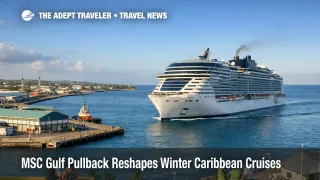
MSC Cruises has turned Middle East conflict risk into a Winter 2026 to 2027 cruise booking story by moving MSC World Europa out of its planned Gulf season and into Southern Caribbean sailings from Fort de France, Martinique, Pointe à Pitre, Guadeloupe, and Bridgetown, Barbados. TravelPulse reported on March 30, 2026, that the ship will now operate 7 and 14 night itineraries in the region instead of sailing the Middle East from November 2026 through April 2027. For travelers, the significance is larger than one itinerary change. It shows a major cruise line is making a season level deployment decision well in advance, which changes how travelers should judge booking reliability in the Gulf and how early they should lock in Caribbean alternatives.
MSC World Europa Southern Caribbean Shift Changes Winter Planning
The immediate change is straightforward. MSC World Europa is being reassigned to the Southern Caribbean, with embarkations in Martinique, Guadeloupe, and Barbados, and calls including Saint Lucia, Grenada, St. Maarten, Antigua and Barbuda, Saint Kitts and Nevis, Dominica, and Saint Vincent and the Grenadines. TravelPulse also reported that MSC Seaview will shift to Brazil and Argentina for that winter season, while affected guests are being offered the option to move to another sailing or request a full refund. MSC said travelers already booked on MSC Seaview sailings from the French Antilles should see no change to itinerary, dates, or overall cruise experience.
What makes this more than a routine fleet adjustment is the cause. The redeployment follows months of disruption tied to the Middle East conflict. Reuters reported on March 2, 2026, that MSC Euribia remained docked in Dubai as operators suspended or adjusted trips in the region after military escalation and airspace disruption. Earlier this month, TravelPulse reported that MSC arranged flights for affected passengers from Dubai after the war disrupted onward travel. In practical terms, MSC is signaling that the Gulf is still not stable enough for a flagship winter deployment plan, even this far ahead.
In an earlier Adept Traveler article, Gulf Cruise Ships Stranded Across Four Lines, the main issue was trapped ships and the first spillover into later programs. In an earlier Adept Traveler article, Gulf Cruise Cancellations Reach Into Early May, the planning value shifted to how long the disruption might last. The newer fact is that the risk is now influencing where MSC wants to place capacity for next winter, not only how it cleans up this spring's disruption.
Which Travelers Benefit Most, and Who Loses Options
The clearest losers are travelers who wanted a Gulf based winter cruise and were counting on a newer flagship style ship with a longer booking window to reduce uncertainty. That option is now gone for Winter 2026 to 2027, and the line still only plans to send MSC World Europa back to the Middle East for Winter 2027 to 2028, according to TravelPulse. That is useful, but it is not a guarantee. Travelers who want Dubai and Abu Dhabi sailings next winter should now assume the market is thinner and more exposed to further supplier changes than it looked before this announcement.
The beneficiaries are travelers who already wanted the Southern Caribbean, especially those comfortable with fly cruise trips through the French Antilles or Barbados. MSC had already planned a larger Southern Caribbean footprint for Winter 2026 to 2027, with MSC Opera joining MSC Seaview, according to the company's June 2025 press release. Adding MSC World Europa changes that market again. More capacity can create more cabin choice, but it can also concentrate demand around a few air gateways and intensify pressure on pre cruise hotels, inter island air links, and shore inventory during peak holiday periods.
This matters most for travelers who do not live near those embarkation ports. A cruise from Martinique, Guadeloupe, or Barbados is not just a ship decision. It is also an airfare, overnight buffer, baggage, and missed connection calculation. First order, travelers gain a different winter sun option. Second order, they may face tighter holiday flight pricing and less forgiving recovery options if inbound air service slips.
What Travelers Should Do Before Booking
Travelers who were considering a Gulf cruise for Winter 2026 to 2027 should treat this as a signal to reassess the whole region, not just one ship. If the destination itself is the priority, watch whether other cruise lines keep their programs in place and whether those sailings remain open for sale without repeated schedule edits. If the bigger priority is simply warm weather cruising, earlier booking in the Southern Caribbean may now make more sense than waiting for substitute demand to harden closer to the season.
Travelers shifting into the French Antilles or Barbados should price the full itinerary, not only the fare. The right comparison is cruise fare plus flights, transfer risk, and at least one pre cruise overnight if the inbound flight arrives the same day. The tradeoff is simple. Waiting may produce promotions, but booking earlier may protect the itinerary if airlift and hotel inventory around embarkation days tighten first.
If you are already booked on an affected MSC itinerary, act based on your trip purpose. Travelers with fixed holiday dates, family groups, or nonrefundable flights should decide sooner. Travelers with flexible timing can afford to compare rebooking versus refund options more calmly. The next decision point is whether MSC or competing lines make further winter deployment changes, especially if the conflict risk in the Middle East stays elevated into the second half of 2026.
Why This Redeployment Matters Beyond One Ship
Cruise deployment is a network decision. Ships are assigned where operators think they can sail reliably, fill cabins, and support fly cruise logistics without constant contingency costs. When a line moves a major ship out of one region and into another, it is effectively publishing a view on risk. In this case, the message is that Middle East uncertainty is no longer just a short term disruption story. It is strong enough to alter winter capacity planning months ahead of departure.
That mechanism can spread. If one operator pulls back from a region, travelers shopping comparable warm weather cruises often shift to substitute markets, and that can reshape pricing and availability well outside the original problem area. MSC's own Southern Caribbean plan was already expanding before this latest move, with MSC Opera and MSC Seaview due in the market for Winter 2026 to 2027. MSC World Europa raises the stakes again by pushing even more product into the region while the Gulf loses a high profile option.
What happens next depends less on marketing language than on whether Middle East risk genuinely recedes. For now, the useful takeaway is clear. MSC World Europa Southern Caribbean sailings are no longer just a new itinerary launch. They are part of a broader Middle East cruise redeployment that should change how travelers judge winter cruise reliability, substitute market demand, and how early to commit to Caribbean plans.
Sources
- MSC Cruises Repositions MSC World Europa for Winter 2026/2027 Sailings to Southern Caribbean
- German Tour Operators Dertour and TUI Cruises Suspend Middle East Trips
- MSC Cruises Arranges Flights for 1,500 Guests Impacted by Middle East War
- MSC Cruises Expands Southern Caribbean Offering With Year-Round Sailings and Two Ships in Winter
- Gulf Cruise Ships Stranded Across Four Lines
- Gulf Cruise Cancellations Reach Into Early May