

KLM Cuts 160 Flights, Tightening Schiphol Options
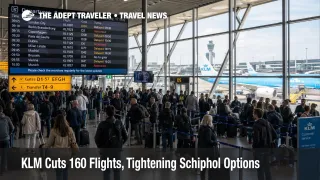
KLM flight cancellations are no longer a fuel story travelers can file under abstract summer risk. KLM said it will cancel 160 European flights over the coming month, equal to 80 return flights to and from Amsterdam Airport Schiphol (AMS), because higher kerosene costs have made a limited number of services uneconomic to operate. The airline also says there is no kerosene shortage behind this move. What matters now is not only the headline cut, but where KLM trims frequency, how much slack remains inside its Schiphol banks, and which passengers lose their easiest backup options first.
KLM Flight Cancellations: What Changed
KLM confirmed on April 16, 2026 that it will operate 80 fewer return flights from Schiphol over the coming month, which it described as less than 1 percent of its European flying during that period. The carrier said the issue is cost, not physical fuel availability, and framed the cuts as a limited schedule adjustment rather than a network retreat.
That distinction matters. A true fuel shortage can produce rolling operational disorder, uneven airport supply, and fast moving day to day schedule changes. KLM is describing something narrower, a profitability filter applied to part of its short haul network. For travelers, that usually means fewer frequency choices, weaker same day recovery, and a higher chance that the flight time you booked is the piece that disappears while the route itself stays on sale.
In an earlier Adept Traveler article, KLM Europe Flight Cuts Hit May Short Haul Plans, the immediate issue was the raw number of canceled flights. The stronger traveler angle now is that KLM cancellations make Europe's fuel strain visible on a real major carrier timetable, not only in warnings from Brussels or fare pressure across the region. In an earlier Adept Traveler article, EU Jet Fuel Plan Raises Summer Flight Risk, the risk was still mostly about contingency planning. KLM has now turned part of that contingency into actual schedule loss.
Which Schiphol Itineraries Are Most Exposed
The travelers least exposed are those on high frequency routes where KLM can move people to a later departure the same day. KLM itself pointed to cities such as London and Düsseldorf as examples of markets it serves multiple times a day, saying affected passengers can usually be accommodated quickly.
The more exposed group is the connector, especially anyone using a short European hop to feed a long haul departure from Schiphol. KLM says Schiphol minimum connection times are 40 minutes for Schengen connections and 50 minutes for non Schengen connections, and notes that passport or security checks can require more time depending on the itinerary. That means a canceled feeder flight does not just remove one segment, it can break the bank structure that made the long haul connection work in the first place. Once one short haul frequency disappears, the next available option may arrive too late for the onward departure, pushing the traveler onto a longer reroute or an overnight stay.
The route types most likely to be cut are, by inference, the ones where KLM has enough daily frequency to consolidate passengers without abandoning the market entirely. That points more toward dense European business and short haul trunk routes than single daily spokes. Even so, the traveler pain can land hardest on timing sensitive passengers, morning departures feeding North America, midday banks feeding Africa or Asia, and evening returns where the next fallback is not until the following day. That is where hotel night pressure, missed cruise joins, and lost ground transport reservations start showing up.
What Travelers Should Do Now
If you are booked on KLM within Europe over the next month, start with the exact operating flight number, not just the route. A route may remain active while your selected frequency disappears. Watch the KLM app, My Trip, and your email closely, especially if your itinerary touches Schiphol and a same day long haul connection. KLM says affected passengers will be rebooked onto the next available flight, and protected KLM or partner connections that misconnect are also rebooked at no cost.
For travelers with flexible plans, the decision threshold is simple. If your trip depends on a short connection at Schiphol, or on arriving the same day for a cruise, tour, wedding, or long haul departure, it is worth moving to an earlier feeder flight now if seats are available. Waiting may preserve your original timing, but it also leaves you exposed to a weaker recovery ladder if your booked flight is one of the trimmed frequencies. On the other hand, if you are flying a high frequency city pair and have no hard onward commitment, waiting for KLM's automatic rebooking may be reasonable.
On passenger rights, the baseline is that cancelled passengers must be offered reimbursement or rerouting. Compensation is more conditional. Under EU passenger rights, compensation usually does not apply if the airline notified you more than 14 days in advance, and it also may not apply if the carrier proves extraordinary circumstances. KLM's own compensation page says cancelled or rebooked passengers may be entitled to compensation or reimbursement, while the EU guidance sets the notice windows and extraordinary circumstance test. Because KLM has publicly linked these cuts to rising fuel costs and commercial viability rather than weather or air traffic control, some passengers will reasonably scrutinize compensation denials closely, though the final legal outcome depends on each case.
Why The KLM Cuts Matter Beyond Amsterdam
KLM's move matters because it changes the signal coming out of Europe's fuel story. The carrier is still saying there is no kerosene shortage, but it has decided that some short haul flying no longer makes economic sense at current prices. That is an earlier and more visible traveler consequence than outright airport rationing. It tells passengers that schedule resilience can thin before physical supply fails.
The next thing to watch is whether other network airlines follow the same pattern, trimming lower yield frequencies while trying to protect core long haul banks and peak leisure departures. Lufthansa has already announced much larger short haul cuts through October, which suggests the pressure is not isolated to one group or one hub. If that pattern spreads, Europe's summer problem becomes less about whether flights exist on paper, and more about whether backup options remain when something goes wrong.
For travelers, that shifts the planning rule. The main risk is no longer only high fares. It is thinner recovery when weather, airport congestion, crew issues, or late inbound aircraft hit an already pared schedule. Over the next several days, monitor whether KLM publishes more route specific detail, whether Schiphol banks start looking tighter in booking flows, and whether other European carriers move from warnings into actual cancellations. KLM flight cancellations may still be limited in percentage terms, but they make the fuel stress visible in the part of the trip chain travelers feel first, the timetable.