

Rabia Reopens After 12 Years, but Syria Access Stays Tight
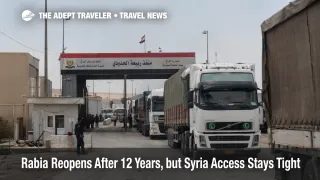
Iraq's Rabia border crossing reopened on April 20, 2026, after more than a decade, giving northern Iraq and Syria a real overland route change at a moment when Gulf shipping disruption has pushed Baghdad to look for land alternatives. The operational catch is that this is not a normal tourist reopening story. Current reporting and official travel advice point much more to trade, fuel shipments, and specialist movement than to a simple new option for ordinary travelers, which means the crossing changes route planning math without turning northern Iraq or northeast Syria into a routine overland corridor.
Rabia Border Crossing: What Changed
The change itself is real and significant. Iraq's Border Ports Commission said earlier this month that Rabia would reopen on April 20, and Reuters reported that the crossing is now back in service for fuel oil shipments and commercial trade after more than 12 years of closure. Iraqi officials have framed the move as a way to relieve pressure on the al Waleed crossing and to create another overland outlet while Gulf maritime exports remain badly constrained. Reuters reported that Iraq's state oil marketer, SOMO, recently awarded contracts for about 650,000 metric tons of fuel oil per month from April through June to move overland via Syria.
For route planners, that matters because a reopened border point in Nineveh province gives the north a corridor that was previously shut, and it can pull some freight and tanker traffic away from western Iraq. That can change truck density, queue patterns, road wear, and commercial traffic timing on approaches linked to Rabia, even before any broader passenger use becomes normal. AP also described the reopening as the Rabia, Yarubiyah crossing, underlining that this is a bilateral route restoration rather than a one sided Iraqi announcement.
Who Can Realistically Use Rabia Now
This is where the story narrows. The available reporting does not show Rabia reopening as a normal, low friction crossing for mainstream leisure travelers. Reuters' April 20 report is explicit about fuel oil and commercial trade traffic, while Rudaw reported the post would run 24 hours a day and handle goods, oil, and petroleum products. That makes Rabia operationally important, but it still reads as a trade led reopening first.
The security overlay is what keeps the route niche. The U.S. State Department's Iraq advisory remains Level 4, Do Not Travel, and specifically warns against travel near armed groups or Iraq's northern borders because of terrorist threats, armed conflict, aerial bombardment, and civil unrest. Its Syria advisory is also Level 4, Do Not Travel, and says the U.S. government cannot provide emergency or routine services inside Syria. Australia's Smartraveller says Syria's roads and border crossings may close without warning, and Jordan's advisory adds that crossings near Syria and Iraq can close without notice. In practice, that means Rabia is more realistic for freight operators, aid actors, business travelers with local sponsorship, and specialist regional movements than for independent travelers trying to build a standard overland itinerary.
What Travelers Should Do Now
Travelers and operators should treat Rabia as an additional corridor, not as a clean new fallback. For anyone whose work genuinely requires movement across northern Iraq and Syria, the immediate step is to confirm whether your nationality, visa status, permissions, local sponsor arrangements, insurance, and security provider all recognize Rabia as a usable crossing before you build transport around it. A reopened gate does not remove permit friction, insurance exclusions, or the possibility of same day closure.
The decision threshold is simple. If the trip is discretionary, Rabia does not suddenly make northeast Syria a practical casual overland add on. If the trip is essential, the safer planning model is still a layered one, with spare road time, alternate overnight points in Iraq, backup communications, and a second crossing or retreat option already mapped. That logic matches the broader regional pattern. In an earlier Adept Traveler article, Syria Exit Planning Now Means Airport and Border Failure Risk, the weak point was not only the border itself, but the whole chain needed to reach and clear it.
What to watch next is durability. If Rabia stays open, handles sustained truck volumes, and starts appearing in official passenger guidance rather than only trade reporting, then route planning across northern Iraq and Syria changes more materially. For now, the reopening is meaningful, but its traveler value is still conditional, narrow, and heavily shaped by security, consular limits, and the possibility that freight traffic itself will make the corridor slower and less predictable before it becomes easier.
Why This Reopening Matters Beyond One Border Post
Rabia changes more than one map pin because it sits inside a wider scramble to reroute flows after Gulf disruption. Reuters reported that Iraq reopened the crossing partly to ease pressure on the already active al Waleed route and to move fuel out by land after maritime options through the Gulf were hit hard. That means freight demand, not tourism demand, is the main force behind the reopening. When tanker and trade traffic expands first, the first order effect is a usable corridor for commerce. The second order effect is a route environment that may become busier, slower, and more variable for any non freight movement trying to use the same roads.
It also matters because the Syria side is still part of a fluid political and administrative picture. Recent reporting on northeast Syria has tied border management, including other crossings, to the still evolving relationship between Damascus and Kurdish led authorities. That leaves Rabia more exposed to policy and control changes than a mature, low risk international crossing would be. The result is a genuine route update, but not a normalization story. The border is back. The corridor is not yet simple.
Sources
- Al-Waeli: Rabia border crossing with Syria to reopen on April 20
- Iraq reopens Rabia border crossing to boost fuel oil exports via Syria
- Iraq's Rabia border crossing with Syria reopens after 12 years
- A long-shuttered Iraq-Syria border crossing reopens for the first time in more than a decade
- Iraq Travel Advisory
- Syria Travel Advisory
- Syria Travel Advice & Safety
- Jordan Travel Advice & Safety
- Syria Exit Planning Now Means Airport and Border Failure Risk