

Thailand Cambodia Land Crossings Stay Shut
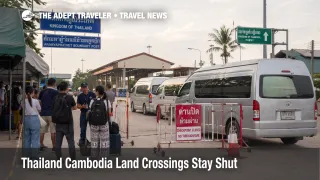
Thailand Cambodia land crossings are still not back for tourists, and that changes more than one border stop. The U.K. Foreign, Commonwealth and Development Office says land borders and crossings between the two countries remain suspended, while tourist sites near the frontier, including Preah Vihear and the Ta Krabey and Ta Muen Thom temple areas, remain closed and affected zones still carry unexploded landmine risk. For travelers, that means the old habit of stitching Thailand and Cambodia together by road is still the wrong planning model, even after months of ceasefire headlines and partial political calm.
Thailand Cambodia Land Crossings: What Changed
The key update is not a fresh clash. It is that official traveler guidance still treats the frontier as functionally closed for normal tourist movement. Britain's Thailand and Cambodia advisories both continue to say the land borders remain suspended, and the Thailand advisory, updated on April 2, 2026, still flags the named temple zones as closed. That keeps the practical answer blunt. If your trip depends on crossing from Thailand into Cambodia, or the reverse, by road, rail, van, private driver, or same day bus transfer, the plan is still broken.
That is a narrower and more operational problem than a generic regional security warning. The border issue does not mean Bangkok, Phnom Penh, or Siem Reap are all off limits. It means the classic country to country handoff that used to be routine for backpackers, private guides, and custom overland itineraries still has not come back in a form travelers should rely on.
In an earlier Adept Traveler article, Thailand Cambodia Border Warning Redraws Overland Routes the focus was the wider warning zone around the frontier. What is different now is that the traveler facing consequence remains live in late April. The border is still not a normal transport corridor.
Which Travelers and Routes Are Most Exposed
The hardest hit route is still the classic Bangkok to Siem Reap overland chain through the Aranyaprathet and Poipet corridor. That used to be the default budget move for travelers combining Angkor with Thailand. It is now the clearest example of an itinerary people should stop trying to salvage on the ground.
The next exposed group is travelers linking eastern Thailand, Koh Chang side trips, or Trat province with Cambodia's southwest coast and Phnom Penh. The Hat Lek and Cham Yeam corridor used to make that pairing workable for slower custom trips. With land crossings still suspended, that road based link is not something travelers should assume can be improvised back into service.
Temple and frontier circuit travelers are exposed in a different way. This is not only about crossing the line. It is also about closed attractions and unsafe border belts. Preah Vihear, Ta Krabey, and Ta Muen Thom are not just difficult to reach, they are specifically named as closed in official advice, and unexploded landmines remain part of the risk picture. That matters for private drivers, photography trips, heritage itineraries, and travelers who were planning to combine Siem Reap with frontier temple stops from Surin, Si Sa Ket, or nearby districts.
There is also a quieter second order problem for travelers who built tightly sequenced plans. Once the land handoff disappears, hotel nights, pickup times, visa timing, onward flights, and even guided tour start dates can all slide out of alignment. What used to be a same day ground transfer becomes an air segment plus airport transfers, or a full resequencing of the trip.
What Travelers Should Do Now
The safest substitute is to split the trip into two air connected blocks. Travelers moving between Thailand and Cambodia should plan around flights into Cambodia's main gateways, especially Siem Reap and Phnom Penh, rather than trying to solve the problem with drivers, buses, or a different checkpoint. That is the cleanest way to preserve the trip without dragging the frontier back into it.
For custom itineraries, the decision threshold is simple. If any part of the plan still says border crossing, temple stop near the frontier, or private transfer between Thailand and Cambodia by road, rebuild it now rather than waiting for a late fix. The cost of changing early is usually lower than losing a hotel night, a guide day, or an onward flight because a border reopening rumor does not materialize.
Travelers already committed to both countries should resequence each side as its own self contained segment. Keep Thailand plans anchored to Bangkok, Chiang Mai, Phuket, or the islands that are well away from the border problem. Keep Cambodia plans anchored to Siem Reap, Phnom Penh, or other interior routes that do not depend on the frontier. For anyone with prepaid drivers or overland packages, get the cancellation and refund conversation started before departure, not from the road.
Why the Closure Still Matters, and What Happens Next
The reason this still matters is that reopened headlines and calmer diplomacy do not automatically restore traveler usable infrastructure. Thailand and Cambodia may not be in the same headline cycle they were during the worst fighting, but major government advisories still frame the frontier as a place where crossings remain suspended, temple zones remain closed, and mine risk remains real. That is enough to keep the overland system broken for tourism even if flights and city stays continue elsewhere.
Reuters reported when Thailand closed its border crossings to almost all travelers in June 2025 that the move covered checkpoints across seven border provinces. Public advisories now confirm the suspension remains in place, but they do not give travelers a clean, current, checkpoint by checkpoint reopening matrix for tourism. That means people should be skeptical of informal assurances from drivers, forums, or old route blogs that treat the border as a day of travel problem rather than a live operational restriction.
What to watch next is not chatter about peace, but explicit reopening language from official travel advisories or border authorities, plus any clear notice that named temple areas have reopened and demining risk has eased. Until that happens, Thailand Cambodia land crossings should stay in the do not rely on category for tourists, and any trip linking the two countries works best when the border is removed from the plan entirely.