

Avianca Adds 42 Weekly Flights for World Cup Summer
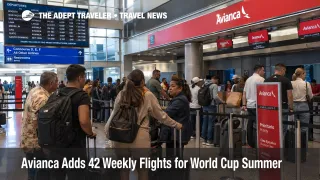
Avianca summer flights are expanding sharply for July 2026, giving travelers 42 more weekly U.S. flights than the carrier operated in July 2025 as World Cup travel demand builds across the Americas. The change is not just more seats into Latin America. It adds new nonstop options, restores seasonal links, and increases frequencies on routes that connect U.S. travelers with Colombia, Ecuador, Guatemala, and El Salvador during one of the busiest sports travel periods North America has seen.
Avianca Summer Flights: What Is Changing
Avianca said on April 23, 2026, that it will add 42 additional weekly flights across multiple U.S. routes compared with July 2025, with tickets available through Avianca's website, mobile app, travel agencies, and contact center. The carrier framed the expansion around stronger U.S. demand for Colombia, Ecuador, and Central America, and specifically tied the buildup to the upcoming soccer competition.
The largest listed increase is Bogotá to Orlando, rising from 14 weekly flights in July 2025 to 21 in July 2026. Miami to San Salvador rises from seven weekly flights to 11, while Cali to New York rises from three to seven. Bogotá to Washington, Bogotá to San Salvador, Bogotá to Tampa, and Guayaquil to New York each gain three weekly flights.
Two routes carry more strategic value for travelers because they add or formalize nonstop options. Miami to Guayaquil, launched in October 2025, will operate seven weekly flights in July 2026. San Francisco to Guatemala City, scheduled as a new June 2026 route, will operate four weekly flights. Avianca also says it will resume seasonal service on Miami to Cali, New York to Pereira, Orlando to Medellín, Las Vegas to San Salvador, and Chicago to San Salvador.
Who Benefits Most From The Added U.S. Routes
The biggest winners are travelers whose trips depend on nonstop access between the United States and northern Latin America during the June 11 to July 19, 2026, FIFA World Cup window. FIFA's official schedule places the tournament across Canada, Mexico, and the United States, which means visiting friends and relatives traffic, soccer travel, business trips, and summer leisure demand will overlap instead of spreading cleanly across separate periods.
Travelers in Florida get the clearest practical improvement. Orlando gains more Bogotá service, Miami gains more San Salvador service, and Miami also gets daily Guayaquil service. That matters because Florida is both a large Latin America gateway and a World Cup travel market, so additional frequencies can reduce the need to backtrack through other hubs.
The West Coast also gets a useful shift. San Francisco to Guatemala City gives Bay Area travelers a more direct Central America option, while Guatemala City to Los Angeles and Los Angeles to San Salvador each gain one weekly flight. The increases are modest, but they improve schedule choice in markets where a missed connection or awkward arrival time can turn a short trip into a much longer itinerary.
How Travelers Should Use The Extra Capacity
Travelers should not assume that more weekly flights automatically means lower fares. The added capacity helps, but World Cup demand can still pull seats into higher fare buckets quickly, especially near match dates, school holiday periods, and weekends. The better use of the expansion is schedule control, picking routes with more weekly departures, better arrival times, and fewer forced overnight connections.
For Colombia trips, the practical decision is whether to prioritize nonstop service or schedule depth. Bogotá has the strongest frequency gains, while Cali and Pereira seasonal routes may be useful for travelers heading beyond the capital. Travelers building multi-city Colombia itineraries should leave more space around domestic transfers, especially when arriving late, connecting to regional flights, or relying on road transfers after dark.
For Ecuador and Central America, the main threshold is ground timing. Daily Miami to Guayaquil service can make Ecuador trips simpler, but travelers should still protect first-night hotel and transfer plans. For Guatemala and El Salvador, new or restored nonstop service may reduce connection risk, but travelers should compare total trip time, arrival hour, and backup availability rather than choosing only by fare.
What Happens Next For World Cup Flight Planning
The next test is whether added flights hold as schedules move closer to summer. Airlines often publish capacity before the peak booking curve is fully visible, then adjust aircraft, departure times, and frequencies as demand hardens. Travelers should monitor schedule changes after booking, especially on seasonal routes and flights that operate fewer than daily departures.
The operational mechanism is straightforward. More frequencies give an airline more ways to absorb demand, but they do not eliminate pressure when multiple travel segments converge at once. World Cup visitors, diaspora travel, summer vacationers, and business passengers will all compete for the same seats, airport counters, baggage systems, and onward transfers. First order, travelers get more nonstop choices. Second order, peak travel days can still produce fare spikes, tighter award availability, and fewer same-day alternatives when a flight cancels.
Avianca summer flights should make U.S. to Latin America planning easier for travelers who book early and choose routes with real schedule depth. The strongest move is to lock in nonstop or high-frequency itineraries first, then keep watching for aircraft swaps, retimed departures, and airport transfer constraints as the World Cup travel period gets closer.