

Heathrow Security Delays Threaten Morning Flights
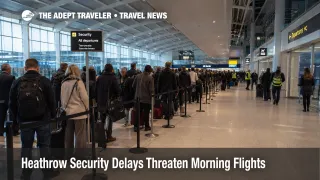
Heathrow security delays are becoming the weak point travelers cannot ignore on early departures from London Heathrow Airport (LHR), especially when morning banks at Terminals 2 and 5 put security lanes under pressure. The airport's public wait-time tools may show short estimated queues at calmer moments, but the traveler risk is the gap between a published estimate and the real processing time when check-in, bag drop, security, and boarding all compress into the same morning window.
Heathrow Security Delays: What Changed
The operational shift is inside the airport, not just on the way to it. Recent Heathrow coverage has focused heavily on rail access disruption, including the Tube strike and Piccadilly line weakness. This new pressure point is different because it sits after travelers have already reached the terminal. Once a passenger is late at security, there are fewer recovery options than there are during the city-to-airport transfer.
Heathrow's current passenger tools publish estimated security and immigration wait times by terminal, and the airport encourages travelers to use live flight and terminal information before they move through the building. Heathrow also says departing passengers can receive live notifications for check-in, bag drop, security wait times, gate information, and boarding status through its app.
The important caveat is that public wait-time estimates are not a guarantee. Heathrow flight pages advise passengers to enter security at least 60 minutes before departure, which is a useful planning floor for travelers with tight morning schedules. If an early security queue runs long, a traveler who arrived just inside the normal airline check-in window may have technically followed the rules but still lose the flight.
Which Heathrow Travelers Are Most Exposed
Terminal 5 is the higher-stakes terminal because British Airways and partner traffic create heavy departure banks, especially on short-haul European flights that invite tighter airport arrival habits. Travelers with checked bags, families moving through bag drop, and passengers without premium or Fast Track access have less margin when security lanes slow.
Terminal 2 exposure is different but still real. Star Alliance and other international departures can create clustered morning demand, and long-haul passengers often have more complicated document, baggage, and connection requirements before they even reach security. The result is a chain problem, not a single queue problem. A longer bag-drop line pushes the traveler later into security, and a longer security queue then pushes the same traveler closer to boarding cutoff.
In an earlier Adept Traveler article, London Tube Strike Hits Heathrow Again on April 23, the risk was getting to the airport during disrupted Underground service. For this article, the risk starts after arrival at the terminal. Travelers who already built extra rail or road time into the airport run should not give that time back by cutting security close.
What Travelers Should Do Before Departure
For Heathrow morning departures, the safer planning threshold is to be inside the terminal and moving toward check-in or bag drop at least 3 hours before long-haul flights, and at least 2.5 hours before short-haul flights when baggage, children, mobility needs, or premium security access are not part of the plan. Hand-luggage-only travelers with seat assignments and no document complications can hold a slightly tighter buffer, but only if live terminal conditions are calm before leaving for the airport.
The clearest decision point is the 90-minute mark before departure. If you are not through security by then for a short-haul flight, or not at least through check-in and actively moving toward security for a long-haul flight, the itinerary is already in a higher-risk zone. At that point, stop shopping, stop pausing for food before screening, and move directly to the process point that controls boarding.
Travelers should check Heathrow's wait-time page and the airline app before leaving the hotel, then check again before joining bag drop or security. If waits are elevated, ask airline staff early rather than waiting until boarding has started. Same-day rebooking is usually worse after the aircraft door closes, and nearby airport hotels can fill quickly when missed departures cluster during the morning peak.
Why The Security Bottleneck Can Spread
Heathrow completed a major security upgrade in January 2026, allowing passengers in all terminals to keep liquids and electronics in their bags, with liquids allowed in containers of up to 2 litres. That technology should reduce preparation friction, but it does not eliminate the need for enough open lanes, staff coverage, queue control, and traveler compliance during busy departure banks.
That is why staffing pressure can matter even at an airport with upgraded scanners. A modern checkpoint can process passengers faster when lanes are fully staffed and travelers are prepared. It can still slow down when too many passengers arrive at once, when lane availability changes, or when travelers need secondary bag checks. First order, queues stretch at the security entrance. Second order, gates see late passengers, airlines face tighter offload decisions, and missed departures move into rebooking desks, baggage recovery, and hotel demand.
What happens next depends on whether morning wait-time spikes remain isolated or become a repeated Terminal 2 and Terminal 5 pattern. Travelers should treat Heathrow security delays as a morning planning risk until live wait-time data and recent passenger reports show consistent stability across peak banks. The practical move is simple: protect the first flight, not the last 30 minutes at the hotel.