

Storm Byron Floods Israel And Gaza Travel Corridors
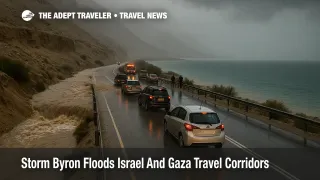
Storm Byron Israel travel corridors now face live flash flooding and sudden closures on December 11, 2025, as heavy rain, strong winds, and desert cloudbursts move from forecast charts into real world disruption across Israel and Gaza. Fire and rescue services report dozens of water rescues, at least one weather related death from suspected hypothermia, and urban flooding from Netanya and Yavne down toward the Negev. At the same time, the same storm system is flooding displacement camps in Gaza, turning tent streets into knee deep water and exposing families to cold, sewage, and disease risks. Travelers with winter itineraries built around Tel Aviv, Jerusalem, the Dead Sea, the Negev, or cross border Jordan corridors now need to treat desert drives, wadi hikes, and some aid related routes as conditions to actively reschedule or heavily buffer.
Storm Byron Israel travel corridors have shifted from a red alert forecast into an active flood event that is closing roads, triggering rescues, and complicating both leisure trips and humanitarian access for at least a 24 to 48 hour window.
How Storm Byron Is Hitting Israel's Main Travel Corridors
Across Israel, Byron's heaviest bands are now delivering the 100 to 150 millimetres of rain that forecasters warned could fall in short, intense bursts from the coast into the hills and deserts. Local reports describe flooded streets and shops in cities such as Yavne and Netanya, with storm drains and culverts overwhelmed and some vehicles abandoned in waist deep water. Emergency services say at least 14 people have been pulled from trapped cars in central Israel and confirm that a 53 year old man was found dead with signs of hypothermia after being exposed to the storm.
On the road network, Israel Police and transport officials have closed segments of Highway 90 between the Nahal David junction and the Dead Sea hotel strip because of dangerous flooding, with additional closures and rolling restrictions on Highways 40 and 12 when desert streams spill across the pavement. Those arteries link Jerusalem and the Tel Aviv area with the Dead Sea, Eilat, Ramon Airport, and many popular hiking canyons, so even short closures can strand tour buses and self drive travelers on the wrong side of a wadi. Storm Byron arrives on top of earlier flash flood episodes that recently cut Eilat off from the rest of the country for hours, underlining how quickly the Negev and Arava can swing from dry road to impassable channel.
Rail operations remain less dramatically affected than high risk roads, but wind and rain can still slow intercity services and airport links, especially on exposed sections between Tel Aviv and Jerusalem and near coastal bottlenecks. Given the mix of flooded approaches and some reports of diverted or delayed flights earlier in the week associated with Byron's arrival in the region, travelers should treat all transfers to and from Ben Gurion Airport (TLV) as higher variance legs, even if the airport itself remains open. The practical move is to add at least one extra hour beyond normal traffic expectations for Tel Aviv or Jerusalem hotel pickups and to avoid separate tickets that assume very tight domestic to international or regional connections through TLV.
Gaza Camps Face A Weather Added Emergency
In Gaza, Byron's impact is less about formal travel corridors and more about whether aid workers, journalists, and relatives trying to reach or move within the Strip can function at all. Heavy rain over tent cities in Khan Younis and Deir al Balah has flooded tens of thousands of makeshift shelters, sent sewage coursing through walkways, and left families without dry bedding or clothing. Local and international agencies describe residents wading through knee deep water inside camp streets and report at least one infant death linked to exposure, while medical teams warn about the rising risk of hypothermia, respiratory illness, and waterborne disease.
For the relatively small group of foreign travelers who have permission to enter Gaza in the current security environment, these conditions turn each movement into a negotiation. Even when permissions and security guarantees exist, flooded camp roads, damaged drainage, and overtaxed clinics make it harder to move vehicles, keep to schedules, or access specific neighborhoods. Anyone planning essential travel into Gaza over the next several days, including humanitarian staff and accredited media, should work through established agencies, plan for highly flexible schedules, and assume that comfort standards will be sharply lower than usual winter contingencies.
Allenby Bridge, Jordan Corridors, And Cross Border Trips
The reopening of the Allenby, or King Hussein, Bridge crossing for aid trucks from Jordan this week has restored a critical humanitarian artery, but it does not mean a quick return to normal tourist transits. New security measures, including stricter driver screening and cargo checks, sit on top of the long queues and variable processing times that Adept already flagged in its earlier Jordan border delays coverage. Storm Byron's heavy rain adds a further layer of fragility, since access roads on both the Israeli and Jordanian sides can flood or see traffic jams when convoys queue and side streets handle spillover traffic.
For travelers combining Amman, the Dead Sea, or Petra with Jerusalem or the West Bank, that means Allenby remains a high friction choice, useful when it works but not a leg to pin a same day long haul departure on. A safer pattern is to treat cross border moves as stand alone travel days, to avoid late afternoon crossings that risk bumping up against weather, queues, and possible security events, and to keep flights and train legs on adjacent days rather than the same calendar date. Separate from the storm, Thursdays and Fridays continue to see a higher likelihood of demonstrations and rolling roadblocks around Amman, the Dead Sea Highway, and border approaches, so it is sensible to avoid planning tight Allenby transfers in those windows or to leave substantial slack if timing cannot move.
Background, Why Israel's Flash Flood Risk Is So High
Israel's main desert tourism zones sit inside narrow wadis and steep sided canyons that react violently to cloudbursts. A few minutes of intense rain over a distant plateau can send a wall of water and debris down an otherwise dry streambed, which is why the Israel Meteorological Service and civil defense agencies treat even short term red alerts for the Judean Desert, the Dead Sea valleys, and Negev or Arava wadis as life threatening warnings rather than gentle advisories. Hikers or drivers who enter stream channels during these windows can have no visual cue until the surge arrives.
The same geography that produces dramatic canyon scenery also funnels road and rail alignments into narrow choke points. Highways 90, 40, and 12, plus feeder roads to Ein Gedi, Masada, and Negev national parks, tend to share alignments with wadis or low bridges, which is why closures can come in waves as specific segments flood, drain, then flood again. Even on the coastal plain and in cities such as Tel Aviv and Haifa, drainage networks can be overwhelmed when 100 to 150 millimetres of rain fall in a short window, flooding underpasses, tunnels, and lower parking decks.
How To Reshape Trips Over The Next 48 Hours
For travelers already in Israel, the cleanest moves over the December 11 to 12 peak are to swap canyon and Dead Sea days for urban time in Tel Aviv or Jerusalem, and to push desert legs into clearer post Byron windows from about December 13 onward, when forecasts suggest more stable conditions. Anyone holding non essential self drive loops that rely heavily on Highways 90, 40, or 12 can also look at flipping those segments later into the itinerary or consolidating them into a single, well monitored day once police and meteorological services lift flash flood alerts.
For upcoming arrivals into Ben Gurion, the key is to separate what the airline controls from what the storm controls. The airport is built to handle heavy rain, but transfer times from hotels or regional cities can expand sharply when urban flooding or highway closures hit. A cautious baseline over the next two days is to add at least one extra hour for TLV transfers, to avoid relying on last departures of the night for critical connections, and to keep airline apps and airport alerts switched on in case of diversions or reroutes around Byron's remaining bands. If airline waivers become available, moving voluntary changes into clearer weather windows may be less stressful than gambling on same day rebooking in a saturated system.
For trips that also involve Jordan, it is wise to lean on Queen Alia International Airport in Amman, and direct flights in and out of Jordan, for as much of the itinerary as possible, then treat Allenby as an optional connector rather than an essential bridge. If cross border legs cannot be avoided, make them the focus of a full travel day on either side of the storm, keep plans flexible for last minute schedule shifts, and avoid stacking them against evenings that could also see protests or traffic disruptions.
For humanitarian and professional travel linked to Gaza, the threshold should be even higher. No one should enter camp zones or flooded streets without coordination with on the ground agencies, access to safety equipment, and a plan for safe shelter and exit if rainfall resumes. In many cases, the safest decision may be to delay non urgent site visits until after Byron's rain bands clear and drainage improves.
Sources
- Storm Byron wreaks havoc on Israel amid heavy flooding as supermarkets, roads overflow
- Storm Byron brings floods, strong winds across Israel
- Man found dead, 14 rescued from trapped vehicles, 2 girls stranded in riverbed as winter storm hits
- Winter Storm Byron Pounds Israel, Authorities Issue Warnings
- Winter storm rips through Gaza, exposing failure to deliver enough aid to territory
- Displaced Gaza families struggle as winter storm hits
- Israel to reopen Jordan border crossing with Jordan after nearly 3 months of closure
- Allenby Crossing to open for Gaza aid from Jordan for 1st time since September attack
- Storm Byron Flood Threat For Israel Winter Trips
- Jordan Border Delays At Allenby Bridge Disrupt Trips