

IndiGo Cancellations Persist Across India on December 12
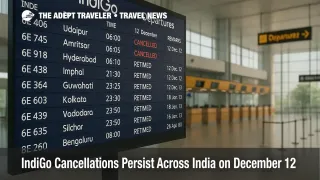
IndiGo flight cancellations India remain a live planning problem on Friday, December 12, 2025, even as the carrier says the worst of the disruption wave is easing. Travelers moving on domestic India itineraries, or linking domestic legs into international departures, should expect uneven reliability by route and time of day. The practical fix is to check flight status through IndiGo channels that are tied to your booking, add connection buffers, and be ready to rebook quickly if a retime turns a safe connection into a misconnect risk.
IndiGo flight cancellations India are no longer an all out system meltdown, but they are still frequent enough to break tight plans, especially at the biggest hubs that feed the rest of the network.
What Changed on December 12
IndiGo said it planned to operate more than 2,000 flights on Friday as it stabilizes, a meaningful improvement from the peak cancellation days earlier in the month. At the same time, reporting and airport snapshots continue to show ongoing cancellations and rolling retimes at multiple airports, which is why travelers should treat "operating normally" as route specific rather than network wide.
For passengers, the key operational reality is that even a smaller number of cancellations can still cause large downstream pain when flights are full, crews are tightly scheduled, and reaccommodation options are limited. A single scrubbed rotation can strand aircraft and crews away from their next sectors, and that tends to show up later in the day as gate changes, delayed departures, and last minute aircraft swaps that break seat assignments and checked bag flows.
Where Disruption Is Most Likely
IndiGo's network is built around high frequency metro corridors and hub feeding patterns, so the most noticeable ripple effects usually concentrate at the biggest connecting airports, including Indira Gandhi International Airport (DEL), Chhatrapati Shivaji Maharaj International Airport (BOM), Kempegowda International Airport (BLR), Rajiv Gandhi International Airport (HYD), and Chennai International Airport (MAA). Even if your flight is not cancelled, congestion at these hubs can raise the odds of missed bags, longer queues at customer service desks, and slower turnaround times that turn a modest delay into a serious misconnect.
Travelers should also expect the network to feel "patchy," meaning two flights on the same city pair can have very different reliability depending on which aircraft is assigned and whether that aircraft has already absorbed earlier delays. This is why it is not enough to check your flight once the night before, because the most relevant information, your specific aircraft and crew plan, can change multiple times on departure day.
How To Catch Last Minute Changes
The most reliable way to spot real risk is to check status using your PNR inside the IndiGo app or the manage booking flow on the airline website. That view is tied to the carrier's latest control decisions, and it will usually reflect cancellations, retimes, and reaccommodation prompts faster than third party timetables. Enable push notifications, and recheck at three points, when you wake up, before you leave for the airport, and after you clear security.
If you are connecting, do not only check the first flight. Also check the onward flight's current departure time, gate, and boarding cutoff, then compare those to your expected arrival time plus a realistic taxi in, deplane, and terminal transit buffer. When a retime shrinks your connection below what you can reliably make, rebook immediately, because seats on later flights disappear fast during a disruption week.
Rebooking, Vouchers, and What To Expect
IndiGo has been using rebooking and voucher style remediation as it works through passenger backlogs, and travelers should assume that the fastest path is self service first, then escalation through support channels if the digital options fail. If you are already at the airport and your flight cancels, take screenshots of the cancellation status, keep receipts for meals and ground transport, and ask explicitly how checked bags will be handled on your new itinerary, because bag reunification becomes harder when flights are full and aircraft swap frequently.
For travelers holding separate tickets, for example a domestic IndiGo flight into an international departure on another carrier, assume you carry the misconnect risk. The safest option during an uneven recovery is to widen the buffer substantially, or move the domestic leg earlier, even if that means extra time in the terminal.
Background: Why This Keeps Happening
This disruption cycle has been closely tied to crew scheduling strain under newer pilot duty and rest constraints, with regulators and the airline working through temporary adjustments and operational resets to restore reliability. The traveler relevant takeaway is simple, when the limiting factor is crews and rotations rather than a single airport closure, recovery tends to be uneven, and the last flights of the day are more exposed to knock on effects.
For earlier context on how the disruption began and what it means for winter schedules, see our reporting on India Domestic Flight Cancellations Disrupt Travel and India IndiGo Winter Flight Cuts Hit Domestic Routes. For a broader rolling view of how airline disruptions cascade and how to plan buffers, see Flight Disruptions.