

NYC Snowstorm Delays JFK, Newark, LaGuardia December 15
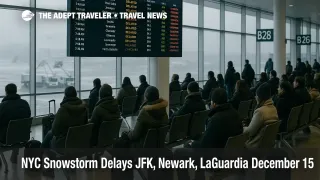
NYC airport delays after snow are still disrupting travel across the New York City region, including John F. Kennedy International Airport (JFK), Newark Liberty International Airport (EWR), and LaGuardia Airport (LGA), on December 15, 2025. Travelers connecting through the metro area, especially on tight domestic connections and last flights of the day, are the most exposed to misconnects, forced overnights, and baggage delays. The practical move is to rebook early if you can, avoid short connections, and do not leave for the airport until your flight status, aircraft, and crew look stable.
The NYC airport delays after snow problem is no longer just falling snow, it is recovery math, where limited gates, slow turns, and out of position aircraft keep schedules brittle even after the worst weather window passes.
What The Numbers Say At JFK, Newark, And LaGuardia
The December 14 snowstorm produced the kind of operational pileup that New York airports struggle to absorb, because runway throughput drops during snow removal and deicing, while gates stay occupied longer by aircraft that cannot depart on time. Business Insider documented extended waits after landing at JFK, and cited widespread delays and cancellations across the metro area as crews prioritized snow and ice removal and safe operations. FAA cited snow or ice as a driver of multi hour arrival delays during the peak disruption window at JFK.
By December 15, the system had moved into recovery mode, but the flight inventory still showed meaningful damage. FlightAware's airport dashboards for December 15 listed 218 delays and 64 cancellations at JFK, 138 delays and 14 cancellations at Newark, and 134 delays and 58 cancellations at LaGuardia. Those airport totals matter because even if the FAA clears major traffic management programs later in the day, airlines often need additional cancellations to rebuild a usable aircraft and crew rotation for the next morning's departure bank.
FAA airport status pages are a useful cross check for whether the national traffic management picture is improving. On December 15, FAA status pages for JFK, Newark, and LaGuardia showed shorter arrival delay programs later in the day, signaling that the most severe airborne holding and arrival metering had eased. That does not guarantee a smooth passenger experience, because local gate availability, late arriving aircraft, and crew legality constraints can still drive last minute cancellations at the airline level.
Why Airports Stay Snarled After The Snow Stops
Background Snow disruption is not just a runway problem, it is a turnaround problem. A winter operation forces extra steps on nearly every movement, including aircraft deicing, longer taxi times, slower pushbacks, and more spacing between arrivals and departures. When those delays stack up, planes arrive late and occupy gates longer, and arriving flights can be forced to wait for a gate to open, which is how tarmac holds happen during peak congestion.
A second layer is network recovery. New York airports sit at the center of dense short haul schedules, and many flights are "linked" by the same aircraft and crew operating multiple legs. If an early leg cancels or arrives far behind schedule, later legs become impossible to operate without swapping aircraft, repositioning crews, or canceling flights to reset the rotation. This is why travelers can see a day where FAA delay programs improve, but airline cancellations still roll through the schedule as carriers rebuild for the following morning.
Cold air also matters. When temperatures drop, deicing effectiveness windows can be shorter, and snow or ice can refreeze on ramps, making ground operations slower and more cautious. Even small differences in timing can push crews over duty limits, particularly on multi segment domestic itineraries.
Practical Rebooking Moves For Travelers
Travelers with connections through JFK, Newark, or LaGuardia on December 15 should treat same day plans as fragile. If an airline waiver is available, moving the trip to December 16 is often the cleanest fix, because it lets the carrier protect you onto a rebuilt schedule rather than forcing you into a shrinking pool of remaining seats.
If travel cannot move, the lowest risk tactic is to prioritize nonstop options and avoid self connecting on separate tickets. Separate tickets can turn a weather disruption into an expensive problem, because your onward carrier may treat a misconnect as a no show. For travelers who must connect, longer connection times are not optional in this recovery window, because a late inbound plus a gate wait can erase a normal domestic connection buffer quickly.
Baggage strategy is also part of the decision. When irregular operations drag on, checked bags are more likely to misroute during reaccommodation. Carrying essentials and keeping key items in cabin baggage reduces the downside if your itinerary changes mid trip.
For readers planning future winter travel through New York, this storm is a reminder to match booking choices to the risk profile. Flexible fares, realistic connection times, and a clear understanding of what your travel insurance covers can turn a rough day into an inconvenience instead of a trip ending surprise. Adept Traveler's Travel Insurance Basics hub explains how many policies treat delays, cancellations, and missed connections, especially on separate tickets.
Related coverage worth skimming before you rebook includes our Northeast winter storm flight delays update, plus the broader U.S. flight delays and airport impacts roundup, which can help you spot alternate hubs and less brittle routings.
Sources
- Passengers landing at JFK got stuck on the tarmac for 3 hours after a snowstorm hit New York
- FlightAware, John F. Kennedy International Airport delays and cancellations
- FlightAware, Newark Liberty International Airport delays and cancellations
- FlightAware, LaGuardia Airport delays and cancellations
- FAA Airport Status, JFK
- FAA Airport Status, EWR
- FAA Airport Status, LGA
- Winter storm brings travel chaos to Northeast with flights delayed
- Snowfall totals from around New York City, Tri State area