

UK Benin Travel Advice Expands No Travel Zones
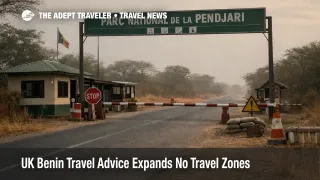
UK travel advice for Benin changed on December 15, 2025, when the Foreign, Commonwealth and Development Office expanded the footprint of areas it advises against all but essential travel. The key operational shift is that the remaining areas of Alibori and Atacora, two northern departments that anchor many safari and overland routes, are now explicitly covered by the higher restriction category, alongside existing no travel guidance for specific parks, hunting zones, and some border areas. For travelers, that change is not abstract. It can directly affect whether insurance remains valid, whether a tour operator will run a departure, and whether a hotel or ground handler will treat the trip as cancelable or reroutable without heavy penalties.
The practical map of "what is now harder to do" is straightforward. FCDO continues to advise against all travel to Parc du W National Park and the connecting hunting zones of Mékrou and Djona, as well as Pendjari National Park and adjacent hunting grounds, and it maintains no travel guidance for other specified border areas in the north. It also continues to advise against all but essential travel to a defined eastern belt between the Interstate Highway RNIE 2 [from Tchaourou to Malanville] and the Benin Nigeria border. The December 15 update adds another layer by covering the remaining areas of Alibori and Atacora under all but essential travel, which can pull a wider set of northern lodges, staging towns, and approach roads into the "rebuild the itinerary" category.
For travelers trying to interpret the shift quickly, use a two step check. First, identify whether your itinerary includes Pendjari, W, adjacent hunting zones, or travel within 5 km of the Burkina Faso border, which fall under the highest restriction tier in the FCDO guidance. Second, if you were not going into those specific no travel areas, check whether your route still spends meaningful time in Alibori or Atacora, or uses the RNIE 2 corridor from Tchaourou to Malanville with movement toward the Nigeria border, because that is where the expanded all but essential travel guidance concentrates.
Who Is Affected
This change most directly affects travelers who built Benin around northern nature tourism and borderland overland movement. That includes classic Pendjari and W circuits, hunting zone add ons, and multi country trips that were meant to flow between Benin and Burkina Faso, Niger, Nigeria, or onward Sahel destinations. It also affects travelers who intended to reach the north overland from coastal Benin and then continue by road, because the advisories are written in geographic terms that can encompass approach corridors, not just the final park gate.
Travelers on packaged safaris and guided tours are likely to feel the impact first, because operators, insurers, and destination partners tend to treat FCDO "all travel" and "all but essential travel" guidance as hard constraints. Even when flights and hotels in southern Benin are operating normally, a single northern leg can cause an entire itinerary to become non deliverable under the operator's duty of care rules. Independent travelers are affected differently, often through second order logistics: fewer transport providers willing to run long legs north, reduced availability of private drivers for multi day itineraries, and tighter acceptance policies for prepaid excursions that depended on park access.
The ripple effects then spread across the travel system in predictable ways. When northern departures pause, capacity shifts south, especially into coastal and near coastal bases such as Cotonou, Ouidah, and Porto Novo, which can raise prices and reduce last minute room choice during peak weeks. At the same time, overland travelers tend to consolidate onto fewer "safer feeling" trunk moves, which can increase crowding at transport nodes, slow down transfers, and compress check in windows for travelers trying to stitch together flights and road legs. If you are flying in and out of Cardinal Bernardin Gantin International Airport (COO), the advice shift also changes how conservative you should be with same day onward ground movement, because itineraries that previously depended on immediate northbound departures may now need a southern staging night to avoid rushed decisions. Travelers following Benin security developments should also read related reporting such as Benin Coup Attempt Raises Cotonou Airport Flight Risk and Benin Coup Aftermath And Cotonou Airport Reopening, because advisories and on the ground movement constraints can tighten quickly when security posture changes.
What Travelers Should Do
If your trip includes any of the named no travel areas [Pendjari, W, adjacent hunting zones, or specified border buffers], treat this as a reroute or postpone decision, not a "wait and see for a day" decision. Contact your insurer and operator in writing, ask them to confirm coverage and operability for your exact towns and nights, and hold off on new deposits until you have that answer. If you are already in Benin and had a northbound segment planned, prioritize staying in place in the south while you rebuild the itinerary, rather than attempting long repositioning days that could leave you stranded mid route if providers cancel at short notice.
If your itinerary does not include the explicit no travel zones but it does include Alibori, Atacora, or the eastern belt defined in the guidance, set a clear threshold for action. When a supplier will not confirm in writing that they will operate your trip, or when your insurance policy excludes losses in areas under all but essential travel, the smart move is to shift plans south or switch destinations rather than trying to negotiate exceptions on arrival. If your suppliers confirm they can operate, build extra buffer nights, and avoid stacking tight connections between long drives and fixed time assets like flights, day tours, or onward land borders.
Over the next 24 to 72 hours, monitor three things rather than chasing rumors. First, monitor GOV.UK for any further map or wording updates, because advisory boundaries can change faster than most tour inventories can. Second, monitor your operator communications for route substitutions, including whether they will replace a northern leg with coastal culture, lagoon, or heritage programming, and whether they will treat that as a material itinerary change that allows cancellation. Third, monitor your insurance policy position, specifically whether it references FCDO advice levels, and whether it treats a change in advice after purchase as grounds for cancellation coverage or as an exclusion.
For general context on what advisory levels mean, and why they often trigger operator and insurance constraints even when day to day life appears calm, see Travel Advisory.
How It Works
FCDO travel advice is not a border control measure, but it is a practical constraint layer that sits on top of the travel system. Insurers often write exclusions tied to "travel against government advice," and tour operators frequently incorporate government advice into their safety duty policies, which means an advisory change can stop a trip even if hotels, roads, and flights remain technically open. The December 15, 2025 update matters because it expands the geographic scope of higher restriction language, pulling more towns, roads, and staging nights into the zone where suppliers may refuse service or limit liability.
That propagation is why northern Benin changes quickly become coastal Benin problems. When tours cancel or reroute, demand shifts into fewer southern products, and the last minute market tightens. When overland legs are removed, travelers often replace them with short haul flights, extra hotel nights, or private transfers, which increases pressure on limited inventory and raises the cost of flexibility. In parallel, travelers who still have to move for non discretionary reasons tend to bunch into specific corridors, and that can produce more checkpoints, slower transfers, and higher misconnect risk around airports and border posts. For a traveler, the correct response is not to debate whether a specific road is open on a given day, it is to build an itinerary that remains workable if a supplier decides they cannot run a northern segment under the updated advice.