

MSC Magnifica World Cruise 2028 Booking Details
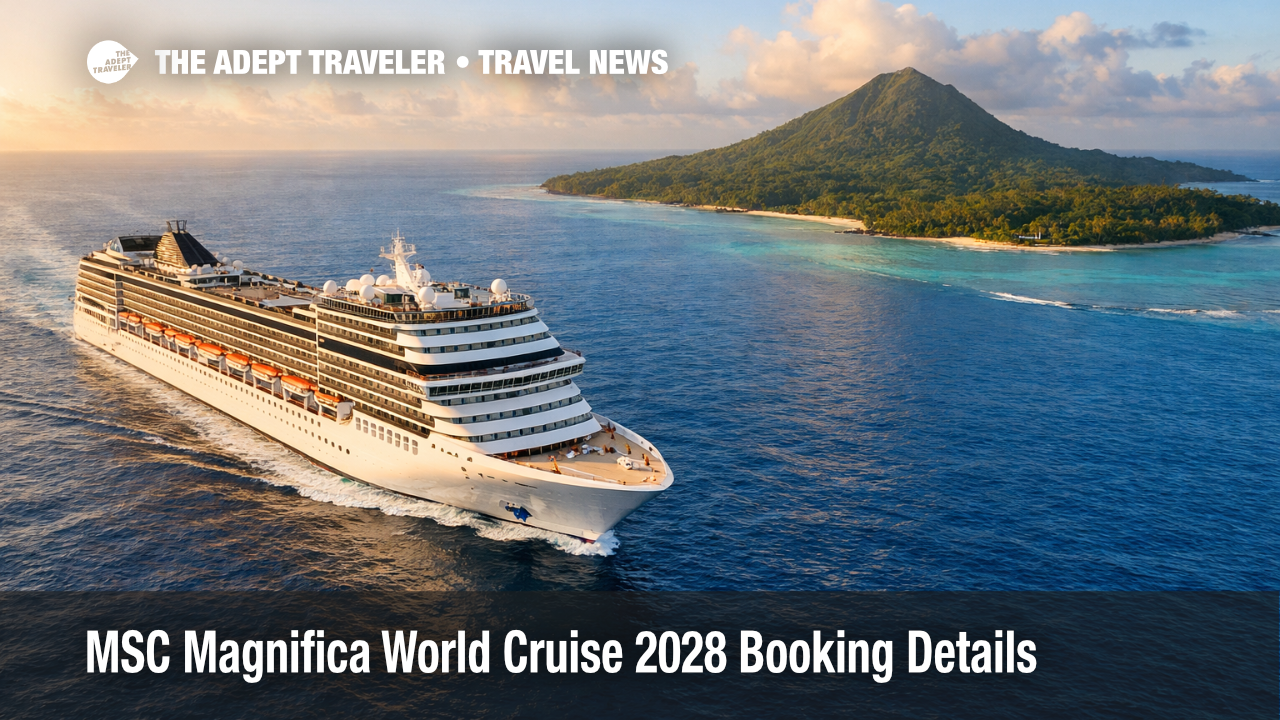
MSC Cruises has opened sales for the MSC Magnifica world cruise 2028, a 115 night itinerary that circles through more than 40 destinations across 29 countries. Travelers looking at a full world cruise, or a shorter segment, are the most affected, especially those planning to embark in Civitavecchia, Genoa, Marseille, or Barcelona in early January 2028. The next step is to choose the embarkation port that best matches your flights and visas, then build buffers for winter travel disruptions and border processing, and price the included perks against how you normally spend onboard.
The MSC Magnifica world cruise 2028 matters because MSC is pairing a newly refurbished ship with bundled inclusions and overnight stays, which can reduce decision friction, but raises the stakes on logistics and documentation for a long, multi region itinerary.
MSC says travelers can board on January 4, 2028 from Civitavecchia, on January 5, 2028 from Genoa, on January 6, 2028 from Marseille, or on January 7, 2028 from Barcelona. The route is built around seven overnight calls, including Callao and Lima, Papeete, Sydney, Cairns, Ha Long Bay and Hanoi, Mumbai, and Dubai, which is designed to make longer shore days possible without rushing back to the pier.
MSC highlights new, or rare, calls that include Nuku'alofa, Manta, Arica, Callao, Chan May, Sihanoukville, Grand Turk Island, Hanga Roa on Easter Island, and Puerto Limón, which is a mix of remote islands and practical gateway ports that can reshape what travelers do ashore. MSC also says the ticket includes 15 shore excursions, a Dine and Drink beverage package served during lunch and dinner, and a 30 percent discount on laundry services, and that MSC Voyagers Club Classic members and above get a 5 percent discount plus accelerated points credit.
Who Is Affected
Travelers committing to the full 115 night voyage are most exposed to compounding risks, including missed embarkation, mid itinerary medical needs, and shifting entry requirements, because there are fewer easy reset points than on a one or two week cruise. Those risks are highest for travelers who plan complex positioning flights into Italy, France, or Spain during winter schedules, and for anyone trying to stitch together separate tickets.
Travelers booking a partial segment still face the same documentation reality as full voyage guests, but with a different failure mode, which is a segment start or end that does not line up cleanly with available flights. Overnight calls can be a benefit here, but they also create late night returns, early starts, and greater reliance on local transport timing.
Travelers deciding between standard cabins and premium categories should pay attention to the ship changes. MSC has said MSC Magnifica's refurbishment program adds the MSC Yacht Club and other venue upgrades, with the Yacht Club experience scheduled to debut from summer 2026, which makes the world cruise a relevant use case for travelers who want an enclave style product on a long sailing.
What Travelers Should Do
Start with the hard constraints, which are passports, visas, and flight geometry into your chosen embarkation port. If you are flying into the Schengen Area to start the cruise, build extra time for border processing and airport variability, and treat embarkation morning arrivals as a self inflicted risk. If Vietnam, India, Australia, or other stops require action for your citizenship, set calendar reminders for application windows, and keep digital and printed copies of approvals, Vietnam Entry Requirements For Tourists In 2026 is a practical starting point for one of the higher friction ports.
Use a decision threshold for rebooking versus waiting, because long cruises punish indecision. If flights to your embarkation city require a same day connection, or if you cannot add at least one buffer night in the embarkation region, it is usually smarter to change routing or ports now, even if the fare is slightly higher. If you are choosing Yacht Club primarily for privacy and service, make that the gating factor first, then price the cabin against what you would otherwise buy separately over 115 nights.
Over the next 24 to 72 hours, monitor three things that can materially change your risk profile. Watch for any MSC updates that clarify included excursion lists and package limits, watch for border processing alerts that could affect January travel into Europe, and watch for airline schedule changes on the specific routes you need for positioning. If you expect to enter Schengen by air, Schengen EES Border Delays At Airports Into 2026 is the relevant operational backdrop for buffer planning, and if you are comparing MSC cabin strategies, MSC Eastern Mediterranean Cruises 2026 on Lirica, Divina provides a recent reference point for how MSC positions Yacht Club versus standard inventory.
Background
A world cruise is not just a long itinerary, it is a tightly coupled system of port slots, fuel planning, crew rotations, provisioning, shore excursion capacity, and ship reliability, and small changes in one layer ripple into traveler outcomes. The first order effect of MSC opening bookings is that scarce cabin categories are allocated early, and flights and hotels in the four embarkation cities start to behave like event travel, with higher prices and fewer refundable options near sailing week.
The refurbishment angle matters because it changes onboard product decisions for a long duration trip. MSC has said the ship's upgrade program includes the MSC Yacht Club with new suites, plus other onboard enhancements, which can change both the price curve and the onboard experience for travelers who plan to live onboard for more than three months.
Second order effects show up across at least two other layers. On the air side, travelers funnel into Rome, Genoa, Marseille, and Barcelona gateways, which increases the chance of misconnects and baggage issues, especially if you try to arrive close to sailing day. On the ground side, overnights in places like Lima, Hanoi, and Dubai encourage late returns and longer independent touring, which increases reliance on local transport timing, and raises the value of conservative all aboard buffers and clear ship time discipline.