

Portugal Airports Ground Handling Strike Dec 31 to Jan 1
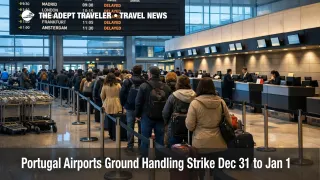
Ground handling staff tied to SPdH, Menzies have a strike notice covering Portugal's main airports over the New Year period, a timing that can disrupt check in flow, baggage handling, and aircraft turnarounds even when flights are still scheduled to operate. Travelers moving through Humberto Delgado Airport (LIS) in Lisbon, Portugal, Porto, Portugal, Francisco Sá Carneiro Airport (OPO), and Faro, Portugal, Faro Airport (FAO) are the most exposed, with Madeira gateways also named. The practical next step is to reduce reliance on checked bags and tight connections, and to build a buffer plan for overnight stays or alternate routing if queues and turnaround delays snowball.
The Portugal ground handling strike is scheduled from 1200 a.m. on December 31, 2025, through 1200 a.m. on January 1, 2026, and the unions say it covers mainland Portugal and the Autonomous Region of Madeira.
In their statement, the unions tie the walkout to uncertainty around the ongoing tender for ground handling licenses, and they describe the affected work as categories tied to baggage terminal, cargo, and apron activity, which are the functions that most directly determine whether bags move on time and whether aircraft can depart on schedule.
Who Is Affected
Travelers are most exposed at Portugal's largest gateways, particularly Lisbon and Porto, because those airports concentrate holiday departures, inbound leisure arrivals, and onward connections, which magnifies any slowdown in baggage and ramp flow. Faro is also a risk point because high leisure volume can compress baggage belts and check in areas quickly when a single workgroup becomes a bottleneck.
The unions' strike notice names staffing impacts in Lisbon, Porto, and Faro, and it also names the Madeira airports serving Funchal, Portugal, and Porto Santo, Portugal, which means island travelers should plan for a higher chance of delayed bag delivery and late inbound aircraft that arrive out of sequence. For Madeira travel, Madeira, Portugal, Madeira, Funchal Airport (FNC), and Porto Santo Airport (PXO) are the relevant gateways.
This is also a year end risk for anyone chaining travel products that do not protect each other. A delayed departure out of Lisbon can break separate ticket connections to Europe, Africa, or the Americas, and a late arrival can spill into missed hotel check in windows, prepaid transfers, and cruise embarkation cutoffs, especially on January 1 when staffing can already be thinner across the travel system.
What Travelers Should Do
Travelers flying on December 31, 2025, or January 1, 2026, should treat checked bags as the biggest variable. Pack one change of clothes, essential medications, chargers, and anything needed for the first 24 hours in a carry on, and assume bag drop and baggage delivery can run late if baggage terminal and ramp work slows. If checking a bag is unavoidable, arrive earlier than normal, and use an easily identifiable bag and a current bag tag photo to speed up tracing if it misroutes.
For decision thresholds, the cleanest rebook is any itinerary that depends on a tight connection, a last flight of the day, or separate tickets through Lisbon or Porto. If the plan has under two hours to connect in Lisbon, or under 90 minutes in Porto, the risk of a misconnect rises quickly once turn times slip and gate changes stack. Moving the trip to December 30, 2025, or to after the strike ends, or adding a buffer night on either side, is often cheaper than buying a last minute replacement ticket during a holiday peak.
Over the next 24 to 72 hours, travelers should monitor three things: airline waiver notices, airport operational updates, and any minimum services ruling that could define what level of handling must be provided during the strike. Similar Portugal handling actions earlier in 2025 operated under minimum service requirements set by arbitration, but minimum services do not eliminate queues, they mainly reduce the chance of a total stop. For additional strike planning context across Europe, see London Airport Strikes Disrupt Christmas Flights and Italy Airport Strike Disrupts Flights January 9, 2026.
How It Works
Ground handling is the set of on the ground services that connect a scheduled flight to a real departure. It includes tasks such as bag acceptance and sorting, loading and unloading baggage and cargo, marshalling aircraft on the apron, and the servicing steps that must finish before an aircraft can push back. When a strike hits any of those links, the flight may still show as operating, but the airport can lose throughput, so lines grow at bag drop, bags miss the correct aircraft, and late turnarounds cascade into later departures.
This story is also being amplified by a structural transition in Portugal's handling market. The Government extended the validity of ground handling licenses at Lisbon, Porto, and Faro to May 19, 2026, while the National Civil Aviation Authority, ANAC continues a multi phase tender process, and that unresolved outcome is the core trigger unions cite for the New Year action.
The ripple pattern is predictable. First order effects start at the source, slower baggage processing, slower ramp service, and longer dwell times for aircraft waiting on completed handling tasks. Second order effects spread into missed connections across banked schedules, aircraft and crew arriving late to their next rotation, and fewer recovery options when holiday load factors are high. The third layer shows up off airport property, more forced overnights near terminals, pressure on last minute hotel inventory, and missed tours, transfers, and port check in appointments that were timed to a punctual arrival.
Sources
- Portugal airport staff strike announced
- Lusa - Business News - Portugal: Airport ground handlers to strike between 31 December-1 January
- Portugal ground handling at airports
- Minimum services ordered for airport strike
- "Contingency plan" to reduce airport disruptions due to strike
- Lisbon Humberto Delgado Airport
- Porto/Francisco de Sá Carneiro Airport
- Faro Airport
- Madeira/Funchal Airport
- Porto Santo Airport