

Portugal Ground Handling Strike Called Off for New Year
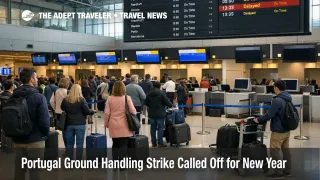
The planned SPdH Menzies ground handling walkout in Portugal for December 31, 2025, and January 1, 2026, has been called off after unions said they signed two agreements, one with Menzies and one with TAP Air Portugal, and that both were validated by the Portuguese government. For travelers, the practical change is that a major New Year threat to check in throughput, ramp staffing, and baggage delivery has been removed at the highest volume airports in the system.
The nut graf for travelers is simple: the Portugal ground handling strike is no longer expected to disrupt New Year departures and arrivals in the way a two day handling stoppage typically would. That restores confidence for Portugal connections and for itineraries that would have failed on baggage timing alone.
What was agreed matters because it points to why the strike was lifted, and what could still be fragile. Unions said the SPdH Menzies agreement includes immediate negotiation of a new company agreement, with priority on pay tables and other compensation components, aligned with a broader income agreement between the government and social partners. They also said the TAP agreement is intended to ensure the conditions needed for worker stability, which is relevant because TAP is a major anchor customer in Lisbon. The unions also noted the signed agreements apply only to their members under Portuguese labor law, which is a reminder that labor risk can reappear if other groups are not covered.
For travelers comparing how ground handling labor actions behave across the Iberian Peninsula during peak weeks, the operational pattern is similar even when the outcomes differ, and the best mental model remains baggage, check in desks, and aircraft turns as the highest exposure points. See Spain Azul Handling Strikes Delay Baggage at Airports for a nearby example of how predictable handling constraints can still create real traveler friction without fully grounding schedules.
Who Is Affected
Travelers flying on, or connecting through, Portugal around New Year are the main beneficiaries, especially anyone who planned to check a bag, relies on counter processing for document checks, or is connecting onward the same day by air, rail, or cruise positioning. The highest stakes are at Humberto Delgado Airport (LIS), Francisco Sá Carneiro Airport (OPO), and Faro Airport (FAO), because those airports concentrate holiday volume into banks where there is little slack if baggage belts, ramp teams, or turnaround staffing fall behind.
Even with the strike called off, some itineraries remain structurally sensitive. Separate ticket connections are still the easiest to break because a small processing delay can cascade into missed flights without protection, and New Year loads reduce the number of open seats available for recovery. Travelers on cruise or tour schedules are also exposed to small delays, because embarkation cutoffs and timed transfers behave like hard deadlines, even when the flight itself operates.
The second order ripple that matters most in this specific update is the one that does not happen. If the strike had proceeded, cancellations and late departures would likely have spilled into January seat maps, tightening inventory beyond Portugal, and pushing more travelers into last minute airport hotel nights, and rebooked routings through alternate European hubs. By removing that trigger, the system keeps more capacity available for routine winter irregular operations, which is why this is a meaningful de escalation for the whole travel chain, not just the airports themselves.
What Travelers Should Do
If you are flying December 31, 2025, or January 1, 2026, keep your current itinerary unless you were already on the edge of failure with a short connection. Plan for holiday volume anyway, arrive earlier than you would on a normal week, and keep essentials in cabin baggage even if you check a bag, because baggage delivery delays can still happen in peak banks even without a strike.
Use a simple decision threshold for changes: if your plan breaks with a delay of about 90 minutes to two hours, and you have a separate ticket connection, a cruise embarkation, or a last train transfer, rebook proactively to create more buffer rather than hoping day of operations run perfectly. If your itinerary is protected on one ticket and you have time slack, it is usually rational to wait and monitor, because the cancellation driven rebooking wave that would have followed the strike is less likely now.
In the next 24 to 72 hours, monitor three signals that tend to predict real world pain. First, airline apps for schedule retimes and aircraft swaps, because those can change gate areas and compress connection windows. Second, airport and airline service advisories about baggage delivery or check in congestion. Third, any fresh labor updates tied to ground handling licensing decisions, since that underlying issue is the reason this strike existed in the first place.
How It Works
Ground handling is the layer of airport operations that touches the traveler's itinerary in places that feel mundane until they fail. It includes staffed check in and document processing, bag acceptance and sortation, baggage loading and unloading, and ramp tasks that keep aircraft turns on schedule. When that layer is constrained, flights can still operate, but travelers experience long landside queues, missed bag drop cutoffs, late departures from slower turns, and delayed baggage delivery on arrival, which then creates a second disruption at baggage reclaim and claims.
This dispute was tied to uncertainty over ground handling licensing, and that is why travelers should treat the de escalation as real, but not magical. Portugal's civil aviation regulator is running a tender for handling licenses, and reporting cited a preliminary ranking that placed the Clece and South consortium first, while the government extended current licenses until at least May 19, 2026. That timeline means the immediate New Year strike risk is lower, but the system driver, who holds the licenses and what happens to staff terms, is still in motion, and that can produce future risk windows if negotiations stall.
The broader travel system ripple is worth understanding because it explains why baggage and staffing issues can persist after a strike is lifted. Holiday travel concentrates demand into narrow peaks, and even a small shortfall in teams or throughput can create a backlog that takes multiple bank cycles to clear. That backlog then spreads outward, late arrivals miss their next departure slot, crews approach duty limits, and rebooking demand concentrates into the same limited inventory, which is why a localized handling problem can turn into a network wide seat scarcity problem. If you are also traveling onward through other European airports with published labor actions in early January, that stacking risk still matters, and Italy Airport Strikes January 2026, Milan Flights at Risk is a good example of how multiple, dated actions can compound across the same travel week.
Sources
- Desconvocada a greve nos aeroportos prevista para os dias 31 e 1
- Desconvocada greve nos aeroportos marcada para 31 de dezembro e 1 de janeiro
- GREVE SPdH / MENZIES (incluindo EVOLVE / CROSSTAFF) 31 DEZEMBRO e 1 JANEIRO
- Portugal airport staff strike announced
- Minimum services ordered during Portugal airport workers strike
- ANA - Aeroportos de Portugal