

China Cold Snap Closes Roads, Shanghai Rare Snow
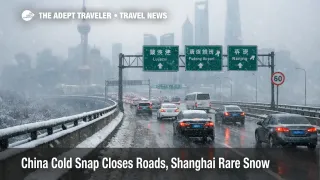
China's latest winter blast is disrupting overland travel after rare snow reached Shanghai, China, and a broad temperature drop spread across multiple provinces. Overland travelers, tour operators, and anyone relying on highway transfers are the most exposed because authorities reported widespread closures and restrictions on road sections due to snow and ice. The practical next step is to assume same day surface itineraries can break, add larger transfer buffers into airports and rail stations, and be ready to reroute by rail or delay departures until key corridors reopen.
The China cold snap road closures matter for travel because highway shutdowns and slowdowns do not stay isolated to the road network, they propagate into rail station arrival waves, airport curbside congestion, and missed check in cutoffs when travelers cannot reach hubs on schedule. Rare snow in Shanghai adds an extra layer for domestic connections through the Yangtze River Delta, where many itineraries rely on short highway transfers between districts, stations, and airports.
Who Is Affected
Travelers crossing provinces by road are first in line for disruption, especially those using long haul coaches, private drivers, or rental cars on expressways where closures can be implemented quickly for safety. Reuters reported that authorities shut 241 sections of major roads across 12 provinces because of snowfall and icy roads, with provinces cited including Shanxi, Inner Mongolia, and Heilongjiang. That footprint matters because it captures both long north south corridors and the feeder routes that connect smaller cities into larger rail and air hubs.
Travelers in and around Shanghai, China, should also plan for slower urban movement even if the snowfall itself is modest, because rare snow events can reduce road speeds, create localized icing, and amplify minor incidents into citywide delays. Reuters described Shanghai's snowfall on January 20, 2026, as rare, and noted it was the first heavy snowfall there since January 2018, with authorities warning the frigid conditions could last at least three days.
Air travelers are indirectly affected because surface disruptions can shift passenger arrival patterns and because winter operations can slow turn times. Xinhua reported aviation deicing preparations and described airport response measures such as Beijing Daxing International Airport (PKX) using multiple deicing positions and vehicles, plus preparations at Wuhan Tianhe International Airport (WUH). Even when airlines keep schedules intact, longer deicing queues and late inbound aircraft can compress departure banks and increase misconnect risk later in the day.
What Travelers Should Do
Take immediate actions that reduce the chance of getting stranded between cities. If your itinerary relies on a highway transfer to an airport or rail station, add a larger buffer than you normally would, and move departure times earlier in the day when possible. When you must keep a fixed appointment, consider positioning the night before in the hub city closest to your departure airport or main rail station, because closures can extend longer than forecast and reopens can be stop start as crews treat ice.
Use a clear decision threshold for rerouting versus waiting. If your route crosses provinces currently reporting closures or restrictions, treat any notice of expressway shutdowns on your corridor as a trigger to switch to high speed rail if operating, or to delay departure rather than attempting a long drive that depends on a single pass, bridge, or elevated segment staying open. If you are on separate tickets or you have a fixed check in, assume a highway delay of several hours is plausible, and rebook to a later departure or a next day plan before help lines and hotel inventory tighten.
Over the next 24 to 72 hours, monitor the signals that predict whether recovery is stabilizing. Watch for updates on road section reopenings, rail operating adjustments, and airport deicing throughput, not just snowfall totals. Also track whether temperatures are expected to refreeze overnight, because that is when black ice risk often rises and authorities can re impose restrictions even after daytime melting.
Background
Cold waves disrupt travel systems in layers, starting with traction and safety limits on roads, then spreading into the schedules that depend on predictable arrival times. When expressway segments close, intercity buses miss planned station slots, private transfers arrive late to airports, and rail stations see surges of late arriving passengers that can overwhelm ticketing and security flows. The second order ripple is that missed departures create unplanned overnights, which tightens hotel availability near major hubs, and pushes demand into later departures, sometimes raising fares once the system is trying to recover.
This event also has a strong aviation linkage because winter operations change the rhythm of airport turnarounds. Deicing queues, slower taxi operations, and late inbound aircraft can cascade into rolling delays even for routes that do not start in the worst snow zones. For a recent example of how winter weather creates multi day recovery problems across networks, see Freezing Rain Central Europe Airports, Delays Linger. For how delay programs and late day constraints can propagate beyond the weather footprint into missed connections, see Flight Delays and Airport Impacts: January 19, 2026.