

Tel Aviv Night Flights: Lufthansa Ban to Jan 31
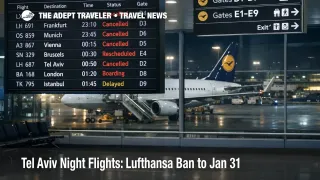
Lufthansa Group has extended its cancellation of overnight flights to and from Tel Aviv through Saturday, January 31, 2026, while continuing some daytime flying. The change affects schedules at Ben Gurion International Airport (TLV) by removing late arrivals and early departures that normally support tighter connections through Lufthansa Group hubs. Travelers with time sensitive onward plans should rebuild itineraries around daylight arrivals, add buffer for connections, and lock in lodging if a same day return is no longer possible.
The Lufthansa Tel Aviv night flight ban matters because it reduces schedule flexibility even when service has not fully stopped, and it concentrates demand into fewer daylight departures.
Who Is Affected
Passengers booked on Lufthansa Group itineraries that touch Tel Aviv in the late evening or early morning are most exposed, particularly travelers using Frankfurt, Munich, Zurich, Vienna, or Brussels to connect onward on the same day. When the last bank of flights disappears, the next workable option is often the following day, which increases the odds of an unplanned overnight in a hub city and raises the cost of hotels, meals, and rebooked ground transfers.
Travelers on codeshares and partner itineraries can also get caught by inventory reality even if the ticket technically offers alternatives. A rebooking offer is only as good as the remaining seats on the smaller set of daylight flights, and those flights can fill quickly when multiple disrupted departures are funneled into the same windows.
This is also a network issue, not just a Tel Aviv issue. Removing night flights changes aircraft utilization and crew rotations, which can ripple into irregular operations elsewhere in the same fleet plan, especially when hubs are already busy and recovery options depend on having multiple frequencies.
What Travelers Should Do
If you are traveling to Tel Aviv before February, start by checking whether your flight is scheduled as an overnight movement, even if your ticket shows a simple departure and arrival pair. If it is, proactively move to a daylight departure that still preserves your onward plan, and choose itineraries with longer connection times rather than minimum legal connections that fail if the inbound arrives late.
Use decision thresholds, not hope. If your current plan depends on arriving late and connecting onward by train, car pickup, or a domestic hop within a few hours, rebook now. If you have a flexible first night and your connection is protected on one ticket, it can be reasonable to wait, but only if you have a backstop hotel and you are comfortable with arriving the next day.
Over the next 24 to 72 hours, monitor Lufthansa Group travel alerts and your specific flight number status because these restrictions are often extended in short increments when regional risk changes. If Israel entry timing matters for your trip, keep your documents ready and recheck Israel Entry Requirements For Tourists In 2026 before you depart.
Background
Airlines use overnight stops to position crews and aircraft for early morning departures, which is why night flying is not just a convenience option, it is a structural part of a hub schedule. When a carrier decides crews should not overnight in a destination, it usually shifts to daytime only flying so crews can operate in and out the same day. That protects crew duty rules and reduces on the ground exposure the airline is trying to avoid, but it also collapses the usable schedule into a narrower band.
In practice, the first order impact shows up as fewer flight choices into and out of Ben Gurion, and more passengers competing for the same daylight seats. The second order ripple spreads across connections and recovery. When a late arrival is removed, missed connections are no longer solved by a later same night departure, so passengers are rolled to the next day, which increases hotel demand near hubs and can lengthen queues at transfer desks. The same compression also increases the chance that a single delay earlier in the day carries into the final daylight departure, which can then cascade into next day operations.
For travelers, the right mental model is capacity plus timing. If the airline is still flying, you might assume flexibility, but daytime only flying is a form of capacity constraint because it reduces frequency where it matters most for same day recovery.
Sources
- Lufthansa group extends cancellation of night flights to Israel amid Iran tensions (Times of Israel)
- Iran reopens airspace after temporary closure forced flights to reroute (Reuters)
- Lufthansa Group extends Israel night flight ban (Globes)
- Lufthansa to Restrict Flights to Daytime Hours Until Late January (Port2Port)
- Lufthansa Power Bank Ban on Flights Starts Jan 15 (Adept Traveler)
- Lufthansa Group Free WiFi Starts Second Half 2026 (Adept Traveler)