

Toronto Snowstorm Pearson Access, Road Closures
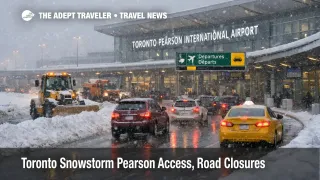
A major snowstorm across southern Ontario, Canada disrupted road travel in and around Toronto, Ontario, Canada, and forced operational slowdowns that spilled into Toronto Pearson International Airport (YYZ) flows. Surface travel warnings, collisions, and temporary closures reduced capacity on key expressways and city arteries, making airport transfers slower and less predictable. Travelers with flights or same day connections through Pearson should treat the next one to two days as a recovery period, add buffer time to every leg that depends on Toronto road access, and keep rebooking options open if their first flight starts running late.
The Toronto snowstorm Pearson access problem is not just the snowfall itself, it is the way reduced road capacity and airport rate controls stack together. When fewer vehicles can move safely on the approaches to the airport, curbside timelines stretch and missed check in cutoffs become more likely. At the same time, air traffic management procedures and snow clearing slow arrival and departure flows, which pushes aircraft and crews out of position and creates uneven departure banks even after conditions begin to improve.
Who Is Affected
Any traveler trying to reach Toronto Pearson by car, taxi, rideshare, limo, shuttle, or bus is exposed, especially those departing during morning or late afternoon peaks when the highway system is already capacity constrained. Passengers on domestic and transborder itineraries are also in a higher risk bucket because those schedules often depend on tight turn times and dense connection banks, meaning a delay getting into Toronto can erase the margin for the next leg even if the onward flight still shows on time.
Travelers connecting onward the same day to Montreal, Quebec, Canada, Ottawa, Ontario, Canada, Vancouver, British Columbia, Canada, and major US hubs are the most likely to feel the second order ripples. A slowed arrival push into Toronto reduces gate availability, increases the odds of short holds on the ground, and can force late swaps that create longer walks or terminal changes. If the itinerary is on separate tickets, the risk rises further because a missed connection can become a traveler funded overnight.
The road network matters here as much as the airport. Reports during the storm highlighted temporary shutdowns and collision driven slowdowns on major corridors, including the Don Valley Parkway and affected segments and ramps tied to Highway 401 and Highway 403. Even when closures lift, a backlog of minor incidents, stranded vehicles, and slow plowing can keep travel times unstable, which is the hardest condition for airport planning.
What Travelers Should Do
If you are traveling within the next 24 hours, treat airport access as the first failure point. Check live highway conditions before you commit to a departure time, then leave with a buffer that still works if your drive time doubles. If you have a checked bag, or you need to check in at a counter, assume additional time at the terminal as irregular operations rebuild lines and staffing patterns.
If you have a same day connection through Pearson, use a simple decision threshold, either you have a connection long enough to absorb a late inbound, or you do not. When your first leg is already delayed, or your inbound aircraft is arriving late into Toronto, favor rebooking to a longer connection, or a nonstop alternative, rather than hoping the system snaps back on schedule. If your onward flight is the last departure of the day to a smaller station, the cost of waiting is usually an overnight, so the bar for proactive rebooking should be lower.
Over the next 24 to 72 hours, monitor three things: whether the airport continues using flow controls, whether cancellations are clustering in specific departure banks, and whether your airline expands, or tightens, its waiver language tied to weather recovery. Also watch the ground side signals, including any renewed travel advisories, localized closures, and updates on major snow removal conditions, because a clear runway does not help if the roads to reach it stay slow.
Background
Snowstorms disrupt the travel system in layers. On the road side, collisions and reduced traction cut throughput on expressways and ramps, which is why airport arrivals can become lumpy, with bursts of late check ins followed by curbside congestion. On the air side, airports and air traffic control, ATC, can reduce acceptance rates for arrivals and meter departures while snow teams clear runways and taxiways, and while deicing queues rebuild in the departure push. Those constraints then ripple outward, because late inbound aircraft can miss their next departure slot, crews can time out, gate plans break, and airlines protect their network by canceling select flights that are harder to recover.
In Toronto's case, the second order effects show up quickly because Pearson is a high density hub where domestic, transborder, and long haul schedules compete for gates and deicing resources. When one bank runs late, the delay can propagate into later banks, and that can strand travelers who thought they were insulated by a two leg itinerary. The knock on effects are also visible off airport, with higher demand for hotels near the terminals and in downtown Toronto when flights cancel late in the day and rebooking inventory compresses.
Related coverage that may help you calibrate expectations and buffers includes Winter Storm Delays Toronto Pearson, Montréal Trudeau and Toronto Snow Bursts May Slow YYZ, YTZ Transfers.
Sources
- Toronto schools closed and commuters face delays as heavy snow blankets southern Ontario
- Toronto storm causes DVP closure, highway crashes
- Cancellations, delays reported at Toronto Pearson, Billy Bishop airports due to snowstorm
- Extreme Winter Weather Response
- Major snowstorm causes travel chaos in southern Ontario
- Nearly 200 collisions reported as winter storm paralyzes Ontario roads